How to Develop an iOS App in 2026: A Detailed Guide

Apple devices are known for their strong ecosystem, seamless integration, and flawless user experience. Their sleek, high-quality, and user-friendly design attracts users. The love for Apple devices is a reason why there is an immense demand for iOS apps. 

As iPhone usage continues to rise globally, the demand for iOS apps is only going to skyrocket. This is an immense opportunity for businesses looking to expand their operations. Investing in iOS app development services helps businesses target the premium user base.

According to Statista, there are a total of 1.5 billion iPhone users globally who believe in Apple’s robust security, smooth UI/UX design, and more. Nevertheless, only a handful of people understand that the path from ideation to execution isn’t always straightforward. 

Without properly understanding the nitty-gritty of iOS app development, you are likely to end up hitting a wall. There are many considerations and a lot of questions to ask before you decide how to make an iOS app. Budget and process are just the tip of the iceberg.  

We will explain to you everything in detail, from planning to technology, in this comprehensive iOS mobile app development guide to make the right decision. Whether you are a startup founder or bootstrapping your idea, this guide will help you navigate the challenges in developing an iOS app.  

Let’s get started without further ado!

Why iOS App Development Matters for Businesses 

Faster performance, flawless UX, and sleek design are the core USPs that make iOS apps stand out from hybrid or Android apps. But there is more to the picture; so, let’s have a quick look at the solid reasons why businesses should invest in iOS mobile applications.
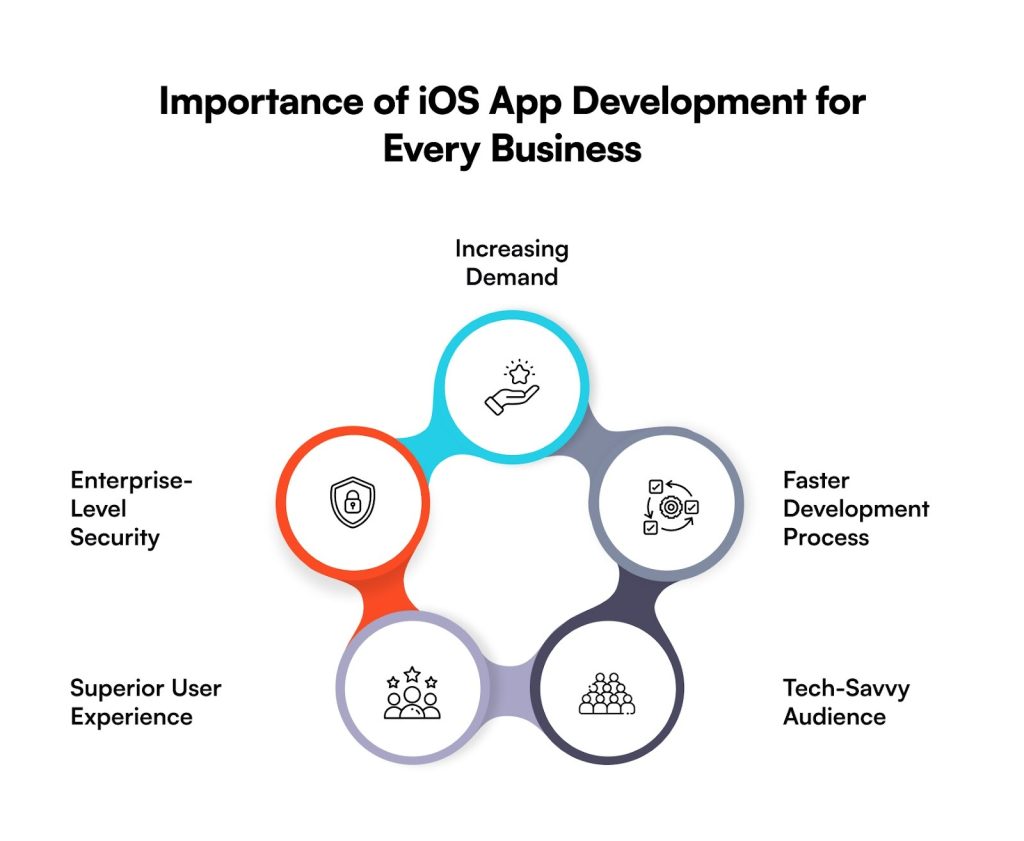
  • Increasing Demand

The adoption of the iPhone continues to increase, and so does the demand to build an iOS app. Apple has a strong and loyal customer base, who prefer quality apps – thanks to Apple’s robust security standards and consistent user experience. Because of this, business owners (like you) have the right opportunity to tap into this growing market. 

  • Enterprise-Level Security

One of the main reasons for the success of the iOS ecosystem is Apple’s security, which is basically a fortress. It is enhanced by Apple Intelligence: the system that enables on-device AI features, and at the same time, keeps personal data secure through Private Cloud Compute. When combined with features like end-to-end encryption, tracking prevention, mail privacy protection, and passkeys, iOS delivers an even better and trusted security ecosystem. 

  • Superior User Experience

If you want to enhance your brand recognition, along with a robust user base, then iOS mobile application development is an excellent strategic move. Apple strictly follows Human Intelligence Guidelines, which precisely set the standards for layout, navigation, typography, and spacing. The main advantage of this uniformity is that it allows companies to give their customers an impeccable experience that seems trustworthy and familiar. 

  • Tech-Savvy Audience

Without​‍​‌‍​‍‌​‍​‌‍​‍‌ a doubt, an iOS app will lure a tech-savvy audience, as they are generally the first ones to leverage the innovations and the most advanced features. In addition, they will not think twice before paying more when it comes to using premium features, which makes it a win-win situation for both users and business owners.

  • Faster Development Process

Most of the business owners want a faster development methodology for their app, so they can leverage what they have built. In such case scenario, iOS is definitely a go-to choice. It has a faster and less complex development process – all thanks to less fragmentation and predictable software updates. 

Choosing the Best Approach: How Will You Build Your iOS App?

Before writing a single line of code, make one critical choice: how to decide iOS app development approach. There are three main paths. Your budget, timeline, and control needs will guide your choice. Review this decision matrix to see which fits your goal:

ApproachBest ForTimelineCost RangeControl Level
DIY DevelopmentTech founders, Learning6-12 months$5K – $15KComplete
Freelance/DeveloperMost businesses, Startups3-8 months$30K – $150KHigh
No-Code/Low-CodeMVPs, Simple apps1-3 months$2K – $20KLimited

Path #1: Do It Yourself (DIY)

Choose this path if you know how to code. It is great for a personal project or if your budget is low. Realize the cost: you need a Mac. You must pay $99 yearly for a developer account. It takes most people six months to learn the basics of Swift/SwiftUI. The first app often needs over 500 hours to complete. Only about one in four first-time builders finish and launch their app.

Path #2: Hire the Experts

This is the path for most business owners. You need professional quality. You need to launch within a few months. This is the path you can rely on. The cost ranges from $30K to over $300K. Local iOS app development service providers in the USA or Europe charge more per hour than offshore teams, usually located in Asia. 

Path #3: Use Simple Platforms

If you just need to test an idea (MVP) quickly, use a no-code/low-code platform. These are fast. They are often under $20K. The downside is that they limit what you can build. Your app might not grow easily. If your app needs complex features later, you might have to rebuild the entire thing.

Native vs Hybrid: Which Type Should You Choose for iOS App Development?

Before developing an iOS app, business owners generally have to make a choice between two approaches: either choose Native or Hybrid app development. 

Both methods have their own pros and cons. Let’s have a look at each of them one by one:

  1. Native iOS App 

Native​‍​‌‍​‍‌​‍​‌‍​‍‌ app development refers to the process of building applications that are specifically designed for the operating systems of Apple. The development is done by using languages like Swift or Objective-C, an integrated development environment (IDE), or Xcode. As the apps are for specific operating systems, they render excellent performance and seamless ​‍​‌‍​‍‌​‍​‌‍​‍‌integration.

ProsCons
Optimal User ExperienceHigher Development Cost
Full Device AccessLonger Development Time
Offline Functionality Platform-Specific Knowledge
App Store SupportClosed Ecosystem
Robust SecurityComplex Maintenance
  1. Hybrid iOS App

Hybrid applications make use of typical web technologies such as HTML, CSS, and JavaScript and are shown via the embedded browsing library in the native shell. A hybrid framework employs a single codebase for creating apps on both platforms. This method of work can still be very efficient, as you can save a lot of time during app development. 

ProsCons
Lower Development CostLimited Performance
Faster Development TimeInconsistent UI/UX
Simplified MaintenanceFramework Dependency
Code ReusabilityApp Store Rejections
Broader ReachLess Optimal

How to Develop an iOS Mobile Application: Step-by-Step Process
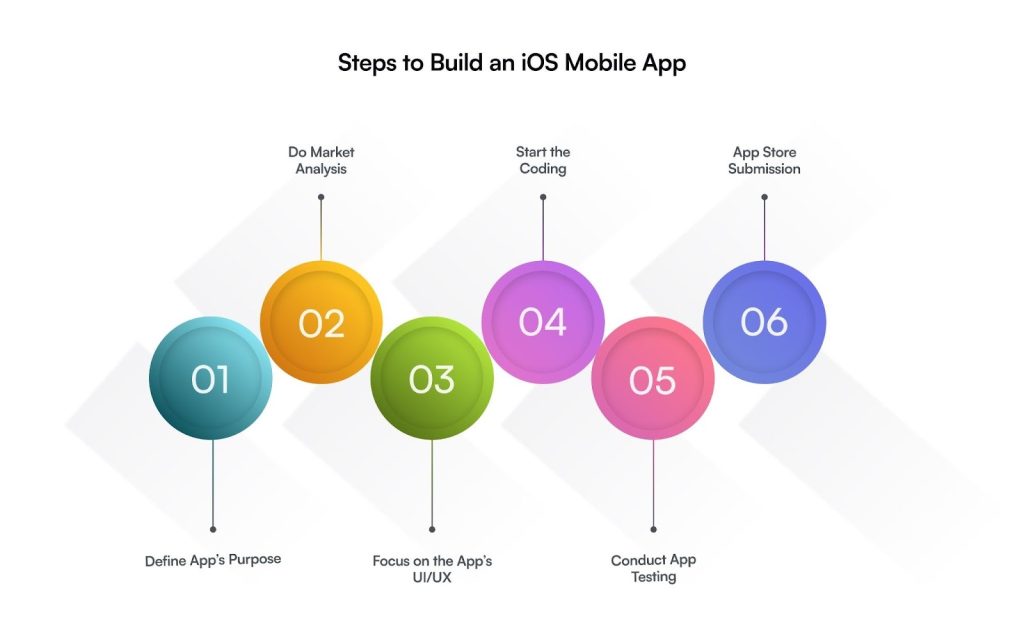
Developing an iOS app is not rocket science, but it surely does require careful planning and a strategic journey, keeping the targeted audience in mind. 

There are several phases used in developing an iOS mobile application. The following table describes these phases with duration and estimated budget in brief. 

PhaseDuration% of BudgetFocusGoal
Planning2-4 weeks10-15%Goals, Audience, Trends, and User NeedsKnow what value your app brings and who uses it. Figure out what users want. Plan the core features (MVP).
Design3-6 weeks15-25%Look and FeelCreate a simple, clean interface. Follow Apple’s design rules.
Development8-20 weeks50-60%DevelopmentWrite clean code using tools like Xcode and Swift. Build the real app.
Testing2-4 weeks10-15%Quality ControlCheck for bugs and errors. Make sure the app is safe and works well.
Launch1-3 weeks5-10%DeploymentSubmit the finished app. Get Apple’s approval for the market launch.
Total16-37 weeks/4-9 months average

Listed below are the key detailed steps for developing an iOS application:

  1. Define App’s Core Purpose

Before availing of iOS app development services, make sure you have clearly defined the goals of your app or what exactly you’re aiming to deliver. It is advisable to properly study the market of your niche and then define a unique concept based on that. 

Ask the following questions of yourself:

  • Who is going to be your target audience?
  • What value will your app add for your targeted audience?
  • In what ways is your iOS app unique from others?
  • What features must you integrate into the app to stand out in the market?
  • Do you want to monetize your app or not?

Answer these questions, and you will know what exactly you want or what will fit the best in the market. 

  1. Conduct In-Depth Market Research

After setting up your app goals, it’s time to evaluate the market and check out the actual trends or the new things that users are expecting. The first stage is to figure out the necessities and issues of the target audience, and then figure out the features for the minimum viable product development (MVP).

In fact, a minimum viable product is a product that helps you prove the concept of your app, carry out the basic features test with real users, and collect user feedback to enhance the app. Identify competitors in the App Store, and check what kinds of features they are offering. This will help you determine the best feature for the initial version of your app and create a roadmap for iOS app development.

  1. App Design & Prototyping

First impressions are the most lasting ones, so design a user-friendly interface to capture your audience’s attention at first glance. You must make sure, the designing team you have hired is in perfect harmony with the brand spirit of your company to get the desired outcome. 

This step involves mapping user journeys, creating flow diagrams, and designing information architecture. It further involves wireframing different interfaces and creating interactive prototypes to test the viability of the design and features. 

The team must adhere to Apple’s Human Interface Guidelines (HIG) so that the app can be perceived as a standard and common one among iOS users. Above all, the design has to be simple for the user to move through and have a clean and attractive visual.  

  1. App Development

Now comes the most important part: coding. 

This is the final stage, where your concepts will become real life (or take a form). Developers​‍​‌‍​‍‌​‍​‌‍​‍‌ are writing clean, scalable, and efficient code that conforms to Apple’s recommended practices or guidelines. To make the app concept a tangible app and to maintain compatibility with all iOS devices, they use different tools such as Xcode, Swift, and ​‍​‌‍​‍‌​‍​‌‍​‍‌SwiftUI.

This step involves two phases: frontend and backend engineering. While the frontend is about creating the interface and features that users will directly interact with, the backend is about setting up the infrastructure that involves the server, databases (MySQL, PostgreSQL, MongoDB, Firebase, etc), and APIs.  

You may also need to integrate specific features like Apple Intelligence, Vision Pro, Live Activities, and Home screen/Lock screen widgets.

  1. Rigorous App Testing

It is necessary to test your iOS mobile application extensively before you launch it in the marketplace. Practice unit and integration tests, as well as performance and user acceptance tests (UAT), are conducted to prevent the occurrence of potential errors. 

The main reason for such thorough testing is to keep the app safe, make it bug-free (or glitch-free), and finally, to be able to count on it 100%. It involves various tests, like manual, automated, and beta testing, as well as performance optimization. 

  1. Launch into App Store

Voila! Here comes the step where you can finally see your dreams coming true, or rather, submitting your app to the App Store. Remember, this is the crucial phase because getting Apple’s approval is the priority here. 

Get some thorough checks or final tweaks, and ensure your iOS app is all set for a smooth launch, adhering to Apple’s strict standards and guidelines. 
Tech Stack Used for Building an iOS App

To​‍​‌‍​‍‌​‍​‌‍​‍‌ create a first-rate and high-performing iOS application, the knowledge of an expert and the right mix of tools, languages, and frameworks are necessary. Using the features of a proper tech stack is what ultimately provides app performance at its best, a user experience without any hiccups, and the possibility of ​‍​‌‍​‍‌​‍​‌‍​‍‌scaling.

Here is a list of the top technologies used for developing an iOS mobile app:

Programming Language:

Integrated Development Environment (IDE):
IDE

UI Frameworks:

Backend & APIs:

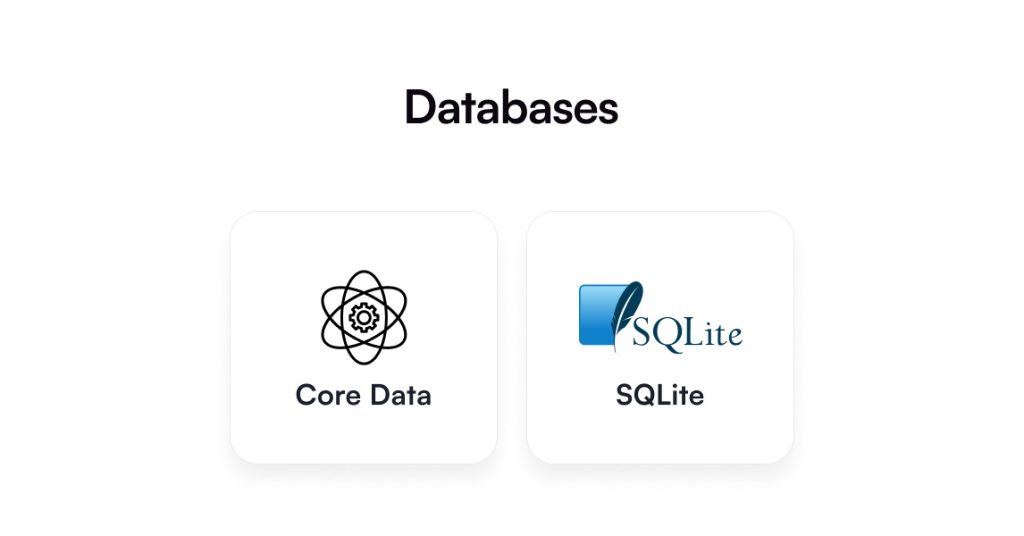
Databases:
Testing Tools:
Common Mistakes in iOS App Development & How to Avoid Them

Mistake #1: Building Features Nobody Wants: You waste time building things users will not use. The fix is simple: Launch with only the essential functions. Check usage data often and check user feedback to know what they actually need.

Mistake #2: Ignoring Design Quality: A bad design instantly drives people away. Your app must look professional from the start. Spend heavily on design, use Apple’s own guidelines, and test the look before you code.

Mistake #3: Underestimating Timeline: Every project takes more time than expected because changes will happen. Always add a 30% cushion to all your schedules. Use short, rapid work cycles to handle changes easily.

Mistake #4: Poor Post-Launch Support: Users quit fast when an app goes stale. Plan to release updates every month. Fix crashes immediately and respond to every person who leaves a review.

How Much Does It Cost to Make an iOS App

For iOS, an app development project typically costs between $40,000 and $500,000. Or even more. The price is influenced by several factors; hence, if you desire a more sophisticated iOS app, you need to allocate a higher budget. 

Just a heads up: it will all be worth it in the end!

To give you a clearer picture, here is a list of factors affecting the overall cost of mobile app development for an iOS application:

  1. Size of the app
  2. Project complexity
  3. The advancement of features
  4. App design
  5. Any additional changes you want

Below is a table outlining the pricing range from simple to high complexity iOS applications:

App TypePrice Range
Simple App$45,000 to $95,000
Medium Complexity$85,000 to $150,000
Complex App$150,000 to $300,000
High-Level Complexity $300,000 to $500,000

Factors to Consider Before Hiring an iOS App Development Company

It is important to hire a mobile app development company that understands your business needs, aligns with your goals, and, most importantly, fits your budget. But how do you determine which company is the right choice?

Below, we have given some of the factors that you must consider before hiring an iOS app development company. 

  • Technical Background: The primary factor to keep in mind is to ensure that the iOS app developers of the company have a strong technical background, stay updated with the latest tools & technologies, along with programming languages. 
  • Ratings & Reviews: Don’t forget to read the company’s reviews to get an actual idea about the company’s reputation and how effectively they deliver projects. 
  • Development Approach: Ask which development approach the developers follow. Make sure they follow Agile methodology; this way, you’ll get to see the progress of your iOS app development at every stage and suggest changes in real-time.
  • Maintains Transparency: Hire a company that maintains transparency by giving clear cost estimations and setting realistic timelines.  
  • Post-Launch Support: App development process doesn’t end after the launch because then comes the real thing, offering post-launch support and maintenance services. So, ask if the company maintains a long-term relationship or not. 

Critical Success Factors: Things to Keep in Mind to Build a Successful iOS App

Your app needs certain things to win. 

  • Solving a real problem is the first rule. Many failed apps try to fix issues that do not exist. Talk to people first. Do not build until you know the need is real.
  • Second, the user experience must be great. Follow Apple’s simple rules for design. Apps with good design keep users three times longer. Test it with real users constantly. Make the first sign-up process simple; most people quit right away.
  • The app must also be fast and reliable. Load times should be under two seconds. Crashes are unacceptable. Aim for nearly zero errors. Core features must work even when offline.
  • Next, timing the launch matters. Do not submit during busy holidays; reviews slow down. Plan your marketing for weeks before you hit the store. Build your email list early.

Finally, you must commit after the launch. Update the app often. Answer all reviews, especially the bad ones. Watch your numbers closely for the first three months. You must budget for continuous marketing. Do not stop once the app is live.

How to Make Money: Monetization Model for iOS Apps

Choosing how your app will earn money is the most important business choice you will make. You must pick the best fit from the start.

ModelBest ForProsCons
Free with AdsContent, simple toolsSimple to get usersLow income per person
FreemiumGames, productivityHuge potential user baseOnly 2–5% ever pay
Paid DownloadNiche, premium toolsMoney right awayVery few downloads
In-App PurchaseGames, digital goodsHighest income possibleHard to build well
SubscriptionServices, ongoing valueSteady, recurring revenueYou must always add value

The Reality Check: Most apps do not make much money. The bottom half of all apps earn less than $1,000 per year. Only the top 1% make over $1 million.

To actually make a profit, you need to think long-term. It takes 18 to 36 months on average just to break even on costs like development and marketing. To maximize your money, test different prices and make purchases simple—one tap is best. Look at setting prices lower in different countries, and always offer an annual discount to encourage commitment. 

Get an iOS App of Your Dreams with Galaxy Weblinks

Simply​‍​‌‍​‍‌​‍​‌‍​‍‌ put, creating an iOS app is not only a fantastic idea but also requires the correct development method, knowing your users, confirming the app concept, and other things. Each of these stages has its difficulties, and it might be too much for you to figure out the way through them by ​‍​‌‍​‍‌​‍​‌‍​‍‌yourself.

This is where you need a technology partner!

At Galaxy Weblinks, we carefully plan out the complete iOS app development journey with a guarantee of the app’s success. We have the right set of team, who can turn every vision of yours that you will bring to the table. 

We are not asking you to just believe our words; you can look for yourself and see if we can be the best companion for your upcoming project. Check out our portfolio. Meanwhile, if you have any queries or need assistance, we’re just a call away!

FAQs

  1. Why are iOS mobile applications popular among business owners?

The popularity of iOS app development is inevitable because of the following reasons:

  • Higher revenue potential
  • Strong security ecosystem
  • Better monetization opportunities
  • Consistent & premium user experience
  • Early access to innovation 
  1. How much does it cost to build an iOS app?

You cannot provide a definite answer to this question as it depends on several factors, such as the intricacy of the project, the number of features that you want to add, UI/UX, the proficiency of the development team, and so forth. 

  1. How long does it take to develop an iOS application?

There is no specific timeframe set for the overall iOS app development. However, to give you a ballpark figure, the development can be accomplished in 2-4 months with just simple (or basic) app features. Or 6-12 months and even more for the complicated ones.

  1. How secure are iOS apps for business use?

One​‍​‌‍​‍‌​‍​‌‍​‍‌ of the main reasons that iOS apps are considered to be more secure is the fact that Apple maintains a closed ecosystem. Additionally, Apple performs on-device processing, uses advanced encryption, and has a number of built-in data protection features. For this reason, iOS is always the preferred option of business owners who take the security of their data ​‍​‌‍​‍‌​‍​‌‍​‍‌seriously.

  1. Building an MVP before developing a full-fledged iOS app is useful?

Definitely, an MVP development is a way to confirm the app idea, collect the real users’ feedback, and it also enables you to refine your app based on that feedback prior to a full-scale development investment. 

Custom CRM Development Cost in 2026: A Complete Pricing Breakdown 

The typical range for custom CRM development cost in 2026 falls between $30,000 and $300,000+, with most mid-tier businesses investing $75,000–$150,000 for a complete solution.  

When you decide to move past generic platforms like Salesforce or HubSpot, custom development is the way you want. It allows you to create a system built specifically for your sales process. But the price tag is the first obstacle. Often businesses seriously underestimate the actual cost and end up investing more than they expect in developing custom CRM.   

Because the landscape is constantly shifting. New requirements for AI/ML integration and stricter data privacy compliance are pushing up the CRM development price in 2026. This is a huge market, with the global CRM sector hitting $98.84 billion in 2025, and the demand for bespoke solutions is driving prices up.  

This guide will give you the transparent numbers you need. We’ll break down the exact custom CRM development cost by complexity, industry, and other factors. You will learn about the hidden expenses that routinely add 25–40% to initial estimates and discover smart cost optimization strategies that can save you up thousands of dollars.  

We will also show you the ROI calculation proving when your custom CRM software pays for itself. This will help you stop guessing the cost to build custom CRM and start budgeting with confidence. So, let’s get started! 

A Brief Overview of the Cost of Custom CRM Development 

The cost to build a custom CRM varies greatly due to business requirements, project complexity, and several other factors. One of the primary factors in determining the cost is software complexity.  

Complexity Level Timeline Best For Features Average Cost 
Simple/MVP  2-4 months Startups, small teams Core features (MVP): Contact management, simple sales pipeline tracking, basic reporting/dashboard, email integration, task management. $15,000 – $40,000 
Mid-level 4-8 months Growing businesses Expanded features: Advanced lead scoring, custom sales pipeline stages, some third-party integrations (e.g., accounting or basic marketing tools), custom reports, role-based access controls. $40,000 – $80,000 
Enterprise 8-18 months Large corporations Full-suite enterprise features: Advanced workflow automation, complex third-party integrations (e.g., ERP systems), AI/ML features (e.g., predictive analytics, lead forecasting), mobile app support, sophisticated security, custom UI/UX. $80,000 – $180,000+ 

Key Factors Influencing Custom CRM Development Cost 

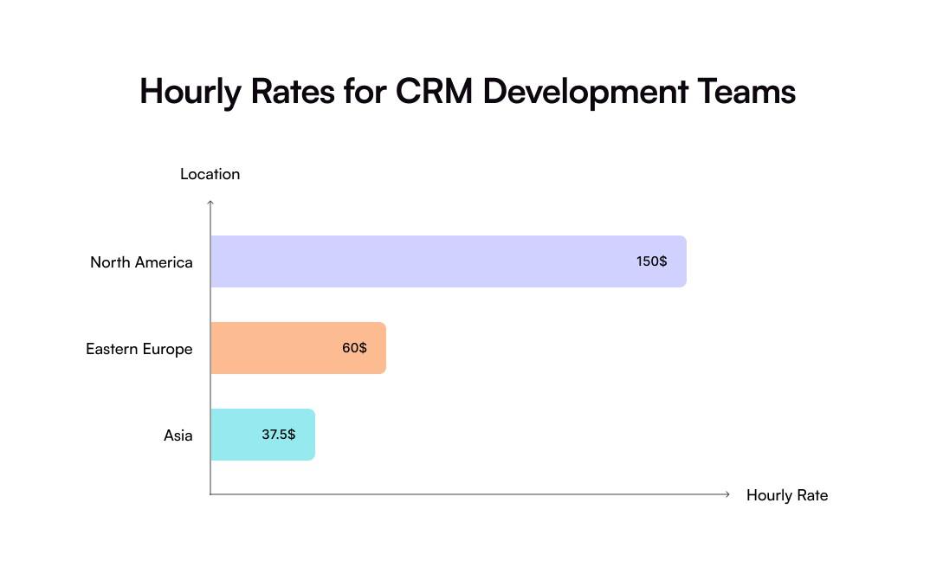
Developing a custom CRM isn’t a single-shot process; it entails several steps and aspects. For example, the cost of developing a tailored CRM can be high when your development team is from a region where developer rates are higher, such as the USA. Similarly, the cost can be lower for a development team from a region like India due to cheaper developer rates. 

So, we cannot get an exact estimate for the cost to develop custom CRM as it depends on multiple factors. The following table summarizes the custom CRM development pricing for different factors affecting the overall cost.  

Category Primary Cost Range Key Cost Driver 
Feature Complexity & Scope 40–50% of Total Budget The core driver. Ranges from $8,000 (basic) to $100,000+ (advanced features). Premium AI can add $30,000–$80,000. 
Platform Choice 20–30% Variance Deciding between Web-only ($60K–$90K+) or a Hybrid Web & Mobile solution ($50K–$150K+). 
System Integrations $5,000 – $80,000 Cost depends on complexity: simple email API ($5K) vs. complex, bidirectional ERP/Legacy system sync ($25K–$80K). 
Data Migration $5,000 – $40,000 Moving existing customer data. Cost increases significantly with data volume, messy data, and multiple source systems. 
UI/UX Design $10,000 – $50,000 Custom, persona-driven design ($25K–$50K) drives high user adoption, which is essential for ROI. 
Development Team Location 200–300% Variance Highest impact on hourly rates, ranging from $25/hour (Asia) to $200/hour (N. America). 
AI & Machine Learning $20,000 – $150,000 New cost factor for 2026. Covers integration of pre-built AI APIs or custom-trained predictive ML models. 
Compliance & Security $15,000 – $60,000 Non-negotiable cost for features like GDPR/HIPAA compliance, MFA, audit logs, and data encryption. 
Testing & Quality Assurance (QA) 15–20% of Development Cost Essential to prevent costly failures. Covers functional, security, and cross-platform testing. 
Project Management 10–15% of Total Budget The cost of structure, planning, and communication that ensures the project finishes on time and budget. 
Third-Party Licenses $5,000 – $30,000/year Recurring annual cost for hosting, cloud services, advanced APIs, and required development tools. 
Training & Documentation $8,000 – $25,000 Post-launch cost for creating user guides, video tutorials, and conducting live training to ensure high user adoption. 

Feature Complexity & Scope  

This is the single biggest factor, impacting 40–50% of your total budget. A basic CRM includes contact management and simple reporting ($8,000–$15,000). Intermediate features, such as custom automation and role-based access, push the price to $20,000–$40,000.  

Advanced features like predictive analytics and multi-language support can cost $50,000–$100,000 or more. Critically in 2026, premium features—like Generative AI for content creation or conversational AI chatbots—will add a substantial $30,000–$80,000 extra. 

Platform Choice  

The target platform creates a 20–30% variance in the final CRM development price. A web-only system is the cheapest starting point ($60,000–$90,000+). If your team works in the field, you need mobile compatibility, which raises the cost.  

A full hybrid solution that works flawlessly on both web and native mobile apps (iOS/Android) is the most expensive path, ranging from $50,000 to $150,000+. 

System Integrations  

The CRM rarely stands alone. Integrating it with other business software is mandatory. Simple integrations with email or calendar platforms run about $3,000–$8,000 each. Complex, bidirectional integrations with ERP systems (like SAP or Oracle) or marketing automation platforms can cost $10,000–$25,000 per system. Enterprise-level integrations with custom APIs and legacy systems can exceed $80,000. 

Data Migration  

Moving your existing customer data—often the messiest part—can cost $5,000–$40,000. Simple migrations from one clean source with fewer than 10,000 records are cheaper ($5,000–$10,000).  

Complex projects involve multiple data sources, significant cleansing, and custom field mapping for hundreds of thousands of records, driving the cost past $30,000. 

UI/UX Design  

Good design is an investment, not an afterthought. A basic, template-based interface design costs $10,000–$20,000. For a truly custom, branded interface based on user research and testing—which is vital for user adoption—expect to pay between $25,000 and $50,000. The better the UX, the higher the user adoption, and the faster your ROI. 

Development Team  

Location Where you hire impacts the cost to build custom CRM by 200–300%. North American rates are highest, typically $100–$200/hour. Eastern Europe offers rates between $40–$80/hour.  

Teams in Asia (India, Philippines) often charge $25–$50/hour. You must balance lower hourly rates with communication, timezone differences, and proven experience. 

AI & Machine Learning  

This is a major new cost for 2026, ranging from $20,000 to $150,000. Simply integrating pre-built AI APIs for basic chatbots costs less ($15,000–$30,000). Building and training custom machine learning models for predictive lead scoring on your proprietary data is far more expensive, often costing $40,000–$80,000 or more. 

Compliance & Security  

This is non-negotiable, costing $15,000–$60,000. Basic security (SSL, encryption) is standard. Enhanced security with two-factor authentication and detailed audit logs is $25,000–$40,000.  

Full compliance readiness for regulations like GDPR, HIPAA, or SOC 2 adds considerable complexity and testing, pushing costs to $50,000–$60,000. 

Testing & Quality Assurance  

QA is not just bug fixing; it’s protecting your investment. This accounts for 15–20% of the core development cost. It includes functional, performance, security, and user acceptance testing across platforms. Cutting QA time is a common, costly mistake. 

Project Management  

Project management accounts for 10–15% of the total budget. This is the cost of requirements gathering, sprint planning, risk management, and stakeholder communication—the structure that keeps the entire custom CRM project on track and budget. 

Third-Party Licenses  

This is often a hidden, recurring cost of $5,000–$30,000 per year. It covers cloud hosting services (AWS, Azure), specialized third-party APIs, and necessary development tools and frameworks. 

Training & Documentation  

Launch day is not the end. To ensure high user adoption, you need training and documentation. This cost, typically $8,000–$25,000, covers user guides, video tutorials, and live training sessions for your sales and support teams. 

Industry-Specific Cost Breakdown 2026  

The industry you operate in directly dictates the final custom CRM development cost. Compliance and system integration mandates change the price.  

  • Healthcare CRMs demand the highest investment, typically starting at $120,000+. This cost is driven by non-negotiable HIPAA compliance and complex integration with Electronic Health Records (EHR) systems. Features like patient portals and telemedicine tools add significant expense.  
  • For Financial Services, costs often range from $150,000–$300,000. The spending goes toward advanced encryption, mandatory SOC 2 compliance, and tools for real-time risk assessment and portfolio management. Security is the main budget killer.  
  • E-commerce CRMs are mid-range, around $80,000–$160,000. Here, the price comes from deep integration with order management systems and inventory sync. Features like abandoned cart recovery and customer segmentation are high-priority additions.  
  • Finally, Real Estate CRMs often cost $65,000–$120,000. This includes necessary MLS integrations and custom modules for property listing and commission tracking. The features are specific. You must pay for what you use. 
Industry Avg. Cost Key Cost Driver 
Healthcare $120,000 – $250,000+ Mandatory HIPAA compliance (encryption, audit logs), EHR/EMR system integration, patient portal security. 
Financial Services $150,000 – $300,000+ SOC 2 / advanced regulatory compliance, real-time risk assessment, portfolio management, advanced encryption. 
E-commerce/Retail $80,000 – $160,000 Inventory synchronization, complex Order Management System (OMS) integration, advanced customer segmentation for analytics. 
Real Estate $65,000 – $120,000 MLS integration, property listing management, commission tracking, client-facing portal features. 
CTA

Step-by-Step Method to Calculate Custom CRM Development Cost  

To estimate the custom CRM development cost accurately, you must use a structured approach. This moves the question from “how much” to “how.” This method helps you find the true CRM development price for 2026. 

  • Step 1: Define Your CRM Scope: Don’t include every feature in your CRM solution; it’s going to impact both performance and UX instead of giving any real benefit. For simplicity, you can break down features into three tiers: Must-have, Important, and Nice-to-have. Based on this, you can estimate the cost for each feature and implement those that matter most. 
  • Step 2: Calculate Base Development Cost: Use a simple formula. Tally your feature points and multiply them by an estimated development rate (e.g., $1,000 per feature point). Add costs for each integration (e.g., five integrations times $8,000). Apply a platform multiplier if you need mobile support (add 30% for hybrid). This gives a baseline figure. 
  • Step 3: Apply Regional Cost Multiplier: The cost changes dramatically based on your development team. If your base cost is $100,000, choosing a team in Eastern Europe might mean multiplying by 0.6–0.8, while choosing a North American team means multiplying by 1.5–2.0. This dramatically affects how much does custom CRM development cost 2026. 
  • Step 4: Add Complexity Factors: Apply a final complexity multiplier. A simple CRM uses a 1.0 multiplier. A complex project involving AI or multiple integrations uses a 1.7 multiplier or higher. This accounts for increased testing and project management time. 
  • Step 5: Include Hidden Costs: Add 25% of the total cost for hidden items like advanced QA, project management overhead, and unexpected delays. Do not skip this step. This percentage is crucial for avoiding budget failure. 

Cost Optimization Strategies That Save Thousands 

You can cut the custom CRM development cost significantly. Smart planning beats spending.  

  • Start with MVP Approach: Build core features first (a $30,000–$60,000 MVP). Scale later based on real user validation. Do not build features nobody uses.  
  • Leverage Open-Source Frameworks: Use established bases like SuiteCRM instead of building from zero. Customizing a proven framework saves $15,000–$35,000 in development time.  
  • Smarter Integration Approach: Employ API aggregators such as Zapiert to simplify integrations. Defer non-critical, complex integrations to save from $20,000–$40,000 on custom API work.  
  • Regional Team Selection: Employ a hybrid model. Use local management but outsource development to regions with lower rates (e.g., Eastern Europe at $50/hour). This can reduce the overall CRM development price by over 50%.  
  • Phased Feature Rollout: Deploy features over several months. Spreading the cost validates value at each step and avoids the premium charged for compressed timelines, saving $15,000–$30,000. 

Total Cost of Ownership (TCO) of Custom CRM  

The initial development price is only the start. You must look at the full picture. That is the TCO. The total cost of ownership spans several years. Year one includes the build cost and hidden setup expenses. After that, you pay for maintenance.  

Expect annual maintenance and support to cost 15–20% of the initial development price. You pay for hosting. You pay for cloud services. You pay for licenses. A $100,000 CRM means roughly $15,000–$20,000 yearly just to keep the lights on and the software up to date. Ignore TCO and the initial low quote will hurt you later. Plan for three years. That is the only real measure of the custom CRM development cost. 

Don’t Fear Price, Build Better That Yield Superior Value  

The question is not if you need a custom CRM, but when. Now you know the real custom CRM development cost. Do not fear the price; fear the inefficiency of systems that fail your business. A good CRM is a revenue engine.  

Galaxy Weblinks is the partner that builds that engine. As a dedicated CRM software development company, we focus on creating the best solution at reasonable prices. We build scalable, high-performance, and secure CRM solutions while integrating cutting-edge features like AI. We build the exact system your sales team needs. Start with a clear plan with us. Contact us for all kinds of assistance.  

Frequently Asked Questions 

What is the average price range for a mid-tier custom CRM in 2026?  

Most mid-sized businesses building a modern, functional custom CRM should budget in the range of $75,000 to $150,000. This price covers core features, a custom UX, and several key system integrations. 

What is the single biggest “hidden cost” that ruins budgets?  

Data migration. Moving messy, complex data from old systems and cleaning it up often costs far more than anticipated. We advise adding 25% of the base development cost to cover all hidden costs, including complex migration and project overhead. 

Does adding AI features like predictive scoring make the cost double?  

No, but it increases the price considerably. Integrating custom AI/ML models adds anywhere from $40,000 to $80,000 to the budget. Simple integration with pre-built AI services is cheaper, but you pay more for true custom prediction. 

Why is compliance (like HIPAA) so expensive for a custom CRM?  

Compliance is expensive because it requires mandatory, complex security architecture. You must build advanced audit trails, strict data encryption, and specific access controls. This extra engineering effort can add $30,000–$60,000 to the final price. 

Top Mobile App Development Trends to Follow in 2026 

When Spotify was launched in 2008, it was a neat desktop music player trying to take on piracy. With smartphones quickly becoming the primary device for media consumption, Spotify saw the opportunity early and moved fast. Its first mobile app was basic, but it unlocked a new growth engine.  

From there, Spotify rode and shaped major mobile app development trends: seamless cross-device syncing, offline listening, and hyper-personalized recommendations. Each trend did not just improve the app but also deepened user engagement and cemented Spotify as a global leader in digital audio. 

That is what real digital transformation looks like. Re-engineering an entire ecosystem around how people live, interact, and buy through mobile. And today, every brand is under that same pressure. And the momentum is only accelerating. 

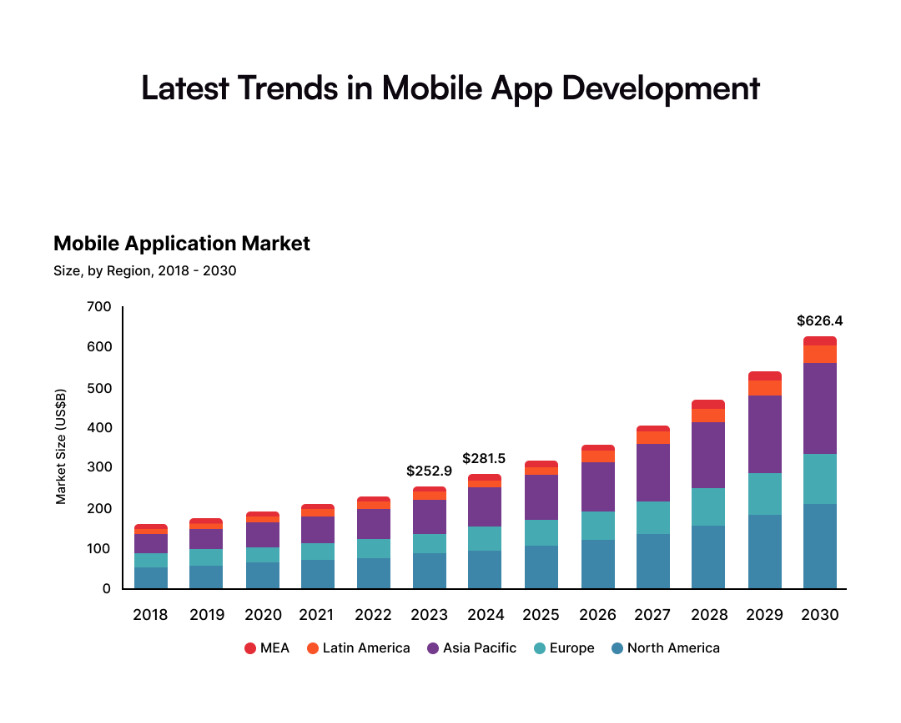
According to Grand View Research, the global mobile app market is set to reach over $626.39 billion by 2030, fueled by AI, edge computing, and multi-platform ecosystems. This makes it important for businesses to stay ahead of the competition by adopting the latest mobile app trends. 

As we look toward mobile app development trends 2026, the real opportunity lies in building apps that act less like tools and more like adaptive, intelligent systems—ones that learn, integrate, and deliver measurable business impact. 

This blog is a view into the strategic shifts redefining mobile as the operating core of modern business. Here, we will unpack the market forces, top 10 trends, and enterprise use cases shaping the next phase of mobile transformation and what they mean for leaders building the future today. 

Understanding Mobile App Development Market 

Every new device, connection, and data stream is reshaping how businesses build, operate, and compete. Therefore, the digital transformation of mobile apps is moving more towards enhancing customer experience. And this wave of growth comes with a shift in mindset. 

The latest mobile app development trends are reinventing how businesses build digital ecosystems that adapt to evolving behaviors, markets, and technologies. 

  • Smarter devices, smarter users – With over 6.8 billion smartphone users globally, mobile has become the default digital environment. Consumers expect relevance, speed, and seamless interoperability. 
  • 5G and soon 6G connectivity – Ultra-low latency is unlocking new categories of experiences — from immersive commerce to real-time data visualization.  
  • Wearables and IoT ecosystems – Mobile apps are now control centers for connected lives — syncing watches, home devices, and even cars. 
  • The enterprise awakening – From healthcare to BFSI, large organizations are using mobile apps as operational command hubs, not just customer-facing portals. 
  • Mobile commerce dominance – Over 70% of eCommerce transactions now originate on mobile, redefining how brands design, market, and deliver.  

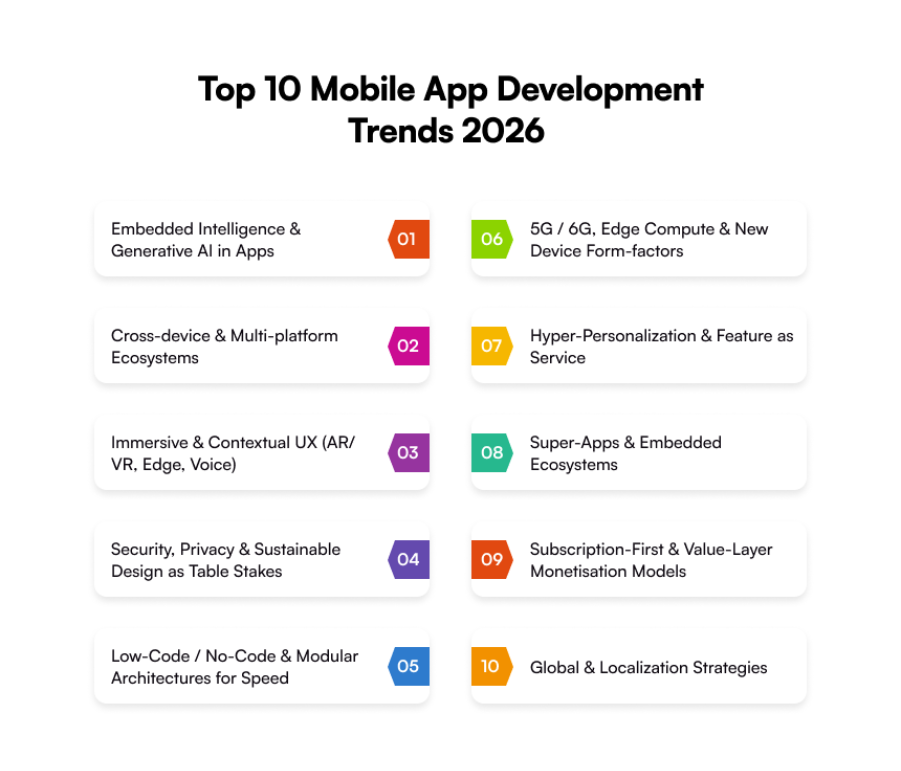
Top 10 Trends Shaping Mobile App Development in 2026 

The next decade of mobile app development technologies will be shaped by how fast businesses turn ideas into usable, intelligent systems. 
Below, we break down the top 10 mobile app technology trends driving this shift—each explained with a real-world use case and a strategic takeaway you can act on. 

Embedded Intelligence & Generative AI in Apps 

In mobile app development trends 2026, intelligence is the foundation. The best apps no longer react—they predict. They learn what people want, when they want it, and how to deliver it without being asked. 

A retail app might see a pattern in your searches. It knows you are close to buying. It offers a discount at the right moment. A banking app might study your habits and suggest ways to save before you ask for advice. They are calculated customer journeys powered by AI. 

Generative AI takes it further. It can create personalized content, write responses, design offers, or summarize your activity—all inside the app. The user sees speed and relevance. The business sees higher engagement, stronger loyalty, and lower churn. 

Mobile apps are transforming. They are now companions that think. They analyze, decide, and improve. 

For leaders, this change is not optional. Intelligence must be built into the architecture—not added later. And the message is simple: 

Do not design your app just for what users do. Design it for what they will do next. 

Cross-device & Multi-platform Ecosystems 

A mobile app now lives across watches, tablets, foldables, and even car dashboards. It moves where the user moves. It adapts to context. It keeps the experience unbroken. 

An enterprise workflow app can start on a smartphone, shift to a smartwatch during a task, and project data through AR glasses on the floor. The worker never stops. The system never loses track. 

This is the new design rule—continuity over confinement. The new mobile app technology trends make apps that think in ecosystems. They deliver one experience across many surfaces. 

For developers and decision-makers, this changes everything. Frameworks like Flutter and React Native must be flexible. Data must travel fast. Design must scale without breaking. Building for “phone-only” is building for the past. 

The future belongs to brands that build for movement—seamless, adaptive, and everywhere their users are. 

Immersive & Contextual UX (AR/VR, Edge, Voice) 

In mobile app development trends, the experience has stepped out of the display. It listens. It sees. It reacts to the world around the user. 

Augmented and virtual reality turn flat interfaces into environments. A shopper can view a product in their home before buying. A technician can see repair instructions projected over a machine. A student can walk through a virtual model instead of reading about it. 

Edge computing makes it all faster. Data is processed closer to the user, not in a faraway cloud. Latency drops. Reliability rises. The experience feels instant—even offline. 

Voice takes the idea further. Commands replace clicks. The app understands tone, language, and intent. It becomes part of daily behavior—natural, effortless, human. 

A field-service training app shows what this means. Workers can train through an AR overlay that runs on edge devices. The app keeps working even without a signal. Downtime disappears. So does the learning curve. 

Take a look at how we built an interactive Shopify app for our client ArtSugar for visualizing art in customer homes. This is the new standard for experience—context. The next generation of apps will not just look better. They will understand better. 

Investing only in interface upgrades is no longer enough. The future belongs to those who build for awareness—apps that sense, adapt, and respond. 

Security, Privacy & Sustainable Design as Table Stakes 

By 2026, every successful app will share one invisible trait—integrity. 

A single leak, one unclear permission, or a heavy battery drain is enough to make them leave. Trust has become the real measure of design—a defining force in mobile app development trends today. 

Security now lives inside the architecture, not at the edge. Biometric access, encrypted paths, and zero-trust systems are standard. Privacy is part of the experience—simple, transparent, and human. People want to know what you collect and why. They reward honesty with loyalty. 

Sustainability follows the same logic. Efficient code saves energy. Clean interfaces load faster. Apps that use less data feel lighter, last longer, and cost less to run. 

A fintech app shows what this means. It signs users in with biometrics, explains data policies in plain words, and runs lean to save power. The result is trust—the quiet kind that keeps users coming back. 

Low-Code / No-Code & Modular Architectures for Speed 

The old way—long sprints, heavy code, endless testing—no longer fits the pace of business. New mobile app development technologies have changed the rules. Low-code and no-code tools turn ideas into working apps in days, not months. 

A startup can build a pilot in a week, test it with real users, and scale it once the idea proves itself. Enterprises use the same approach to launch side-apps—small tools that solve one problem fast without waiting for a full release cycle. 

Modular design makes this possible. Each feature lives as an independent block. A payment module. A login module. A reporting module. Teams build, test, and deploy them separately. When one improves, the rest keep running. 

This shift cuts waste. It saves time, cost, and effort. But more than that, it changes how teams build systems that evolve. 

For leaders, time-to-value has become the new metric. Speed is no longer a trade-off against quality. It’s proof of agility. 

The future belongs to those who ship fast, learn faster, and keep moving. 

5G / 6G, Edge Compute & New Device Form-factors 

The leap from 4G to 5G was a door opening. The next, 6G, will tear down the walls. 
Data will move in real time. Latency will vanish. Apps will think and act as fast as the world around them. 

This is the quiet revolution behind mobile app development trends 2026. New networks and hardware are not just improving performance—they are redefining what mobile can do. 

A logistics app already shows how. Trucks fitted with edge devices stream live data through 5G. The app plots routes, warns drivers of hazards, and adjusts for weather, all before the driver asks. It works faster than reaction time. 

Edge computing keeps the loop tight. Processing happens inside the vehicle, not miles away in the cloud. If the signal drops, the app keeps thinking. The system stays alive. 

The same principle will guide everything, from smart factories to connected homes to cars that talk to cities.  

For builders and leaders, the message is clear. Choose mobile app technologies that look forward, not back. Build for the networks coming next, not the ones you already have. 

Hyper-Personalization & Feature as Service 

No two users are alike. Apps are finally learning that. The days of one-size-fits-all experiences are gone. The new wave of current trends in mobile app development is about precision—small, timely, personal interactions that feel human. 

A health and wellness app tracks more than steps. It reads patterns in sleep, stress, and movement. It adjusts its advice by the hour. Some days it suggests rest. Others, a run. Each user sees a different path, shaped by real behavior, not static rules. 

This is hyper-personalisation — the move from design for everyone to design for each one. It turns data into empathy and algorithms into insight. 

Feature-as-a-Service makes it scalable. Businesses can launch and update single features—a rewards engine, a meal planner, a payment layer — without touching the entire app. These modules work like services, delivered and improved continuously. 

Super-Apps & Embedded Ecosystems 

In the latest mobile app development trends, the most successful products do not stand alone—they host everything. Payments, messaging, shopping, bookings, and loyalty live inside one ecosystem. The app becomes the brand’s operating system. 

WeChat proved the model. Grab, Gojek, and Paytm followed. Now, even traditional companies are building their own versions—smaller, focused, but built on the same logic. A super-app reduces friction. It keeps users inside one environment, where every action creates data, loyalty, and value. 

A consumer brand shows how it works. Its mobile app acts as a marketplace, a rewards hub, and a digital wallet. Customers browse, buy, pay, and earn—all without leaving. The brand cuts its reliance on third-party platforms and gains direct access to its audience. 

The super-app model turns mobile into a complete business ecosystem—one that can host partners, services, and even competitors under a single experience. 

The question for every leader is simple: 
Are you building a utility, or are you building an ecosystem? 

Subscription-First & Value-Layer Monetisation Models 

The current trends in mobile app development show a clear shift, from one-time installs to ongoing relationships. The app is no longer a product you sell once. It’s a service you maintain, renew, and expand. 

Subscriptions lead this change. They create steady revenue and measurable engagement. Users pay for value that grows with them—new tools, content, or services that feel alive, not static. 

A SaaS brand proves it. It builds a companion mobile app that extends its core platform. Users can access insights, manage tasks, or sync data on the go. Each interaction feeds retention. Each new feature becomes an upgrade, not an add-on. 

Embedded commerce follows the same idea. The transaction hides inside the experience—a seamless purchase, a premium unlock, a contextual offer. No friction, no exits, no lost attention. 

This model rewards design that lasts. It values depth over reach. 
An app that earns trust once can sell forever. 

Global & Localization Strategies + Emerging Markets 

Asia-Pacific now leads the world in mobile adoption. Africa and Latin America follow close behind. Together, they define the next decade of mobile app development trends for 2026. 

The numbers are simple. More users, more devices, more opportunity, but also more complexity. Languages, networks, and payment systems differ by country, by city, even by neighborhood. A one-size-fits-all app breaks under that weight. 

A consumer brand in India shows how to do it right. Its mobile app adapts to over a hundred device types, from low-cost phones to premium models. It supports local languages and payment methods like UPI and digital wallets. The result is reach — fast, wide, and trusted. 

Localization is no longer about translation. It’s adaptation to culture, speed, connectivity, and behavior. Apps must feel native wherever they go. 

The future of mobile app development will belong to those who build globally but behave locally. 

Do not design for one market and hope it fits the rest. 
Design for difference. That’s where the growth is. 

Take Your Next Move 

The next wave of mobile app development trends 2026 is a test. A test of how fast your business can think, adapt, and build value in motion. 

Every company now runs on mobile apps. The difference lies in who uses it to lead. Apps that learn faster, ship faster, and integrate deeper will define how brands grow and stay remembered. 

This is the moment for clarity. 
Audit what you have. See how your mobile ecosystem performs. Then ask what it could become. Schedule a briefing. Map the gaps. Partner with a mobile app development company that understands speed, scale, and design that lasts. 

Do not just build another app. Build an engine—one that drives growth, loyalty, and insight. 

The Ultimate Guide to Travel App Development Cost: A Rundown for Businesses 

The travel industry is facing an all-time high competition today. This is because of the availability of dominating digital booking platforms giving various options to users and meta search platforms pushing price wars. Such rising competitive forces in the travel industry are driving businesses towards modernized solutions.  

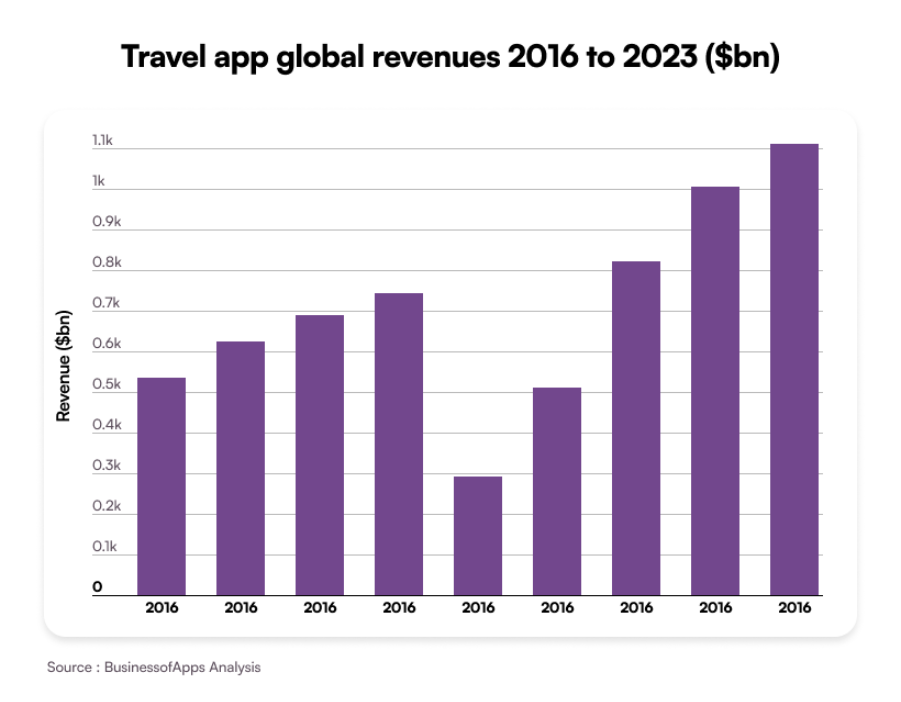
Consequently, growth-driven travel apps are on the rise, with market volume projected to reach $2.27 billion by 2029. Meaning, as this industry is getting competitive, it is also providing businesses with lucrative opportunities to capitalize. You can get this idea from the global revenue generated by travel apps every year.  

However, with many popular apps like Airbnb, Booking.com, and Trivago already existing, making a place in the market presents a lot of challenges. Which takes us to the imperative step of travel app development, i.e., planning. Be it planning of technologies, priority features, revenue model, or most importantly, travel app development cost, following the right strategy path is highly crucial. 

How Much Does Travel App Development Cost? 

For estimating the average cost to develop a travel app, we have divided app as per 3 level of complexities: 

  • Basic / MVP 
  • Mid-level / feature-rich 
  • Advanced / high-end enterprise 

Each tier differs in feature-set, platform coverage, integrations, and backend scale. All of this drive the budget. 

Below is a summary of typical cost ranges, followed by guidance on how to align your budget with your business goals. 

Complexity Tier Typical Features & Scope Estimated Cost Range 
Basic / MVP Single platform (iOS or Android) Core booking/search/navigation features Simple UI/UX, minimal integrations. $30,000 – $50,000 
Mid-Level / Feature-Rich Both platforms (iOS & Android) Moderate custom UI/UX, booking + payments + maps + reviews 3rd-party API integrations, some scalability built in $50,000 – $120,000 
Advanced / Enterprise Full multi-platform support Advanced features (AI recommendations, AR/VR, loyalty programmes, offline mode, high user volumes) Complex backend, global scale  $120,000 – $300,000+ 

Factors Influencing Travel App Development Cost (Detailed) 

Even when two apps share similar features, their costs can differ dramatically. That’s because development cost is shaped not only by what you build but also how, where, and for whom you build it. 

Below, we have categorized the six primary cost determinants that every business should evaluate before finalizing the budget. 

Team Location & Hourly Rates (In-House vs Outsourcing / Local vs Global) 

The development team’s location remains one of the biggest cost levers. 

Region / Country Average Hourly Rate (Outsourcing Company) 
North America  $120 – $200/hr 
Western Europe  $90 – $160/hr 
Eastern Europe  $45 – $80/hr 
Middle East  $60 – $100/hr 
India / South Asia  $25 – $50/hr 
Southeast Asia  $30 – $55/hr 
Latin America  $40 – $75/hr 
Australia / New Zealand $100 – $150/hr 
Africa  $25 – $45/hr 

But selecting an app development company does not solely depend on the budgeted hourly rate, but also value per hour. 

  • In-house teams: More control, cultural alignment, direct collaboration, but high overhead (salaries, infrastructure, benefits). 
  • Outsourced teams: Lower cost, flexible contracts, wide talent pool, but require strong project governance. 
  • Hybrid model: Product owner & architects in-house, execution offshore—a common enterprise strategy balancing cost and control. 

Tip: For an enterprise-grade travel app, a hybrid approach reduces overall spend by up to 30% while maintaining delivery velocity. 

Technology Stack (Native vs Cross-Platform vs Hybrid) 

Your tech stack choice decides both the initial travel app development cost and long-term maintenance. 

Stack Type Key Description Common Tools & Frameworks Cost Implications 
Native Apps Built separately for each platform (iOS & Android) for best performance, full hardware access, and optimal UX. iOS: Swift, Objective-C, Xcode Android: Kotlin, Java, Android Studio Backend: Node.js, Django, Laravel, Firebase – Higher upfront cost (2 codebases) – Longer development cycle – Requires separate maintenance for iOS/Android 
Cross-Platform Apps Single codebase runs on both iOS & Android with native-like UI performance. Frameworks: Flutter, React Native, Xamarin, Ionic Capacitor Backend: Firebase, AWS Amplify, Express.js UI Kits: Material Design, Cupertino Widgets – May need native bridging for advanced features (AR, offline maps) – Slightly higher long-term maintenance for complex apps 
Hybrid Apps Web application embedded in native shell; uses web technologies (HTML, CSS, JS). Frameworks: Ionic, Apache Cordova, Framework7 UI Libraries: Bootstrap, Onsen UI Backend: REST APIs, GraphQL – Limited performance & offline capability – Restricted access to native APIs – Poor scalability for enterprise use 
Backend Stack (Server-Side) Manages bookings, payments, data sync, user management, and APIs. Languages: Node.js, Python, Java, Go Frameworks: Express.js, Spring Boot, Django, FastAPI Databases: PostgreSQL, MongoDB, MySQL, Redis Cloud Services: AWS, Google Cloud, Azure, DigitalOcean – Requires scalable architecture & DevOps support – Cloud costs scale with usage (pay-per-API, server uptime) 
Frontend (Web Interface) Optional web portal or admin dashboard for operators and agents. Frameworks: React.js, Angular, Vue.js Libraries: Redux, TailwindCSS, Chart.js  

Tip: For MVPs, cross-platform gives optimal ROI; for global roll-outs, native ensures durability and security. 

Backend Architecture & Integrations 

The travel industry runs on integrations. Your app will likely rely on technologies, such as: 

  • Global Distribution Systems (GDS) 
  • Online Travel Agency APIs 
  • Payment Gateways 
  • Real-time Maps 
  • Data-driven Analytics 
  • Push Notifications 

Each adds not only development effort but also licensing and compliance overhead. 

  • Simple backend: $10K–$25K (basic booking, search, payments). 
  • Complex backend with GDS/OTA, real-time inventory, personalization: $50K–$100K+. 

UI/UX Complexity 

A travel app’s usability directly impacts retention. A minimal UI costs less, but advanced experiences like interactive maps, smart itinerary transitions, or dynamic filtering demand skilled design and animation teams. 

UI/UX Level Description Added Cost Impact 
Basic Template layouts Standard navigation Low 
Moderate Custom icons Brand colors Simple animations +15–25% 
Advanced Motion design 3D transitions Real-time map layers +40%+ 

Tip: Do not cut corners on UX as every 1-second delay in search/booking flow can drop conversion by 7–10%. Read our ultimate guide to effective UI/UX design to know more about interactive and aesthetically pleasing UI/UX design. 

Compliance, Data Privacy & Localization 

As soon as your app handles personal data, payments, and travel bookings, compliance becomes a cost center. 

Data laws GDPR CCPA Any other local data privacy laws 
Payment compliance PCI-DSS 3D Secure protocol 
Localization Multi-currency conversion Date formats Timezone adjustments Multi-language support 

Note: Each additional market or region adds roughly 10–15% to localization and compliance costs. Planning this from day 1 avoids expensive post-launch fixes. 

Maintenance & Updates 

After launch, ongoing maintenance ensures stability, compliance, and user satisfaction. Annual maintenance usually accounts for 15–25% of the original build cost, but can rise to 30–40% for enterprise-scale travel apps with heavy integrations. 

It covers: 

  • OS updates (iOS/Android releases) 
  • Third-party API version upgrades 
  • Server and hosting scale-ups 
  • Bug fixes and performance tuning 
  • Adding new features based on user feedback 

Tip: Treat maintenance as a long-term investment. Budget a multi-year Total Cost of Ownership (TCO) rather than a one-time build cost. 

Core Features & Modules for Travel App Development (and their Cost Impact) 

Building a travel app means balancing user expectations, business goals, and budget realities. Every feature you add multiplies the technical complexity and, therefore, the travel mobile app development cost. 

Let’s break down the core and advanced features into three groups with clarity on functional scope and cost impact: 

  • Traveler-facing 
  • Agent/Partner-facing 
  • Admin Panel modules 

Travel App Development Cost as Per Traveler-Facing Features 

Feature Functional Scope Cost Impact Driver Estimated Cost Range 
User Registration & Profile Sign-up via email, social, or Google/Apple ID Manage itineraries Saved preferences Authentication logic Database setup Privacy compliance (GDPR, data encryption) $2,000 – $5,000 
Search & Filters (Flights/Hotels/Activities) Intelligent search across multiple APIs with price, rating, and location filters. Integration with APIs (Skyscanner, Expedia, Amadeus) Dynamic query optimization $6,000 – $12,000 
Booking Engine Reservation Seat selection Date picker Price comparison Confirmation emails Payment integration Inventory sync Cancellation flow $10,000 – $20,000 
Secure Payment Gateway Credit/debit Digital Wallet PayPal Stripe Compliance (PCI-DSS) Currency conversion Refund policies. $4,000 – $8,000 
Geolocation & Map Integration Nearby attractions Hotels Route tracking Location-based offers. Google Maps API Caching Offline access Map optimization $3,000 – $7,000 
Reviews & Ratings Traveler-generated content Moderation system Star ratings Real-time sync Anti-spam Moderation UI $2,000 – $4,000 
Push Notifications & Alerts Flight updates Offers Itinerary reminders Check-in notifications Cloud messaging setup (FCM, APNs) Personalization logic $2,000 – $5,000 
Wishlist & History Save favorite destinations Rebook previous trips User session management Data caching Cloud storage $1,500 – $3,000 

Travel App Development Cost as Per Agent/Partner-Facing Features 

Feature Functional Scope Cost Impact Driver Estimated Cost Range 
Inventory Management Manage flight seats Room availability Activity slots Cancellations Complex data syncing between GDS/OTAs Multi-vendor logic $8,000 – $15,000 
Dynamic Pricing & Commission Rules Automated pricing Agent commissions Seasonal offers Algorithm design Dashboard integration Business logic $4,000 – $10,000 
Booking Management Dashboard Real-time tracking Rescheduling Refund status Invoice generation Data consistency Backend logic Admin integration $5,000 – $10,000 
Partner Portal Access Secure login Document upload KYC verification Multi-role authentication Verification APIs Access control $3,000 – $6,000 
Analytics & Reports Performance insights for: Sales Inventory Revenue Cancellations Data visualization Export tools (PDF, Excel) Charts $3,000 – $8,000 

Travel App Development Cost as Per Admin Panel Features 

Feature Functional Scope Cost Impact Driver Estimated Cost Range 
User & Role Management Add/remove users Assign permissions Control access Role-based access control (RBAC) Database synchronization $2,000 – $5,000 
Content Management (CMS) Update banners Blogs Offers Static pages WYSIWYG editor Media management Version control. $2,000 – $4,000 
Payment & Refund Control Track transactions Initiate refunds Handle disputes Payment logs Financial API Integration Data audit trails $4,000 – $8,000 
Performance Analytics Dashboard KPIs Retention rate Revenue trends Real-time data visualization Integrating BI tools API calls Caching mechanisms $6,000 – $12,000 
Customer Support Module Chat interface Complaint tracking Ticket resolution CRM integration (Zendesk, Freshdesk) Chat widget setup $3,000 – $6,000 

Timeline and Associated Cost for Travel App Development 

Time is just as critical as budget for determining the travel mobile app development cost. For travel businesses, getting an app to market before the next peak travel season can make the difference between early adoption and missed opportunity. 

Below is a breakdown of how long each development phase typically takes and how it aligns with overall cost. 

Discovery and Planning 

The first step of travel app development is gathering all the requirements carefully, while also analyzing competitors as well as the primary objective. In this phase itself, you get to decide feature prioritization, tech stack selection, and project roadmap. Once you have solid planning in place, you can ensure your app can be developed within the decided budget. 

  • Estimated Duration: 2-4 weeks 
  • Approx. Cost Contribution: ~10% of the overall budget 

UI/UX Design 

In this phase, app designers will design wireframes, app prototypes, and define user flows along with project managers and other stakeholders. The visual design helps developers get a look at how the app will look on respective mobile screens. This further streamlines the travel app development process and contributes to the cost, too. 

  • Estimated Duration: 3-5 weeks 
  • Approx. Cost Contribution: ~15% of the overall budget 

Development (Frontend + Backend) 

Next, your app developers will take the steps for core feature coding and API & payment gateway integration. This phase also includes database setup and microservices architecture that ensure smooth data flow and the process of the travel application. 

  • Estimated Duration: 8-14 weeks 
  • Approx. Cost Contribution: ~45–50% of the overall budget 

Testing & QA 

For a successful travel app development, it should be thoroughly tested before final deployment with manual + automated testing. The QA process should give emphases on bug resolution, performance checks, and security validation. 

  • Estimated Duration: 3-5 weeks 
  • Approx. Cost Contribution: ~15% of the overall budget 

Deployment & Launch 

The smooth execution of the deployment phase is essential to take your mobile to the target audience. The key activities of this phase that add to the travel app development cost includes: 

  • App Store submission 
  • Hosting setup 
  • DevOps pipeline configuration 
  • Monitoring tools 

Here’s the duration and estimated cost of this phase: 

  • Estimated Duration: 1-2 weeks 
  • Approx. Cost Contribution: ~5% of the overall budget 

Post-Launch Maintenance (Ongoing) 

As a travel business owner, your work does not end with just app development. Continuous updates, version control, performance monitoring, bug patches, and feature rollouts are needed to keep the app up and running.  

  • Estimated Duration: Continuous 
  • Approx. Cost Contribution: ~10–15% of the overall budget annually 

Travel App Development Cost‐Optimization Strategies 

Cost-efficiency in travel app development is built through structured decisions that align technology, design, and business goals. Below are six strategies that help control costs while maintaining quality and scalability. 

Build an MVP First 

Launch a Minimum Viable Product (MVP) with the core journey, including search, book, pay, confirm. 

An MVP approach: 

  • Lowers upfront cost by 30–40%. 
  • Speeds up time-to-market. 
  • Validates product-market fit before large-scale investment. 

Once usage data starts coming in, add features that improve retention with reviews, analytics, or personalized recommendations. Build only what your audience proves they need. 

Use Cross-Platform Frameworks Wisely 

Frameworks like Flutter and React Native let you deploy on both iOS and Android from a single codebase. They shorten release cycles and reduce testing effort. 

Use them for general user flows, but switch to native development for performance-heavy areas like AR maps or live navigation. This balance keeps costs predictable while preserving quality. Compare languages like Flutter vs Kotlin to find the right fit for your travel app development.  

Rely on Proven APIs and Platforms 

Most of what powers a travel app already exists. Integrate APIs from trusted providers for bookings, payments, and maps. 

It’s faster and more stable than building custom systems. The small recurring API fees cost less than maintaining proprietary infrastructure. A major factor when calculating the total cost to develop a travel app. 

Design with a Modular Architecture 

Build the app in independent layers: booking, payments, analytics, notifications. Each can evolve or scale without rewriting the rest. 

A modular structure: 

  • Cuts long-term maintenance cost. 
  • Supports continuous updates. 
  • Limits downtime during new releases. 

It’s the simplest way to future-proof development without paying twice for scalability. 

Outsource Non-Core Modules Strategically 

Outsource specialized work like testing, UI builds, or documentation strategically to reliable offshore partners. 

This hybrid approach can save 25–40% while maintaining speed and control. Set clear deliverables, communication windows, and review cycles to prevent coordination loss. 

Invest Early in Analytics and Feedback 

Track user behavior from the first release. Integrate tools like Mixpanel, Firebase Analytics, or Amplitude to monitor feature usage and drop-off points. 

Data helps you: 

  • Identify where users convert or abandon. 
  • Remove low-value features. 
  • Plan updates based on evidence, not assumption. 

Early analytics turns guesswork into measurable strategy. The most sustainable form of cost optimization.

App Scaling: From Startup Travel App to Enterprise Platform 

For a travel app to become enterprise-grade requires steady releases, stronger infrastructure, and smarter monetization. Each stage adds new capabilities and new costs. Planning for that evolution early keeps scaling predictable instead of reactive. 

The Foundation Phase: Building for Core Functionality 

This is where most startups begin. The focus is usability, not expansion. 

The app covers only essential journeys: search, booking, and payments. Infrastructure is minimal with a single cloud instance, shared databases, and lean analytics. 

Key Priorities: 

  • Clean architecture for easy upgrades. 
  • Keep APIs modular for future integrations. 
  • Document every feature and dependency. 

Cost Behavior: 

  • Most of the budget (70-80%) goes into development. 
  • Maintenance costs remain low, about 10-15% of the build per year for updates and small fixes. 

The Growth Phase: Scaling Infrastructure and Experience 

Once adoption grows, the focus shifts to scale and reliability. Users expect faster load times, personalized recommendations, and multi-device continuity. 

Key Additions: 

  • Server Upgrades 
  • Load Balancing 
  • New Features 
  • Analytics Expansion 

Cost Behavior: 

  • Infrastructure and monitoring add 20-25% to annual operational cost. 
  • Feature expansion raises maintenance to 20-30% of original build cost. 
  • Bug fixes and OS updates become ongoing expenses. 

The Enterprise Phase: Scaling Operations and Monetization 

At enterprise scale, the app becomes a complete digital ecosystem. You manage data, user behavior, revenue models, and multi-market compliance. 

Key Developments: 

  • Microservices Architecture: Modules for booking, payments, analytics, and CRM run independently for resilience. 
  • AI and Automation: Personalized trip suggestions, predictive pricing, smart notifications. 
  • Security and Compliance: PCI-DSS, GDPR, and multi-currency regulations. 
  • Data Governance: Clear ownership, retention, and auditing policies. 

Cost Behavior: 

  • Maintenance and infrastructure can rise to 35-40% of total annual operating cost. 
  • Cloud expenses scale with user base and API usage. 
  • Dedicated QA and support teams become ongoing line items. 

Monetization Models of Travel Apps That Support Growth 

A scalable app needs scalable revenue. Monetization should grow alongside user volume and product maturity. 

Monetization Model How It Works When to Introduce 
Commission-Based Earn margin per booking or referral. Early stage (post-MVP). 
Subscription / Premium Plans Offer ad-free experiences, exclusive deals, or concierge support. Growth stage once retention stabilizes. 
Partnership Integrations Revenue sharing with hotels, airlines, or activity providers. Growth to enterprise transition. 
Advertising & Sponsored Listings Promote travel brands within the app. After steady daily active users (DAU). 
Dynamic Pricing & Loyalty Use AI to adjust pricing and reward frequent users. Enterprise phase, data maturity required. 

Guiding Principle: Monetization should evolve with user trust. When you push revenue models too early and you lose adoption. And if you delay it too long, you miss compounding growth. 

Choosing the Right Partner for Travel App Development 

Selecting the right travel and hospitality software services determines how your app drives business transformation. The right tech partner brings more than development skills. They bring industry experience, system integration expertise, and a long-term scalability vision that supports your growth. 

Questions to Ask Before You Commit 

  • What similar apps have you built in travel, mobility, or logistics? 
  • How do you ensure real-time performance across multiple APIs? 
  • Can you show examples of system migrations or app revamps? 
  • What’s your approach to scalability testing before launch? 
  • How do you handle SLAs for uptime, bug fixes, and cloud performance? 

Why Businesses Trust Galaxy Weblinks as Tech Partner? 

Over the years, we have designed and modernized multiple enterprise-grade applications, including AI-powered tools, cross-platform apps, and legacy-to-cloud migrations that keep businesses aligned with user demand. 

For instance, look at the case of our developed transportation management software that empowers organizations to optimize their entire transportation ecosystem, from scheduling and dispatch to driver management and performance analysis. The platform unified operations through intelligent automation and modular dashboards, reducing manual overhead and improving fleet visibility for large-scale logistics and travel operations. 

Our approach combines: 

  • Modern architecture with microservices for scalability. 
  • AI-based analytics for real-time decision-making. 
  • Continuous delivery pipelines for faster releases and updates. 

This hands-on experience across travel, mobility, and logistics ecosystems allows us to apply the same scalability principles to every travel app project we take on. 

Want to know how we can contribute to your travel app development journey? Contact us today and find out. 

Conclusion: Understanding the Total Travel App Development Cost 

The total cost to develop a travel app depends on what you want it to achieve: 

  • A lean MVP that validates an idea 
  • A global platform that scales across devices and regions. 

There’s no single figure that applies to every business, but there is a pattern. 

A basic travel app with standard features typically costs between $50,000 and $90,000, whereas a mid-level app with multiple API integrations and analytics dashboards ranges from $90,000 to $150,000.  

On the other hand, an enterprise-grade travel platform can reach anywhere from $150,000 to $300,000 or more, depending on integrations, infrastructure, and performance goals.  

The true investment, however, goes beyond development. Maintenance, feature rollouts, server scaling, and security compliance can add 15–30% annually to ensure performance and uptime. 

FAQs 

1. Can I build a travel app on a budget? 

Yes. If you start lean and scale smart. 
Begin with a Minimum Viable Product (MVP) that focuses on core features like search, booking, and payments. 
Use cross-platform frameworks such as Flutter or React Native to reduce cost and timeline, and integrate trusted third-party APIs instead of building every system from scratch. 
Once user traction grows, reinvest in advanced capabilities like personalization, loyalty programs, or in-app analytics. 

2. What should I not cut costs on? 

  • Security: Payment and user data protection must meet PCI-DSS and GDPR standards. 
  • Architecture: A scalable, modular backend prevents expensive rebuilds later. 
  • User Experience (UX): A clean, fast interface directly impacts conversions. 
  • Testing: Skipping QA often costs more in rework and reputation loss than it saves in budget. 

3. How long will travel app development take? 

Time to develop a travel app depends on complexity. More integrations, platforms, and compliance requirements means longer build. 

  • MVP: 12-16 weeks  
  • Mid-Level App: 20-28 weeks  
  • Enterprise Platform: 32-48 weeks 

4. What is the travel app maintenance cost? 

Post-launch maintenance typically accounts for 15-30% of the original development cost per year. 
This includes: 

  • Bug fixes and OS updates 
  • API version upgrades 
  • Server optimization and scaling 
  • New feature releases based on user feedback 

Ongoing maintenance keeps the app compliant, fast, and competitive, turning it from a one-time product into a long-term business asset. 

Fintech App Development Cost: A Detailed Guide

The fintech market is booming at an unprecedented rate, and by 2033, its global market size will reach $1583.05 billion. Quite impressive, right? Now, as financial institutions continue to grow, understanding the overall cost to develop a fintech app becomes imperative. 

But the truth is, there is no definite answer to the most asked question: How much does Fintech app development cost? There are numerous factors affecting the cost to build a fintech app, like the complexity of the app, UI/UX design, the developer’s location, and so on.  

On average, the cost of building a fintech app ranges from $30,000 to $300,000 (maximum), and remember, the price will rise as you wish to include advanced features. 

This blog breaks down the real cost drivers, hidden expenses, must-have features, budgeting strategies, and ROI insights. By going through this guide, you can plan your fintech app development journey wisely. So, stay tuned till the end for some useful insights:

Key Factors Affecting Fintech App Development Cost

Understanding the exact cost of fintech mobile app development depends on a wide range of factors that include:

  1. App Complexity

Your fintech app’s complexity level is probably the biggest factor that influences the overall cost. A simple app that has only a few features (like user registration, transaction history, and payment integration) will be significantly cheaper compared to the advanced apps. 

Essentially, the development time and cost will be increased to the extent of the new features, integrations, and functionalities you add. 

  1. Intuitive App UI/UX Design

Trust is at the core of the design in fintech. A straightforward, self-explanatory interface makes the users comfortable with handling the financial features on their own. But getting to a smooth experience demands skilled designers, interactive prototypes, and several iterations.

Hence, it contributes to the total cost. Putting money into a good UI/UX design is a way to make the brand alive with higher engagement, user retention, and long-term value. 

  1. Developer’s Location

The location of your development team will have a major impact on the cost. Generally, developers in North America or Western Europe tend to have higher hourly rates than those in Asia or Eastern Europe. 

Still, the place of a team shouldn’t be the only factor weighing in your decision; the team’s experience, their knowledge of fintech compliance, and communication quality also count a lot for the right team choice.

  1. Tools and Technologies Used

The technology stack supporting your app, such as frameworks, APIs, cloud platforms, and third-party integrations, is one of the main factors that determine the costs. 

The use of cutting-edge technologies like blockchain, AI-powered analytics, or biometric authentication may raise the costs substantially. However, they also improve the security and the overall performance. 

  1. Post-Launch Maintenance

Developing a mobile app is not just about launching it. Timely updates, bug fixes, performance tuning, and feature enhancements are necessary to ensure that your fintech app remains safe and attractive to users. 

Setting aside some of your money (generally about 15–20% of the total development cost) for continuous maintenance and support is a smart decision. 

Types of Fintech Apps and Their Average Cost

The type of fintech app you choose, whether it’s a digital wallet, trading platform, or lending app, directly impacts your project budget. Each app type has different complexity levels, security needs, and feature demands, which shape the overall development cost. 

App TypeEstimated Cost (USD)
Digital Wallet / Payments$50,000 – $70,000
Lending / Microfinance$60,000 – $100,000
Banking / Neobank Apps$90,000 – $150,000+
Wealth / Investment Platforms$90,000 – $160,000
Insurance / Insurtech Apps$80,000 – $150,000

Hidden Fintech App Development Cost You Must Pay Attention To

Fintech app development cost includes more than just coding and designing; from licensing fees to infrastructure compliance, which business owners often overlook, but in reality, they shouldn’t. 

Here is the list of 5 key aspects of hidden costs that come along with the overall cost to develop a fintech app.

Hidden CostWhy It Matters
Licensing FeesUsing​‍​‌‍​‍‌​‍​‌‍​‍‌ banking APIs, payment processors, and implementing other integrations requires money. 
Security CertificationsBesides that, compliance expenses are added by PCI DSS, SOC 2, and ISO audits. 
Infrastructure ScalingCosts of cloud auto-scaling are getting higher as your user base and data volume increase. 
Maintenance & MonitoringMaintenance is usually around 15–20% of the initial development cost. 
Feature UpgradesBy adding features such as crypto wallets or robo-advisors, the expenses will go up after the ​‍​‌‍​‍‌​‍​‌‍​‍‌launch.

Tips and Tricks to Reduce the Fintech App Development Cost

The​‍​‌‍​‍‌​‍​‌‍​‍‌ price of building a FinTech app depends on a number of factors and the method used. If you put in place a procedure that is well-coordinated and efficiently handled, you will be able to alleviate the difficulties in the development and thus lower the total cost of the FinTech app ​‍​‌‍​‍‌​‍​‌‍​‍‌development.

  1. Prioritize App Features

The​‍​‌‍​‍‌​‍​‌‍​‍‌ first thing you should do when you are developing a FinTech app is to figure out which features are necessary and which can be left out. By simplifying the functionalities of the app, you can lower the costs of app development as it takes less time and is less labour-intensive. 

Furthermore, you will be able to add sophisticated features to your app at the next level of business growth. This way, you will be able to handle the development cost of a banking app in a more efficient ​‍​‌‍​‍‌​‍​‌‍​‍‌way.

  1. Focus on MVP Development

MVP development is definitely a good way to test and confirm your app concept in the market while getting constructive feedback from users. On top of that, it is also possible to save a large portion of the development costs through this process. 

By using the MVP strategy to release your app, you get the opportunity to evaluate its success and viability in the market. It is a great way to enhance your app’s features by relying on the actual data and user ​‍​‌‍​‍‌​‍​‌‍​‍‌feedback.

  1. Choose the Framework Wisely

Another important tip to keep in mind when building a fintech app is picking the right technology. You can consider choosing technologies, like React Native or Flutter, which use a single codebase that works on iOS and Android. 

Leverage the capabilities of ready-made components for functionalities, like payment gateways, identity verification, etc. Additionally, use cloud-based infrastructure, like AWS, Azure, or Google Cloud. It reduces upfront hardware investment and offers scalable pricing models. 

  1. Strategic Team Collaboration

By​‍​‌‍​‍‌​‍​‌‍​‍‌ delegating your work to a trusted FinTech mobile app development firm, you can team up with experts who have a deep knowledge of the subject. Such companies have teams of experienced developers who will do your work properly and at a lower price. 

Consequently, your program will be able to utilize systematic governance and open dialogue during its total period of evolution. Being able to choose from a large number of companies, you can find one that suits your financial ​‍​‌‍​‍‌​‍​‌‍​‍‌needs. 

  1. Adopt Agile Development Process

Iterative​‍​‌‍​‍‌​‍​‌‍​‍‌ builds are less wasteful, faster in delivering, and cheaper in terms of rework. By using Agile methods, your team can be very flexible with user feedback, take care of bugs while the work is going on, and make sure that the end product is really what the market ​‍​‌‍​‍‌​‍​‌‍​‍‌requires. 

Top Monetization Models for Your Fintech Mobile App

So,​‍​‌‍​‍‌​‍​‌‍​‍‌ you came up with an app idea and a budget,  but the question remains: how will your fintech app generate money? Here are some of the best monetization models that would not only make your fintech solution profitable but also a sustainable revenue ​‍​‌‍​‍‌​‍​‌‍​‍‌stream.

  1. Subscription Model

This​‍​‌‍​‍‌​‍​‌‍​‍‌ model enables users to keep on paying for premium financial tools or exclusive services by a recurring fee. This is a monthly or yearly payment. It is an ideal model for apps that provide value on a continuous basis, like analytics, portfolio tracking, or lending ​‍​‌‍​‍‌​‍​‌‍​‍‌insights. 

  1. Freemium Model

Want​‍​‌‍​‍‌​‍​‌‍​‍‌ to grab the attention of more users from the start? Just provide the basic features for free and place the advanced functionalities in a paid section. Such a model allows users to familiarize themselves with the value of your app before they make a money-worthy decision, thus increasing conversions ​‍​‌‍​‍‌​‍​‌‍​‍‌gradually. 

  1. In-App Advertising

In-app​‍​‌‍​‍‌​‍​‌‍​‍‌ advertisements are, by far, one of the most efficient methods to monetize an application, particularly when there is a large user base. The main thing that matters here is the equilibrium. Ads should be made relevant and less intrusive so that users remain engaged; thus, you are paid either by the number of impressions or ​‍​‌‍​‍‌​‍​‌‍​‍‌clicks. 

  1. Partnerships and Sponsorships

Collaborations​‍​‌‍​‍‌​‍​‌‍​‍‌ could be a great source of power in fintech. Working together with banks, insurance providers, or financial brands may lead to the creation of new revenue streams. As a result, it enables the company to gain the trust of the users even ​‍​‌‍​‍‌​‍​‌‍​‍‌more. 

  1. In-App Purchases

Give users the freedom to pay for the things they really value. If it is premium analytics, an expert consultation, or a sophisticated investment tool, in-app purchases allow you to turn the engagement into revenue without putting a limit on free ​‍​‌‍​‍‌​‍​‌‍​‍‌users. 

Develop a Fintech Mobile App with Galaxy Weblinks without Breaking the Bank

For​‍​‌‍​‍‌​‍​‌‍​‍‌ each business owner, knowing the actual cost of fintech app development is the initial step that leads to more wise investments. It is a chain where each decision you make, from selecting the appropriate platform and app type to adding necessary features, affects not only your budget but also your app’s ​‍​‌‍​‍‌​‍​‌‍​‍‌success. 

With Galaxy Weblinks, you don’t have to navigate these decisions alone. Our experts are there to guide you at every step and help you build a fintech app that aligns with your vision, market goals, and most importantly, budget. 

So, give us a call and let’s bring your app idea to life!

FAQs

Q. How much does a fintech app development cost?

A. The​‍​‌‍​‍‌​‍​‌‍​‍‌ price of creating a fintech app with an easy payment system varies based on the app’s complexity and the number of features. A basic app with minimum complexity might cost approximately $80,000. To get an estimated quote for your fintech app development, feel free to contact our team.  

Q. How long does it take to build a fintech app?

A. It​‍​‌‍​‍‌​‍​‌‍​‍‌ usually takes 3 to 6 months to develop a standard Minimum Viable Product (MVP) version of a mobile banking app. When more features are added, the time to develop the app can be stretched up to around 9 to 11 months. 

Q. How can startups get a budget-friendly fintech app development?

A. Startup​‍​‌‍​‍‌​‍​‌‍​‍‌ companies can cut down their expenses through an initial MVP launch, the use of reusable components, cloud infrastructure, and collaboration with a skilled fintech mobile app development company that is efficient in mistake ​‍​‌‍​‍‌​‍​‌‍​‍‌management.

How Future Healthcare Technology Is Elevating At-Home Care

Healthcare is no longer limited by hospital walls. The rise of AI-powered monitoring, IoT-based medical devices, and virtual consultations has brought treatment, diagnosis, and prevention right into our homes.

Simply put, how future healthcare technology is elevating at-home care is about turning traditional, reactive care into a proactive, data-driven experience. Patients can now track their vitals in real time, doctors can make informed decisions instantly, and families gain peace of mind through smarter, safer digital systems.

From wearable sensors that predict health issues to AI chatbots that provide instant guidance, these innovations are closing the gap between patients and providers — creating healthcare that’s not only advanced but also deeply human.

Understanding How Future Healthcare Technology Is Elevating At-Home Care

Healthcare has quietly shifted from a place you go to — into something that now comes to you. Over the past few years, this change has accelerated, thanks to breakthroughs in digital connectivity, data analytics, and intelligent health devices.

At-home care used to mean visiting nurses or family support. Today, it’s powered by AI-driven diagnostics, IoT-connected medical devices, and cloud-based health platforms that bring continuous, personalized care to patients — without stepping into a hospital.

The Rise of Home-Based Healthcare

  • The global home healthcare market is projected to surpass $500 billion by 2028, growing rapidly as healthcare systems face cost pressures and aging populations.
  • More than 60% of patients with chronic conditions say they prefer home monitoring over hospital visits.
  • Providers are adopting “hospital-at-home” programs that combine technology and clinical care for faster recovery and better patient satisfaction.

What’s Driving This Transformation

FactorImpact
Aging populationIncreased demand for chronic disease management and non-hospital care
Healthcare cost controlRemote monitoring reduces hospital stays and readmissions
Digital adoptionSmartphones and broadband make remote care accessible
Pandemic influenceAccelerated acceptance of telehealth and at-home treatment
Data intelligenceAI enables real-time decision-making and prevention

The Human Side of Tech-Enabled Home Care

Beyond convenience, this shift is deeply personal.

A patient recovering from surgery can now be monitored remotely by doctors who receive real-time alerts if their vitals change. A senior living alone can get a gentle reminder from an AI assistant to take their medication. And families can rest easy knowing technology is watching over their loved ones, even when they can’t.

That’s the essence of how future healthcare technology is elevating at-home care — bringing together compassion, connectivity, and intelligence to create care that feels both advanced and accessible.

Why the Future of Healthcare Relies on Technology-Driven Home Care

The healthcare industry is facing a pivotal moment. Rising costs, an aging global population, and the demand for continuous, personalized care are forcing providers to rethink the traditional hospital model. This is why the world is seeing a rapid shift toward technology-driven home healthcare — a model that is smarter, more sustainable, and more human.


A Changing Landscape Backed by Data

  • According to McKinsey & Company, up to $265 billion worth of healthcare services could shift from traditional facilities to home-based care by 2025.
  • The World Health Organization (WHO) projects that by 2030, 1 in 6 people globally will be aged 60 or above, significantly increasing the need for long-term home support.
  • Deloitte’s 2024 Global Healthcare Outlook found that digital health adoption among healthcare providers rose by over 60% post-pandemic — with remote patient monitoring (RPM) cited as a top investment area.

These numbers show a clear direction: healthcare is decentralizing. The hospital of the future isn’t a building — it’s a network of connected homes supported by intelligent technologies.

The Core Drivers Behind This Shift

Core DriverWhat’s ChangingReal-World Impact
Cost EfficiencyHospitals spend less on bed occupancy and staffingReduced operational burden and readmissions
Chronic Disease Management70% of healthcare spend goes to chronic illnesses (CDC)Continuous remote monitoring improves outcomes
Patient ExpectationsDigital-native generations expect healthcare on-demandRise in telehealth and virtual consultations
Workforce ShortageGlobal shortage of 10M healthcare workers by 2030 (WHO)Technology bridges the staffing gap
AI and Data IntegrationPredictive analytics enable preventive careShift from reactive to proactive care models

How Technology Makes the Home a New Point of Care

Imagine this:

  • A patient with heart disease wears a connected ECG patch that streams live data to their cardiologist.
  • An AI algorithm analyses trends and sends a preventive alert if irregularities are detected.
  • A secure cloud platform shares updates with caregivers, ensuring transparency and quick response.

This is how future healthcare technology is elevating at-home care — by transforming homes into safe, intelligent health environments.

A Sustainable Future Model

Technology-driven home healthcare isn’t just efficient — it’s sustainable.
By minimizing unnecessary hospitalizations and leveraging data-driven decisions, the system reduces carbon emissions, saves time, and builds resilience.

In short, it’s not just the future of healthcare — it’s the evolution of how we care for one another.

How Future Healthcare Technology Is Elevating At-Home Care Through AI and Predictive Analytics

Artificial Intelligence (AI) has become the beating heart of modern healthcare innovation — and its most meaningful impact is now happening inside our homes. From early disease prediction to medication management and intelligent monitoring, AI is redefining what “care” looks like.

This is how future healthcare technology is elevating at-home care: by turning passive data into proactive action.

Real-Time Intelligence that Saves Lives

AI enables real-time analysis of patient data coming from wearables, home diagnostic devices, and mobile health apps.

  • Predictive analytics help clinicians forecast potential health deterioration before symptoms even appear.
  • AI-driven dashboards track vitals like oxygen levels, blood pressure, and glucose trends — alerting caregivers instantly when values move outside safe limits.
  • Natural language AI tools (like conversational assistants) guide patients with medication reminders or daily wellness check-ins.

According to a PwC Global AI Report, AI applications in healthcare could contribute up to $150 billion annually in savings for the U.S. healthcare economy by 2026, mainly through automation and predictive interventions.


AI in Action — Common Use Cases

Use CaseTechnology InvolvedBenefit
Early Disease DetectionMachine learning algorithmsDetect cardiac, diabetic, or respiratory anomalies early
Personalized TreatmentPredictive analyticsTailors medication and lifestyle advice
Smart DiagnosticsAI image recognitionRemote review of X-rays, ECGs, or scans
Behavioral Health InsightsNLP and sentiment analysisMonitors mood changes and mental health remotely
Virtual Health AssistantsConversational AI & voice botsImproves patient engagement and compliance

Real-World Example

A hospital in the U.S. partnered with an AI analytics provider to track patients with heart failure remotely.

The AI model analyzed vitals and lifestyle inputs, identifying risk factors 10 days before symptoms appeared. The result? A 40% reduction in hospital readmissions, according to Harvard Business Review.

That’s not just smarter care — it’s life-saving foresight.


Galaxy Weblinks Insight

At Galaxy Weblinks, we’ve seen how integrating predictive algorithms with patient-facing apps empowers healthcare organizations to reduce response times and optimize treatment accuracy.
Through AI-powered dashboards and predictive modeling, we help providers see what’s coming — not just what’s already happened.

👉 Explore our AI Development Services

How Future Healthcare Technology Is Elevating At-Home Care with IoT and Remote Patient Monitoring

If AI gives healthcare its “intelligence,” the Internet of Things (IoT) gives it “awareness.”
Through a network of smart medical devices and sensors, doctors can monitor patients continuously — even when they’re miles away.

This seamless exchange of data is transforming the home into an extended care environment, where every heartbeat, breath, and step can tell a story about a patient’s health.

The Scale of IoT in Healthcare

  • The global IoT healthcare market is projected to reach $446 billion by 2028, growing at a CAGR of 16.8% (Statista).
  • A Deloitte study (2024) found that over 60% of U.S. hospitals have implemented at least one form of remote patient monitoring solution.
  • Patients using connected devices reported a 25% improvement in treatment adherence and reduced readmission rates, according to Frost & Sullivan.

These numbers reveal how IoT is not just improving care — it’s redefining how healthcare systems operate.

Common IoT Devices Powering Home Healthcare

Device TypeFunctionBenefit
Smartwatches / Fitness TrackersMonitor heart rate, activity, sleepPreventive care insights
Connected Glucose MonitorsTrack blood sugar in real timeContinuous diabetic management
Digital Stethoscopes & ECG PatchesRecord and transmit heart dataInstant doctor feedback
Wearable OximetersMonitor oxygen levelsVital during respiratory illnesses
Smart Pill DispensersAutomate dosage remindersBoosts medication adherence

A Day in the Life of IoT-Enabled Care

Imagine a patient recovering from heart surgery.
Their wearable ECG patch transmits data every few seconds to a secure cloud platform. An AI model analyzes the data, and when it spots an irregularity, it notifies the cardiologist immediately.
Within minutes, the doctor calls the patient, preventing a potential emergency.

This is how future healthcare technology is elevating at-home care — through real-time visibility, faster intervention, and smarter recovery.

The Integration Challenge

However, IoT isn’t just about collecting data — it’s about making that data usable.
Healthcare organizations face the challenge of integrating IoT device data with Electronic Health Records (EHRs) while maintaining HIPAA compliance and data interoperability.

At Galaxy Weblinks, we design connected health platforms that solve this problem by building secure, interoperable data pipelines — ensuring every data point flows smoothly between patient, device, and provider.

Discover our IoT App Development Services

How Future Healthcare Technology Is Elevating At-Home Care with Telemedicine and Virtual Consultations

In just a few years, telemedicine has gone from a niche service to a mainstream healthcare channel.
It’s one of the clearest examples of how future healthcare technology is elevating at-home care — by connecting patients and doctors instantly, no matter the distance.

With telemedicine, healthcare has finally become location-agnostic — accessible, flexible, and immediate.

The Telehealth Boom — By the Numbers

  • The global telemedicine market is expected to reach $286 billion by 2030, expanding at a CAGR of 12.5% (Grand View Research).
  • During the COVID-19 pandemic, telehealth utilization increased by 38x, according to McKinsey & Company.
  • A Cleveland Clinic study (2023) found that 82% of patients who used telemedicine reported equal or better satisfaction compared to in-person visits.

How Telemedicine Is Transforming At-Home Care

Transformation AreaDescriptionValue to Patients
Virtual ConsultationsLive doctor-patient video calls for diagnosis and treatmentReduced travel & faster care
Hybrid Care ModelsCombination of AI triage + live doctor consultationsShorter wait times
Remote Specialist AccessConnects rural or remote patients to top specialistsImproved healthcare equity
E-Prescriptions & Digital RecordsEnables seamless medication managementSimplifies patient compliance
Post-Discharge Virtual Follow-upsContinuous recovery monitoringLower readmission rates

Real-Life Impact: The Human Connection

For elderly patients or those with mobility challenges, telemedicine offers more than convenience — it restores independence.
A patient in a small town can now consult a city-based cardiologist or therapist through their smartphone.
Families no longer need to take days off or travel long distances for checkups.

And with features like secure video conferencing, digital health records, and AI-powered symptom checkers, the quality of remote care has improved dramatically.

The Next Evolution: Virtual Health Ecosystems

The future of telemedicine isn’t just a one-on-one video call — it’s a connected ecosystem where:

  • Doctors collaborate digitally with labs, pharmacies, and insurers.
  • AI assistants schedule appointments and summarize consultations.
  • Patients access 360° health dashboards to track their journey in real-time.

That’s how technology is reshaping the continuum of care — making it seamless, data-rich, and human-first.

Galaxy Weblinks Perspective

At Galaxy Weblinks, we build custom telehealth platforms that prioritize patient experience, HIPAA compliance, and scalability.
From real-time video infrastructure to AI-powered triage tools, our solutions ensure healthcare organizations deliver care that’s accessible to everyone, everywhere.

How Future Healthcare Technology Is Elevating At-Home Care Using Blockchain and Data Security

In a world where healthcare data moves faster than ever — across apps, devices, and cloud platforms — trust has become just as important as treatment.
That’s why how future healthcare technology is elevating at-home care isn’t only about innovation; it’s also about protection.

With billions of health records being digitized, technologies like Blockchain and Zero Trust Architecture are transforming how sensitive information is stored, shared, and secured.

Why Data Security Matters in At-Home Healthcare

  • According to IBM’s 2024 Cost of a Data Breach Report, healthcare has the highest average data breach cost across all industries — $10.93 million per incident.
  • The U.S. Department of Health and Human Services (HHS) recorded over 500 healthcare data breaches in 2023 alone.
  • Patients are increasingly aware of privacy issues — 84% say they want control over who accesses their health data (Deloitte Insights).

These stats underline a painful truth: without trust, technology adoption stalls.

How Blockchain Reinforces Trust

Blockchain FeatureRole in At-Home HealthcareBenefit
DecentralizationData stored across secure nodesEliminates single point of failure
ImmutabilityEvery transaction is time-stampedPrevents data tampering or fraud
Smart ContractsAutomates patient consent and data sharingBoosts transparency
Audit TrailsTracks who accessed what dataEnhances compliance with HIPAA/GDPR

When integrated into home healthcare platforms, blockchain creates a tamper-proof medical record where every action — from a doctor’s note to a device update — is recorded transparently and securely.

Real-World Example

Estonia, one of the pioneers in digital health, has already deployed blockchain to secure patient health records nationwide.
This ensures complete traceability and zero unauthorized access, setting a global benchmark for digital trust in healthcare (Source: Estonian eHealth Foundation).

The “Zero Trust” Future

Beyond blockchain, the Zero Trust Security Model — which assumes no device or user is automatically trusted — is becoming the new healthcare standard.
It enforces continuous authentication, encryption, and least-privilege access, reducing risks in home-based digital systems.

At Galaxy Weblinks, we implement Zero Trust frameworks and blockchain integrations to help healthcare providers:

  • Secure multi-device data flows
  • Ensure compliance with HIPAA and GDPR
  • Build patient confidence through transparency

In Short

As healthcare becomes more decentralized, data becomes the new heartbeat.
And just like a healthy heart, it must be protected, traceable, and trusted.

That’s how future healthcare technology is elevating at-home care — by ensuring innovation never compromises privacy.

Multi-Stakeholder Impact — Patients, Providers, and Payors

The impact of how future healthcare technology is elevating at-home care goes far beyond patients.
It’s transforming the entire healthcare ecosystem — from how clinicians deliver care to how insurers measure outcomes and technology partners enable innovation.

This shift isn’t just medical; it’s operational, financial, and cultural.

Patients — Personalized, Empowered, and Connected

Technology is giving patients a voice in their own health journeys.

  • 24/7 visibility: Through wearables and health apps, patients can track vitals anytime.
  • Predictive insights: AI algorithms help identify early warning signs of chronic issues.
  • Empowerment: Remote consultations and virtual care remove barriers of geography and mobility.
  • Emotional support: Digital assistants and AI chatbots provide daily motivation and reminders, enhancing mental wellness.

“Patients are no longer passive recipients — they’re active participants in their healthcare.”

Providers — Data-Driven Efficiency and Improved Care Coordination

For healthcare providers, technology reduces workload while improving precision.

  • Remote Monitoring: Doctors can track hundreds of patients simultaneously using IoT dashboards.
  • Predictive Analytics: AI suggests interventions before complications escalate.
  • Workflow Automation: Administrative tasks (like documentation or follow-up scheduling) are automated, freeing up clinician time.
  • Enhanced Communication: Unified platforms connect physicians, nurses, labs, and caregivers seamlessly.

According to a Journal of Medical Internet Research, 72% of clinicians report improved patient outcomes after implementing telemonitoring and AI tools.

Payors — Smarter Reimbursement and Risk Reduction

Insurance providers are increasingly adopting value-based models, where payouts depend on outcomes, not volume.
Technology makes this possible by providing real-time data on patient health progress.

Benefit AreaTechnology InvolvedImpact
Claims AutomationAI + BlockchainFaster, fraud-free claims processing
Outcome MeasurementRPM + Predictive AnalyticsVerifiable patient data supports reimbursements
Risk PredictionMachine Learning ModelsHelps insurers anticipate chronic cases early
Cost OptimizationDigital Health PlatformsReduces hospital stays and repeat procedures

A report by Accenture HealthTech 2024 notes that 63% of payors are investing in AI and analytics to improve claims efficiency and member experience.

Galaxy Weblinks’ Role in the Ecosystem

At Galaxy Weblinks, we collaborate across the healthcare chain —

  • Empowering patients with user-friendly apps,
  • Supporting providers with interoperable AI tools, and
  • Helping payors integrate analytics into decision-making.

Our goal is to create an interconnected digital ecosystem where everyone — from the patient to the payer — benefits from transparency, trust, and technology.

👉 Explore Our Healthcare Case Studies

Key Takeaway

How future healthcare technology is elevating at-home care is not a one-sided innovation — it’s a shared evolution.
Each stakeholder gains a new level of control, visibility, and efficiency that ultimately leads to one universal outcome: better, more equitable healthcare for all.

How Future Healthcare Technology Is Elevating At-Home Care Across Regions

The move toward at-home healthcare isn’t limited to one geography — it’s a global transformation.
While advanced markets like the U.S. and Europe are refining digital healthcare systems for efficiency and scalability, regions like India and the Middle East are rapidly leapfrogging traditional healthcare barriers through mobile innovation and government-backed health digitization.

Together, these diverse regions show one clear pattern — technology is making healthcare borderless, continuous, and personal.


The Global At-Home Healthcare Landscape

RegionFocus AreaMarket InsightSource
United StatesAI & remote patient monitoringThe U.S. home healthcare market surpassed $120 billion in 2023, driven by telehealth and chronic disease management.Grand View Research
EuropeData privacy & digital integrationThe EU Digital Health Strategy promotes interoperable EHR systems and AI-driven home care under GDPR.European Commission eHealth Strategy
IndiaAccessibility & affordabilityThe Ayushman Bharat Digital Mission (ABDM) is building a unified digital health ecosystem; India’s telemedicine market to hit $5.5B by 2025.IAMAI–PwC Report
Middle East (KSA, UAE)Smart hospitals & health digitizationSaudi Vision 2030 and UAE’s Smart Health initiatives aim to digitize 70% of patient interactions by 2030.Saudi Vision 2030 Health Sector Transformation

How These Markets Differ — Yet Converge

  • United States focuses on AI-driven home monitoring, reducing costs and hospital congestion.
  • Europe emphasizes compliance and standardization, ensuring ethical and interoperable data flows.
  • India prioritizes reach and inclusivity, bringing healthcare to remote and rural populations through mobile-first models.
  • The Middle East invests in digital health infrastructure, integrating telemedicine with national health records for large-scale transformation.

Despite these differences, the end goal is identical — accessible, data-secure, and personalized home healthcare.

Real-World Case Highlights

  • In the U.S., hospitals like Mayo Clinic and Kaiser Permanente are expanding hospital-at-home programs that deliver acute care remotely — reducing readmissions by 30%.
  • The UK’s NHS Digital Twin Pilot (2024) uses AI and predictive analytics to personalize at-home recovery plans.
  • India’s eSanjeevani telemedicine platform has already completed over 150 million consultations, proving digital health can scale affordably.
  • In the UAE, the “Doctor for Every Citizen” initiative offers 24/7 virtual consultations in Dubai, integrating directly with EHRs.

Galaxy Weblinks’ Global Experience

At Galaxy Weblinks, we collaborate with healthcare innovators across continents — helping:

  • U.S. and European providers deploy scalable, HIPAA/GDPR-compliant solutions
  • Indian startups design affordable mobile health platforms
  • Middle Eastern health systems modernize through cloud and AI adoption

By understanding these regional nuances, we build digital health solutions that are both globally aligned and locally relevant.

👉 Explore Our Healthcare Industry Solutions

Key Takeaway

Whether it’s AI analytics in Boston, digital twins in London, or telehealth in Bengaluru — the direction is the same.

The world is converging toward care that begins — and thrives — at home.

That’s the true essence of how future healthcare technology is elevating at-home care across regions.

Challenges in How Future Healthcare Technology Is Elevating At-Home Care

While how future healthcare technology is elevating at-home care paints an inspiring vision, the journey isn’t without challenges. 

Healthcare organizations around the world face a complex mix of data, infrastructure, compliance, and adoption hurdles. 

Recognizing and addressing these barriers is the first step toward scaling home-based digital care successfully.

1. Data Privacy and Regulatory Compliance

The more healthcare moves into the home, the more data protection becomes a concern.

  • Sensitive health information flows across apps, wearables, and cloud platforms — increasing exposure points.
  • Compliance with HIPAA (USA), GDPR (Europe), and NDHM guidelines (India) is crucial yet difficult when multiple vendors and devices are involved.
  • According to IBM’s 2024 Data Breach Report, the average breach cost in healthcare is $10.93 million, the highest among all industries.
    Solution Insight:
  • Adopting Zero Trust Architecture, robust encryption, and secure APIs can protect patient data even in distributed systems.

2. Integration with Legacy Systems

Most hospitals still run on outdated IT systems and siloed Electronic Health Records (EHRs).
Integrating new IoT and AI systems into those environments often leads to data duplication and interoperability issues.

ProblemImpactExample Solution
Fragmented health dataDoctors lack a 360° patient viewUse interoperable FHIR (Fast Healthcare Interoperability Resources) standards
Vendor lock-inLimited scalabilityOpt for API-first, cloud-based architectures
Manual workflowsIncreased admin loadAutomate data sync and reporting pipelines

Galaxy Weblinks Approach: We build interoperable digital ecosystems that unify EHRs, IoT, and AI systems into a single source of truth.

3. Low Digital Literacy and Accessibility

Not all patients — especially seniors — are comfortable using smart devices or apps.
A Pew Research Center study found that only 44% of adults aged 65+ feel confident managing digital health tools on their own.

Solution Insight:
Simplified UX design, voice-based navigation, multilingual interfaces, and caregiver support features can drastically improve digital adoption rates.


4. Cost and Infrastructure Constraints

While telemedicine and remote monitoring reduce hospital costs in the long run, the initial investment in IoT devices, AI software, and cybersecurity can be high — particularly for smaller providers.
Infrastructure gaps like unreliable internet or low cloud maturity (especially in rural areas) further delay adoption.

Solution Insight:
Governments and insurers can accelerate adoption through public-private partnerships (PPP) and value-based reimbursement models that reward preventive care.


5. Ethical and AI Governance Concerns

As AI systems begin making health recommendations, bias, transparency, and accountability come under scrutiny.

  • Who is responsible when an AI misdiagnoses?
  • How can algorithms remain fair across gender, ethnicity, and socioeconomic backgrounds?

To build trust, healthcare organizations must ensure:

  • Explainable AI (XAI) models
  • Independent audits for bias
  • Ethical frameworks for decision-making

“AI must support clinicians — not replace them.”

6. Implementation Roadmap — Overcoming the Barriers

StepActionGoal
1. AssessConduct digital readiness & compliance auditIdentify system gaps
2. PlanChoose interoperable & compliant platformsEnable seamless integration
3. BuildDevelop secure cloud infrastructureSupport data scalability
4. TrainEducate clinicians, patients & IT teamsDrive adoption & trust
5. OptimizeMeasure KPIs & refine workflowsSustain long-term ROI

Galaxy Weblinks Perspective

At Galaxy Weblinks, we help healthcare organizations navigate these challenges through:

  • End-to-end compliance consulting (HIPAA/GDPR)
  • Scalable cloud + IoT architecture design
  • UX design tailored for low digital literacy users
  • Continuous AI performance monitoring and bias detection

👉 Explore our Digital Transformation Services

Key Takeaway

Every innovation brings new complexity — but also new opportunity.
By addressing data security, interoperability, and human adoption head-on, healthcare providers can truly unlock how future healthcare technology is elevating at-home care in a sustainable, ethical, and patient-centric way.

How Galaxy Weblinks Is Pioneering Future Healthcare Technology for At-Home Care

At the heart of every healthcare transformation lies one question —
How do we make care more connected, predictive, and personal?

At Galaxy Weblinks, we’ve been answering that question for over a decade by helping healthcare organizations around the world design and deploy technology that brings care directly to the patient’s doorstep.

From AI-driven monitoring to cloud-native health apps, our mission is to enable the future of at-home healthcare — one secure, intelligent, and human-first solution at a time.

Our Core Capabilities

Focus AreaWhat We DeliverOutcome
AI & Predictive AnalyticsMachine learning models that detect early health risksFewer hospital readmissions, improved outcomes
IoT & Remote MonitoringReal-time device connectivity and data dashboardsContinuous patient oversight
Telemedicine PlatformsCustom, HIPAA-compliant virtual consultation appsEnhanced access & patient engagement
Blockchain SecurityImmutable, transparent health data systemsPatient trust & data protection
Healthcare UX DesignAccessible, multilingual, and senior-friendly interfacesHigher adoption & satisfaction

Real-World Impact

  • U.S. Telehealth Network: Galaxy Weblinks built a custom teleconsultation app integrated with wearable data, enabling 5,000+ virtual consultations monthly — improving rural access to specialists by 45%.
  • India’s RPM Initiative: Developed a multilingual IoT-based monitoring platform that reduced critical response times by 32% and helped doctors manage 10x more patients remotely.
  • European Health Startup: Partnered to implement AI-based predictive diagnostics, increasing diagnostic accuracy by 27% while maintaining full GDPR compliance.

These outcomes show our belief: innovation is valuable only when it improves lives.

Our Approach to Healthcare Modernization

  1. Discover – Understand clinical workflows, compliance needs, and user personas.
  2. Design – Build secure, interoperable, and device-agnostic architectures.
  3. Develop – Leverage AI, IoT, and blockchain to create scalable digital health products.
  4. Deploy – Integrate seamlessly with EHR and hospital systems.
  5. Optimize – Monitor, analyze, and enhance performance post-launch.

This proven process ensures our partners can confidently navigate digital transformation with measurable ROI.

Why Healthcare Clients Trust Galaxy Weblinks

  • ✅ HIPAA, GDPR, and HL7 compliance expertise
  • ✅ Proven track record in healthcare AI and data security
  • ✅ 15+ years of digital engineering experience across the U.S., Europe, and Asia
  • ✅ Focus on UX, scalability, and clinical safety

“We don’t just build software — we build healthcare ecosystems that think, learn, and care.”

Let’s Shape the Future of Care

If your organization is looking to build AI-powered, secure, and scalable digital healthcare solutions, Galaxy Weblinks can help.
👉 View Our Healthcare Case Studies

How Future Healthcare Technology Will Continue Elevating At-Home Care

Healthcare is on the edge of its most transformative decade yet.
The rapid pace of innovation — from AI diagnostics to digital twins and home robotics — signals a future where personalized, predictive care will happen not in hospitals, but in homes.

That’s the next evolution of how future healthcare technology is elevating at-home care — shifting from convenience to complete autonomy.

The Next-Gen Technologies Reshaping Home Care

InnovationWhat It MeansFuture Impact
Digital TwinsVirtual replicas of patients built using their health dataSimulates treatment outcomes before real-world application (Gartner, 2024)
AI-Powered Virtual Care CompanionsVoice-based assistants that help with daily health management24/7 personalized guidance for patients and caregivers
Robotics in Home RehabilitationAssistive robots for physical therapy and elderly careSupports aging populations safely and independently
Metaverse-Based CareImmersive virtual environments for therapy, training, and consultationsEnhances patient engagement and medical education
Predictive Population AnalyticsCombining national health data and AI for large-scale predictionHelps prevent outbreaks and chronic disease escalation

Each innovation moves healthcare closer to being preventive, participatory, and personalized — the “3Ps” that define next-generation patient care.

What Experts Predict

  • The World Economic Forum projects that by 2035, over 50% of healthcare interactions will take place virtually or in hybrid formats.
  • According to Deloitte’s 2024 Future of Health Report, AI and robotics will account for one-third of global healthcare investments by 2030.
  • Statista predicts the global Digital Health market will reach $900 billion by 2030, driven largely by home-care technology adoption.

The takeaway?
Home is no longer just a place of comfort — it’s becoming the center of care.

How Providers Can Prepare for This Future

To stay ahead, healthcare organizations must start investing in:

  1. Interoperable, cloud-native systems that connect devices, data, and doctors seamlessly.
  2. AI literacy programs for healthcare professionals.
  3. Patient engagement ecosystems that combine wellness, prevention, and personalization.
  4. Strong ethical governance to ensure AI transparency and fairness.

The providers who act now will lead the next era of healthcare — where outcomes are not measured by treatment delivered, but by crises prevented.

Galaxy Weblinks’ Vision for the Next Decade

At Galaxy Weblinks, we believe the future of healthcare is a partnership between humans and technology — empathetic yet intelligent, automated yet deeply personal.
We’re already collaborating with health systems, startups, and research institutes to bring emerging technologies like AI agents, voice-based care, and digital twin simulations to life.

Benefits of How Future Healthcare Technology Is Elevating At-Home Care

The true power of how future healthcare technology is elevating at-home care lies in its ability to improve lives — not just systems.
From reducing readmissions to improving patient satisfaction, these innovations are making healthcare more accessible, affordable, and humane.

Key Benefits for Patients and Providers

Benefit AreaWhat’s ChangingReal-World Impact
Accessibility & InclusionRemote consultations and IoT devices eliminate location barriersRural and mobility-limited patients can access specialists 24/7
Personalized, Predictive CareAI tailors treatment plans based on continuous dataReduces disease flare-ups and emergency visits
Cost EfficiencyRPM and telemedicine cut hospital overheadsSaves 15–20% on per-patient costs (McKinsey, 2023)
Enhanced Patient EngagementGamified health apps and AI chatbots keep patients involvedBoosts long-term therapy adherence
Improved Clinical OutcomesReal-time monitoring and analyticsReduces hospital readmissions by 38% (Deloitte Health Report 2024)
Data Transparency & TrustBlockchain and secure cloud systemsPatients gain control over their data, building confidence in digital care

Beyond Treatment — Empowerment

Modern healthcare technology doesn’t just treat illness; it empowers individuals to lead healthier lives.

  • Seniors can maintain independence through AI-powered reminders and health alerts.
  • Working professionals can manage chronic conditions from home without disrupting their schedules.
  • Families gain peace of mind knowing care is continuous and connected.

In essence, healthcare becomes not just reactive — but preventive, participatory, and predictive.

The Provider’s Perspective

For healthcare providers, the benefits extend beyond patient satisfaction:

  • Streamlined workflows through automation and cloud integration
  • Reduced burnout by automating repetitive administrative tasks
  • Smarter data insights that support clinical decisions and improve precision
  • New revenue models through subscription-based telehealth or wellness services

As a result, hospitals are transitioning from “treatment centers” to “connected care networks.”

Conclusion

The healthcare revolution is no longer on the horizon — it’s happening inside our homes.
From AI-powered diagnostics to IoT-enabled monitoring and secure digital health records, the way we experience care has fundamentally changed.

Today, how future healthcare technology is elevating at-home care can be seen in every interaction — a remote consultation that saves a hospital trip, a wearable that detects irregular heartbeats, a predictive system that prevents an emergency before it begins.

This transformation represents more than technological progress; it’s the evolution of healthcare itself — from institutional to individual, from reactive to predictive, and from treatment-based to wellness-driven.

FAQs

Q1. How does AI improve at-home healthcare?
AI analyzes data from devices and health records to predict complications early, allowing timely intervention and better outcomes.

Q2. Is at-home healthcare as effective as hospital care?
Yes. According to Harvard Business Review, home-based AI monitoring can cut readmission rates by up to 40% while improving patient satisfaction.

Q3. How does technology make care more affordable?
Telemedicine, automation, and IoT devices reduce physical infrastructure costs, lower staff workload, and enable preventive care — all leading to long-term savings.

Shopify vs WooCommerce: Which Platform is Right for Your Online Store?  

Every eCommerce story begins with a decision. The platform you choose becomes your foundation—your engine for growth, control, and profit. And the debate always boils down to a situation like: Shopify vs WooCommerce.  

On one hand, Shopify is the all-in-one system that handles hosting, security, and performance straight out of the box. So, you build fast and launch faster. As a matter of fact, that simplicity fuels over 6.3 million active stores worldwide.   

WooCommerce takes a different route. It’s a WordPress plugin—open, flexible, and deeply customizable. It powers over a third of global online stores because it bends to your will. You own your data, your design, your infrastructure. But that freedom comes with responsibility. You maintain it. You optimize it. You grow it.  

The contrast is sharp. Shopify is speed and structure. WooCommerce is freedom and control. One prioritizes simplicity; the other rewards technical depth.  

In this guide, we’ll break down both ecommerce platforms on pricing, scalability, customization, real-world usability, and more—to uncover which platform aligns with your business goals. You won’t just find information; you will also get insights to decide between WooCommerce vs Shopify. 

A Quick Comparison Table for Shopify vs WooCommerce 

Before you dive into the technical depth, you need a rapid, honest assessment. This at-a-glance comparison exposes the fundamental trade-offs immediately. Shopify offers simple, fixed subscription pricing and unmatched ease of use, letting you launch a store in hours without code. However, it restricts deep customization.  

WooCommerce is deceptively “free” software; its true cost is variable, tied to hosting and plugins. It demands technical skills and forces you to manage the server. In return, it grants absolute customization freedom, as you own the entire codebase. 

Feature Shopify WooCommerce 
Hosting Included Self-managed 
Ease of Use Beginner-friendly Developer-dependent 
Customization Moderate Unlimited 
Pricing Fixed monthly rates Variable costs 
Support 24/7 reliable support Community + hosting provider 

WooCommerce vs Shopify: Understanding the Fundamentals 

Every ecommerce platform begins with a philosophy. In the case of Shopify vs WooCommerce, that philosophy shapes how you build, launch, and grow an online store. 

Shopify is an all-inclusive solution with a fully hosted SaaS platform, designed for businesses that want speed, not setup. You don’t manage servers or security—Shopify does. The result is simplicity at scale. Its ecosystem powers millions of merchants who want to focus on selling, not maintaining. Shopify’s strength lies in its integrated tools—inventory, payments, marketing—all working from day one. It’s the online store builder that trades customization for convenience.  

WooCommerce takes the opposite approach. It’s an open-source ecommerce plugin built on WordPress. You bring your own hosting, domain, and control. Every pixel, every line of code is yours to modify. It’s favored by developers and brands that want freedom over structure. With 6.6 million active users, WooCommerce dominates the global market share because it lets you create without constraint.  

The trade-off is clear. Shopify delivers convenience and consistency. WooCommerce offers flexibility and ownership. The decision between WooCommerce vs Shopify isn’t technical—it’s strategic. You’re choosing between managed simplicity and limitless control. 

A Full-Fledged Comparison of Shopify and WooCommerce 

A full-fledged comparison of Shopify and WooCommerce goes beyond surface features — it’s about control, convenience, and scalability. Shopify delivers an all-in-one ecosystem built for simplicity and speed.  

WooCommerce offers deep customization for those who want full ownership and flexibility. This section breaks down pricing, performance, design freedom, integrations, and long-term growth potential — so you can decide which platform truly fits your business vision. 

Ease of Use and Setup Process  

Every entrepreneur asks the same question before launching: which is easier, Shopify or WooCommerce? The answer lies in how each platform approaches setup, management, and day-to-day usability.  

Shopify Setup Experience 

  • Shopify is frictionless by design.  
  • Account creation: Enter your email and password. The onboarding wizard begins immediately.  
  • Guided onboarding: A short series of questions helps tailor your store’s setup.  
  • Product management: Adding products is straightforward — the “Products” tab sits second on the sidebar, exactly where you expect it.  
  • Learning curve: Minimal. No coding, no plugins, no configuration files.  
  • Time to launch: Within hours, your store can go live.  
  • Interface: Every screen is purpose-built for ecommerce, clean and predictable.  

WooCommerce Setup Experience 

  • WooCommerce is freedom with effort.  
  • Initial requirements: You start with a hosting plan and a domain.  
  • WordPress installation: WooCommerce runs as a plugin atop WordPress.  
  • Configuration: Shipping, taxes, and payment gateways require manual setup.  
  • Product creation: Modeled after WordPress posts, with more options and detail.  
  • Learning curve: Noticeably steeper — technical familiarity helps.  
  • Time investment: Setup can stretch into days depending on customization.  

Daily Management Comparison 

Shopify’s dashboard is streamlined and ready. WooCommerce offers flexibility but demands management. In the Shopify vs WooCommerce debate, Shopify wins on ease — the faster path for sellers who value launch speed over tinkering. 

Design Flexibility and Customization  

The design of an ecommerce store defines its first impression. In Shopify vs WooCommerce, this is where the contrast is striking — one values simplicity, the other embraces creative control.  

Shopify themes are built for speed and polish. With over 800 professionally designed themes—23 free and the rest ranging from $100 to $500—store owners can launch fast with minimal effort. Every theme is mobile-responsive by default and optimized for conversion. However, deeper customization is limited.  

If you want to build something beyond preset layouts with Shopify, you’ll need to work with its templating language – Liquid. Alternatively, upgrading to higher tier plans also provides more options. Shopify’s AI theme generator, introduced in 2025, simplifies some of this by auto-designing layouts based on brand inputs, but the creative boundaries remain fixed.  

On the other hand, you have almost complete freedom with WooCommerce. It comes with a massive pool of WordPress themes, and many of them are even available for free apart from the premium themes.  

Since it is open source, it can be customized right to its root by manually tweaking with the HTML, CSS, or PHP, or using visual builders like Elementor to customize without writing any code. Additionally, the availability of tens of thousands of plugins makes the WooCommerce designer’s sandbox — malleable, capable, and limitless.  

The contrast is evident. Shopify provides form and velocity. WooCommerce provides flexibility and unlimited creative freedom. When it comes to WooCommerce themes, there are a lot of options, and for Shopify themes, the options are relatively limited. So, in the game of customization, WooCommerce bears an edge over Shopify. 

Scalability and Performance  

Growth might become a hurdle for every ecommerce store when it lacks sufficient ability to scale with your business. In Shopify vs WooCommerce, scalability is not just how well your ecommerce store handles traffic — it’s also about how gracefully a system grows without being overwhelmed by traffic spikes.  

Shopify offers smooth expansion. Since it is a fully hosted platform, its infrastructure, caching, and server optimization are managed to meet your business needs. So, your Shopify ecommerce store can seamlessly handle traffic no matter if you have 100 or 100,000 daily visitors. Shopify’s system automatically adjusts resources to manage traffic surges with zero technical input.  

Apart from this, Shopify Plus, the enterprise-grade solution for ecommerce, can handle large-scale operations, supporting complex workflows, API-heavy integrations, and massive product catalogs. Bonus points: no need for server maintenance, configuration, or downtime management; it’s all automated with flawless scaling for your business.  

WooCommerce takes a different path. Scalability is directly dependent on your hosting environment and the way it’s configured. Yet, WooCommerce can achieve enterprise-grade performance when you have the right hosting and caching configurations.  

But this flexibility has some responsibility. In that case, you will be in charge of managing server load, optimizing databases, and handling updates manually. Your costs will increase as your infrastructure needs grow, and performance tuning also requires technical skills.  

So, the contrast between Shopify and WooCommerce is clear when it comes to scalability. Shopify scales automatically; WooCommerce requires manual efforts. Shopify offers smoother, hands-free scalability for fast-growing brands, while WooCommerce rewards those ready to engineer their own performance. 

Security and Maintenance  

Security defines trust in ecommerce. In Shopify vs WooCommerce, the difference lies in who carries the responsibility.  

Shopify runs on a fully managed security model. Every update, patch, and vulnerability fix is handled automatically. SSL certificates come pre-installed on all stores, and PCI compliance for secure payments is built into the platform. Backups run in the background. There’s no need to worry about plugins or hosting safety — the system simply works. It’s security without supervision.  

WooCommerce, by contrast, puts the control — and the risk — in your hands. It relies on third-party hosting and plugins, each with its own security footprint. You must install SSL, manage updates, and run backups manually. The flexibility is powerful, but it demands vigilance. 

The contrast is clear: Shopify is hands-off and secure by design, while WooCommerce offers freedom with responsibility. 

Payment Processing and Transaction Fees  

Payment processing is the one critical checkout where every purchase journey concludes. Seamless payment processing ensures a successful purchase. And this is where we can consider the Shopify vs WooCommerce payment fees comparison.    

Shopify makes everything easy for you. Its built-in payment processor – Shopify Payments – helps you avoid hefty transaction fees. Besides, this ecommerce platform also supports more than 100 global payment gateways in addition to multi-currency functionality without any extension.  

But this convenience also has a cost — Shopify allows third-party gateways like PayPal or Stripe, there are extra transaction fees on top of the usual credit card rates when using such options. You’re trading simplicity for flexibility.    

Now, WooCommerce leaves all payment controls in your hands. You can seamlessly integrate your WooCommerce store with Stripe, PayPal, and any other payment gateway. It also offers WooPayments, which doesn’t have any platform fees and pays only the gateway’s standard rates. WooCommerce becomes more cost-efficient for businesses that prioritize control and long-term savings. 

Sales Features and Inventory Management  

If we compare Shopify vs WooCommerce for selling, the difference is in the way each of them handles buying cycle and inventory. Shopify is engineered to solve diverse challenges in ecommerce including related to sales and stock management.  

It offers advanced inventory tools, low-stock alerts, multi-channel selling, and an integrated POS system to make the process painless. Such features make it a powerhouse for omnichannel brands. So, it syncs every sale whether online or in-store seamlessly.  

Now considering WooCommerce, it purely focuses on flexibility. You can sell unlimited variable products, customize your checkout flow, and extend functionality with plugins for seamless sales and inventory management. But this also requires technical management, especially when you are using multi-channel selling and inventory automation. 

So, Shopify gives you convenience and WooCommerce offers more flexibility. Here is a quick overview of the comparison between Shopify and WooCommerce based on inventory management and sales features.  

Feature Shopify WooCommerce 
Built-in Sales Tools Comprehensive Plugin-based 
Multi-Channel Selling Native Requires add-ons 
Abandoned Cart Recovery In-built Depends on plugins 
Scalability Enterprise-grade Hosting-dependent 

Support and Assistance 

Customer support defines how smooth your ecommerce journey is when using any of these platforms. Shopify offers reliable support through 24/7 live chat, phone, and email. You also get guided onboarding, and an extensive knowledge base.  

WooCommerce thrives on its community-driven model, where you can get support and assistance from the community forums. Besides, it offers rich documentation to troubleshoot technical issues, but there’s no live or phone assistance like Shopify. 

Which One is the Best for You Shopify or WooCommerce?  

The decision of whether to choose WooCommerce or Shopify boils down to the choice between control and convenience. Shopify excels as an all-in-one, fully managed ecosystem that thrives in speed, stability, and scalability.  

WooCommerce, on the other hand, is built for flexibility and freedom to create deeply customized commerce experiences. So, flexibility outweighs convenience in this case. You should make a decision based on technical skills, business goals, long-term growth plans, and many other factors. 

Choose Shopify if you:  

  • Want to quickly launch an online store without many efforts  
  • Prefer an all-inclusive ecommerce solution without technical setup  
  • Need advanced sales tools and inventory management  
  • Plan to scale rapidly with large product catalogs  
  • Value 24/7 dedicated customer support  
  • Lack in-house development expertise  
  • Want predictable monthly costs and simplicity  

Choose WooCommerce if you:  

  • Already run a WordPress site or content-focused business  
  • Need complete design and functionality customization  
  • Want full ownership and control of your store  
  • Have technical or developer resources  
  • Prefer flexible, gradual cost scaling and no platform lock-in 

In a Nutshell  

There is no universal winner in the Shopify vs WooCommerce debate — only the right fit for your business. Your choice depends entirely on priorities: simplicity or control, speed or flexibility, managed convenience or full ownership. Each platform dominates in different aspects. There are pros and cons of both these platforms, and the right decision depends on which one aligns with your business or requirements.  

Apart from choosing an ecommerce platform, selecting a good ecommerce development company also plays a vital role in developing a robust online store that will meet your business requirements. A good company will carefully analyze your business requirements, challenges, audience, and other aspects to also determine the best-suited ecommerce platform.  

This is where Galaxy Weblinks fits in. As a leading ecommerce development services company, we offer end-to-end services to build a cutting-edge online store for you. From selecting the best tech stack, creating customized themes, to optimizing performance, we help you build a strong ecommerce store with the best features and performance along with security and compliances.  

React out to us and discuss your requirements, so we can provide the most perfect path for success in ecommerce development.  

Frequently Asked Questions 

Which one is cheaper, Shopify vs WooCommerce? 

WooCommerce as a platform is free, but you incur costs related to hosting, customization, SSL, etc. The costs are variable based on your ecommerce store. Shopify is more stable in terms of costs. There is fixed platform costs based on which plan you have chosen. So, WooCommerce can be cheaper in the short term and Shopify might be cheaper in the long term. 

Is Shopify beginner-friendly than WooCommerce? 

Yes, Shopify offers convenient over WooCommerce as it is an all-in-one platform to build an ecommerce store.  

Which platform is more cost-effective for small businesses? 

WooCommerce can be cheaper initially since it’s free and open-source, but costs vary based on hosting and extensions. Shopify has predictable monthly pricing, making it simpler to budget for but potentially more expensive long-term depending on your store size. 

Which is easier to use, Shopify or WooCommerce? 

Shopify is easier to set up and manage, offering a fully hosted solution with built-in tools. WooCommerce provides more flexibility and control but requires more hands-on setup, hosting, and maintenance.