Freelance Brilliance or Bust: What You Must Know Before Bringing a Freelancer On Board

In the modern business landscape, the dynamics of work have undergone a significant shift. Traditional employment models are giving way to a more flexible approach, with companies increasingly turning to freelancers for a variety of reasons. where agility and expertise are prized, the decision of whether to hire a freelancer or collaborate with an agency can be a pivotal one for CEOs and CTOs. 

Since the outbreak of the COVID-19 pandemic, the corporate sphere has witnessed a surge in freelancers. As per the 2022 Global Freelancer Income Report, 32% of respondents noted increased demand for their services post-pandemic, with an additional 45% stating that demand remained steady. So, in this article, we will delve into the considerations CEOs and CTOs should bear in mind when making this pivotal choice, and how agencies can prove to be more beneficial than the Freelancer. Dive in to know!

Why do companies outsource work to freelancers?

Companies outsource work to freelancers for their agility in meeting project deadlines, cost-effectiveness by paying only for required services, flexibility to engage talent as needed, and specialized expertise tailored to specific project requirements. Approximately 300,000 positions are offshored from the United States annually. Below are listed some of the common reasons behind companies opting to outsource work to freelancers and they are:

  • Turnaround Time & Swift Results

One of the prime reasons companies choose to work with freelancers is their agility in delivering results swiftly. Time-sensitive projects demand prompt action, and freelancers excel in this aspect. With no onboarding delays, freelancers can hit the ground running, ensuring that projects progress without unnecessary hitches. Their ability to dive into assignments immediately can often mean the difference between meeting crucial deadlines and falling short.

  • Efficiency in Costs

Cost-effectiveness is a driving factor for many companies opting for freelancers. Employing full-time staff comes with a range of expenses, including salaries, benefits, office space, and training. Freelancers, on the other hand, offer a cost-efficient solution. Businesses can pay for the specific services they require, eliminating the need for long-term commitments and overhead costs. This economic advantage makes freelancers an attractive option, particularly for projects with finite budgets.

  • Adaptable Timelines

The freelance model provides a level of flexibility that is often unmatched by traditional employment arrangements. Companies can engage freelancers for as long as a project demands, without being tied to extended employment contracts. This adaptability is particularly valuable for projects with fluctuating workloads or uncertain durations. Whether it’s a short-term project requiring intense focus or a long-term collaboration spanning months, freelancers provide the necessary flexibility.

  • Specialized Competencies

Freelancers are known for their specialized skill sets. Businesses often seek freelancers who possess the specific competencies needed for a particular project. This targeted expertise ensures that the work is completed efficiently and with a high level of competence. For example, an e-commerce startup seeking a competitive website collaborates with a freelance UI/UX designer. Their tailored expertise in web design ensures swift project initiation, user-centric interfaces, and cost-efficient engagement. This targeted proficiency results in a high-quality, visually appealing website without the overhead of training or hiring full-time staff. 

What Are The Possible Pros Of Hiring A Freelancer?

Freelancers present a magnetic appeal for companies, drawing them into a world of versatile talent. Delve into the facets that make freelancers a compelling choice for businesses seeking expertise.

  • Easy Access to Versatile Talent

Freelancers grant businesses access to a diverse global talent pool. This expansive array of skills is a treasure trove, allowing companies to find the precise expertise they need, regardless of geographical limitations. The digital landscape has transformed the recruitment paradigm, enabling companies to cherry-pick talent from across continents.

  • Swift Engagement: Quick Hiring, Prompt Results

The allure of freelancers lies in their swiftness. Unlike traditional hiring processes, freelancers are readily available to tackle projects on short notice. With no lengthy onboarding, companies can initiate projects promptly, saving valuable time and resources. Freelancers’ agility ensures that businesses can respond effectively to time-sensitive projects and unexpected demands.

  • Platform Plenitude: Vast Choices on Multiple Platforms

The digital age has ushered in a multitude of freelancer platforms like Fiverr, Upwork, and more. These platforms offer a spectrum of professionals spanning various domains. Businesses can meticulously filter and select freelancers based on reviews, ratings, and past work, streamlining the hiring process and fostering confidence in their choices.

  • Cost-Efficiency: Minimizing Overheads and Operational Costs

The freelancer model is inherently cost-effective. Companies bypass the overheads associated with full-time employees – office space, equipment, and benefits. Freelancers operate independently, managing their own overheads, which in turn reduces operational costs for businesses. This streamlined arrangement aligns with a cost-conscious approach, making freelancers an economical choice.

  • Zero Training Costs: Expertise at Your Fingertips

Freelancers bring specialized skills to the table. Unlike in-house hires, freelancers don’t require extensive training, saving companies time and money. Their ability to immediately contribute and execute tasks with precision enhances project efficiency. This ready-made expertise is a significant advantage, especially for short-term or niche projects.

What Are The Major Pitfalls Of Hiring Freelancers?

Unveil the potential challenges that come with hiring freelancers, along with strategies to safeguard business interests.

  1. Real-World Pitfalls: Lessons from the Field

Instances of freelancers ghosting mid-project or delivering subpar work serve as cautionary tales. In a notable case, a freelancer disappeared midway, leaving a marketing campaign in limbo. Another instance involved a developer delivering incomplete code, and stalling a software launch. Such cases highlight the importance of selecting reliable freelancers and setting clear expectations.

  1. Payment Predicaments: A Common Challenge

Payment disputes can arise, impacting project timelines. A freelance writer, for instance, might demand additional compensation for revisions not initially agreed upon. Based on research data from 2020, freelance workers in the United States achieve an average hourly earnings of $20. Setting payment milestones tied to project completion can help mitigate such disputes and incentivize timely work delivery.

  1. Confidentiality Breaches: Safeguarding Sensitive Information

Maintaining confidentiality is crucial. A freelancer accidentally revealing sensitive project details on a public platform is an example of a potential confidentiality breach. To avert this, outline confidentiality agreements within contracts and discuss data security protocols upfront.

  1. The Hidden Costs of Freelancers

While freelancers might seem cost-effective at first glance, hidden costs can accrue over time, tipping the scales in favor of agencies:

  • 1.1. Time Investment:
    Managing freelancers necessitates a significant time investment in terms of vetting, onboarding, and communication. CEOs and CTOs could spend this time on strategic decision-making instead.
  • 1.2. Project Delays:
    Coordinating freelancers can lead to communication gaps and misunderstandings, potentially resulting in project delays. These delays can have ripple effects on other parts of the business.
  • 1.3. Quality Assurance:
    Ensuring consistent quality across various freelancers can be challenging. Investing in quality control mechanisms can add to the overall cost.

What Are Company’s Expectations from Outsourcing Partners?

While there might be a clear surge in freelancing, however, companies hold some expectations from outsourcing partners. Explore the key expectations that companies hold when outsourcing work to external vendors.

  1. Clear Communication: Transparent Collaboration

Companies expect open and transparent communication from their outsourcing partners. Regular updates, progress reports, and prompt responses foster a sense of collaboration and build trust.

  1. Quality Assurance: Delivering Excellence

Delivering high-quality work is paramount. Companies anticipate that their outsourcing partners meet and exceed expectations, ensuring that the final output aligns with their standards.

  1. Timely Delivery: Meeting Deadlines

Timely completion of projects is a fundamental expectation. Outsourcing partners are relied upon to adhere to agreed-upon deadlines, allowing companies to plan effectively.

  1. Flexibility and Adaptability: Responding to Changes

In a dynamic business environment, companies appreciate outsourcing partners who are flexible and can adapt to changing project needs or unexpected developments.

  1. Problem-Solving Skills: Resolving Challenges

Companies look for outsourcing partners with strong problem-solving abilities. The capacity to address issues swiftly and effectively contributes to project success.

  1. Value Addition: Beyond the Expected

Beyond meeting basic requirements, companies value outsourcing partners who bring innovative ideas and suggestions, adding value to projects.

  1. Professionalism and Ethics: Upholding Standards

Professional conduct and ethical practices are essential. Companies expect outsourcing partners to maintain integrity, confidentiality, and ethical behavior.

How Can Choosing Agencies Over Freelancers Help?

Opting for agencies over freelancers can offer significant advantages for businesses. Agencies often provide a diverse range of specialized skills, ensuring comprehensive solutions for multifaceted projects. With a team of professionals, agencies offer reliability, scalability, and consistent project delivery. Discover the compelling advantages of partnering with agencies instead of freelancers for your business needs.

  1. Comprehensive Skill Sets

Agencies bring a range of skills to the table, from design to development and marketing. This comprehensive expertise ensures a holistic approach that addresses multiple project dimensions.

  1. One-stop Shop For Streamlined Collaboration

Collaboration is seamless with agencies, as they house various experts under one roof. This eliminates the need to coordinate with multiple freelancers, saving time and enhancing communication.

  1.  Smooth Progress & Dedicated Project Management

Agencies often offer project management services, guaranteeing organized task coordination, deadline adherence, and progress tracking. This proactive approach minimizes delays and maximizes efficiency.

  1. Growth, Innovative Solutions & Scalability

Agencies possess the necessary resources to handle projects of varying sizes. This flexibility ensures smooth scalability, adapting to changing project demands effortlessly. A study by Harvard Business Review revealed that 82% of businesses that partnered with agencies reported gaining access to innovative solutions that wouldn’t have been possible through a freelancer model. This underlines how agencies foster an environment conducive to creativity and cutting-edge thinking.

  1. Assured Security

Agencies often have established protocols for risk assessment and mitigation. This is particularly crucial for projects involving sensitive data or compliance requirements.

  1. Dependable Outcomes With Consistency & Reliability

Agencies pride themselves on delivering consistent project outcomes. Clients can expect reliability that might be challenging to achieve with freelancers.

  1. Established Accountability Framework

Agencies come with established processes and accountability mechanisms that ensure the timely delivery of projects. The State of Project Management report highlighted that projects managed by agencies are 28% more likely to be completed on time and within budget compared to those managed solely by freelancers.

Navigating Modern Business For Success? — Hire Agencies for Optimal Success!

With the ever changing world of business, the choice between freelancers and agencies emerges as a pivotal consideration. Both options present distinct advantages that cater to project requirements. Freelancers bring agility, cost-efficiency, flexibility, and niche expertise, while agencies offer comprehensive skills, streamlined collaboration, and a reliable framework. Recognizing these unique strengths is essential for informed decision-making.

Looking ahead, the future of effective collaboration and sustainable success leans towards agencies. Their ability to provide diverse skill sets, seamless coordination, scalability, and robust project management aligns well with the dynamic demands of modern businesses. As CEOs and CTOs navigate the complex landscape, partnering with agencies emerges as a strategic move to ensure innovative solutions, consistent outcomes, and efficient growth. Get in touch with our team to learn more about agency partnerships to scale your business.


How To Build An MVP That Helps You Raise Investment For Your Startup Idea

According to Moneyzine report of 2023, 47% of startups eventually fail due to a lack of funding.

These startups struggle to secure funding due to the lack of a compelling business model, insufficient market research, inexperienced team, and an absence of demonstrated traction.

To overcome hurdles and increase chances of success, startups need to effectively strategize their approach for securing investment. This involves accurate forecasting of potential challenges and demonstrating their value to potential investors.

Investors evaluate various aspects when considering a startup, which include the uniqueness and practicality of the solution it provides, market size, growth potential, and industry trends.

The team’s strength and their ability to set their startup apart is key, as is their growth strategy and the technology they leverage. A financially sound business model and clear use of investment funds are also important considerations.

But for tech startups, it’s not just about investing in an idea.

Investors seek proof of a viable market, a robust team, and a scalable business model. A working product that shows the startup’s capabilities is crucial. This is often achieved through MVP development for startup products, and then presented as a Minimum Viable Product (MVP).

While an MVP isn’t directly a selling point, it surely facilitates the process of pinpointing the unique aspects of the product or service. This, in turn, can enhance the startup’s prospects in attracting the required investment. 

Is Your Startup Set for Funding? Indicators of Investment Readiness

When it comes to seeking investment for your startup, timing is crucial. You want to make sure you’re raising and utilizing the funds for growth. So, what does it mean to be ready for investment? 

Let’s explore some key indicators that can help determine if your startup is prepared to seek funding.

  • Clear Business Model: Define how your startup will generate revenue, understand your target customers, and outline your cost structure.
  • Problem-Solution Fit: Validate that there is a real problem to solve and that your solution is appealing to customers.
  • MVP or Prototype: Showcase a minimum viable product or prototype to demonstrate your capability of bringing ideas to life.
  • Initial Traction: Show evidence of market interest and acceptance through user sign-ups, website traffic, or other relevant metrics.
  • Strong Team: Have a committed team with diverse skills necessary for your business’s success.
  • Scalable Growth Plan: Develop a plan for how your startup can grow and articulate how the investment will fuel that growth.
  • Financial Projections: Present a financial forecast that outlines expected income, expenses, and cash flow for the coming years.

By considering these pointers and ensuring your startup meets these readiness indicators, you can position yourself for a successful investment journey. Remember, finding the right investment partner goes beyond the funding itself, as they can provide valuable guidance and support for your startup’s growth.

When Is The Right Time To Seek Investment?

Determining the right time to seek investment for your startup can depend on various factors, including the nature of your business, your stage of development, and your specific funding needs. Here are a few scenarios that often indicate a suitable time to seek investment:

  • Development of a Minimum Viable Product (MVP): 

Having a functional MVP or prototype demonstrates that you have progressed beyond the conceptual stage and can showcase your idea’s potential to investors.

  • Early Traction and Milestones: 

Investors are more likely to be interested in startups that have achieved some level of traction. This can include user sign-ups, positive feedback, initial sales, or partnerships that validate your business model and market potential.

  • Scalability and Growth Potential: 

Investors seek startups that have the potential to scale rapidly and generate significant returns on investment. It is crucial to have a well-defined growth plan and strategy that outlines how the infusion of funds will drive your startup’s expansion.

  • Demonstrable Team Capabilities: 

A strong and capable team is a critical factor in attracting investment. Investors look for teams with relevant expertise, industry knowledge, and the ability to execute the business plan effectively.

  • Financial Preparedness: 

Before seeking investment, ensure you have a clear understanding of your financials, including revenue projections, cost structures, and cash flow management. This demonstrates your financial preparedness and ability to effectively utilize the investment funds.

Remember, seeking investment should align with your business goals and growth plans. It is essential to evaluate your startup’s readiness based on these indicators and seek investment when you have a compelling value proposition, demonstrated market demand, a viable product, and a solid plan for growth.

Here’s an example of a popular startup that mentions how an MVP could have changed its fate.

Argo AI serves as a prime example of a tech startup that managed to secure substantial funding early in its life but ultimately faced significant challenges due to a lack of product-market fit and market validation. Co-founded in 2016 by veterans of Google and Uber automated driving programs, Argo AI sought to build software, hardware, maps, and cloud-support infrastructure to power self-driving vehicles​.

Argo AI
ServiceDevelopment of software, hardware, maps, and cloud-support infrastructure for self-driving vehicles
Problem Couldn’t monetize their technology effectively. Strategic shifts due to new leadership at key backers. Expensive development and implementation of autonomous vehicle technology. Couldn’t secure a sustainable position in an emerging industry. Absence of a product to validate the market and business model.
FundingOver $3.6 billion from Ford and Volkswagen
Market Validation & FitLack of clear business model for autonomous transportation serviceability to bring a successful autonomous vehicle product to market
Technology
Investment in LiDAR imaging technology Despite advantages in LiDAR technology, unable to leverage it effectively for a successful AV product
Financial Performance
Net loss: Posted an $827 million net loss for the third quarter
MVP Approach and Business Model ValidationIt’s possible that an MVP approach could have helped Argo AI better validate its product-market fit and business model. Instead of making massive bets on specific technologies and aiming for a full-fledged autonomous vehicle, a smaller, more focused product offering that targeted a specific customer need or market niche might have helped Argo AI gain the market traction and validation needed to convince investors of its viability. 

This is a powerful illustration of the importance of an MVP when raising investment for a startup, as it offers a way to validate a product idea and business model with real market feedback before committing large amounts of resources.

Putting Investment To Work: How Funds Can Be Utilized

By strategically utilizing the investment, startups can fuel growth, enhance operations, drive marketing initiatives, bolster product development, and strengthen overall business capabilities. Understanding how funds are deployed across different areas is key to maximizing the potential impact of investment and setting the stage for sustainable growth and success.

In the ideal scenario, funds should be infused when your startup is in a position to utilize them effectively across the following key areas:

Product Development & R&D

  • Software and Tools
  • Talent Acquisition
  • Prototyping and Testing
  • Research

Marketing & Customer Acquisition

  • Advertising
  • Public Relations
  • Content Marketing
  • Sales Team

Scaling Operations

  • Physical Expansion
  • Operational Staff
  • Inventory and Supply Chain

Legal & Compliance

  • Legal Counsel
  • Patents and Trademarks
  • Regulatory Compliance

Working Capital

  • Day-to-Day Operations
  • Emergency Buffer
  • Supplier and Vendor Payments

What Are The Investment Decision Criteria?

When investors evaluate a business for potential investment, they consider a number of decision criteria that help them determine the likelihood of the investment generating substantial returns. Investors assess a variety of factors when considering an investment in a startup, particularly when it’s a technology-driven enterprise. 

Here are the key aspects they look for:

  • Speed of Development: 

Investors appreciate teams that can quickly turn an idea into a viable product. The ability to swiftly execute signals a team’s efficiency, dedication, and competence.

  • Financial Prudence: 

Investors want to see effective financial management. They prefer startups that use their funds wisely and can deliver results within a reasonable budget.

  • Focus on Essential Features: 

Investors value startups that understand their target audience’s needs and prioritize features that cater to these needs. A cluttered product with unnecessary features can confuse customers and hamper adoption.

  • Receptiveness to Feedback: 

Startups that are open to constructive criticism and can adapt their product based on user feedback tend to be more successful. Investors seek this adaptability and customer-centric approach.

  • Market Validation: 

Concrete evidence of market demand for a product or service is crucial. Investors need proof that the startup’s offering has the potential for growth and profitability.

  • Customer Base: 

Early traction in terms of a growing customer base is a strong indicator of a startup’s potential. It’s one thing to believe in a product’s potential and another to see customers actually using and benefiting from it.

  • Risk Management: 

Startups that take calculated risks and have plans to mitigate potential downsides are more likely to secure investment. Investors prefer to back ventures that balance ambition with caution.

Now, how can a startup demonstrate these qualities effectively? This is where a Minimum Viable Product (MVP) comes into play. 

One example of a well-known startup that successfully utilized an MVP to secure further funding is Instagram:

When Instagram launched in 2010, it started as a simple MVP—an iPhone app for sharing photos with filters and basic social features. The MVP gained early traction and quickly attracted millions of users. 

The founders used this initial success and user feedback to secure $500,000 in seed funding from venture capitalists, including Andreessen Horowitz. 

The funding helped Instagram scale its operations, enhance the app’s features, and expand its user base. Eventually, Instagram was acquired by Facebook for $1 billion in 2012, showcasing the significant success that stemmed from starting with an MVP.

MVP: Your Secret Weapon for Raising Investment

Investors highly value the market validation that comes with an MVP. By launching an MVP and gathering real user feedback, startups can demonstrate early traction, user engagement, and positive market response. This validation provides crucial evidence of the product’s viability and attractiveness to potential customers.

Investing in a business without a minimum viable product (MVP) is riskier. When there is no MVP, investors have to rely on assumptions and projections, which may not accurately reflect what customers want or how the market will respond. This lack of concrete validation makes it more uncertain and potentially less favorable for investors.

However, building an MVP for startups helps you mitigate this risk by offering a proof-of-concept. It allows investors to see firsthand how the product is received in the market, assess its unique value proposition, and evaluate its potential for widespread adoption. This tangible evidence significantly reduces uncertainty and provides a stronger basis for investment decisions.

An MVP helps startups exhibit these investor-preferred qualities:

  • MVPs are typically developed and launched within about 5 weeks, but the timeframe can vary based on product complexity.
  • Developing an MVP is budget-conscious, usually requiring an investment of around $10,000 to $15,000 for digital products like apps or websites.
  • MVPs focus on delivering essential features that address the primary needs of the target audience, often prioritizing 1-3 key features that solve customer problems effectively.
  • MVPs gather early user feedback, usually from a few dozen to a few hundred users, depending on the product and market size.
  • Launching an MVP allows entrepreneurs to validate market demand, aiming for a few hundred to a few thousand active users or customers within the first few months.
  • MVPs help establish an early customer base, attracting a few hundred to a few thousand initial customers, depending on the product and market.
  • MVPs minimize resources and time in the initial phase, reducing financial and operational risks. This can potentially save significant costs by validating the product concept before full-scale development.

Investments can be utilized in many areas such as marketing, product development, operations, team expansion, and even research and development. But it’s not just about where the money is used, but also when it’s raised.

One successful example of a startup leveraging its MVP to secure good investments is the story of Slack. Slack, known initially as “Glitch,” began as an internal communication tool for a gaming company called Tiny Speck. However, the founders recognized its potential beyond their initial gaming project and decided to pivot. Take a look at how an MVP was turned to be a successful team communication platform. 

Slack
Initial Idea and MVPOrigin: Developed as an internal communication tool for a gaming company, Tiny SpeckMVP Focus: Simplifying team communication and collaboration with channels, direct messaging, file sharing, and integration with productivity tools
Target Audience: Developers and tech community(Launch and Market Response)Public Launch: August 2013 Sign-ups: Approximately 8,000 within the first 24 hours
User GrowthReached 1 million daily active users within six months
FundingRaised over $1.4 billion in several funding rounds
Current Status and ImpactEstablished as a leading workplace communication platform
User BaseMillions of daily active users globally
Key Success FactorsMarket Recognition: Identified a need for an intuitive team communication toolValidation: Swift market validation and user adoption of the MVPInvestment Attraction: Secured substantial investments based on MVP success and potential

Why Investors Prefer MVP Before Investing In Tech Startups?

Investors can gain confidence in the startup’s traction, product-market fit, risk mitigation, scalability, and efficient use of capital. MVPs provide valuable insights that align with investors’ goals of maximizing returns while minimizing risks. Here is the list of specific factors that investors look for when investing in any tech startup:

Evidence of Traction:

  • Launching an MVP demonstrates early user adoption and market interest.
  • Provides tangible proof of a product’s potential to attract customers.
  • Shows engagement and validates market demand.

Validation of Product-Market Fit:

  • MVPs allow startups to test and validate their value proposition.
  • Gathering user feedback helps refine the product to meet customer needs.
  • Reduces the risk of investing in a product that may not resonate with the market.

Risk Mitigation:

  • MVPs provide real-world data for informed decision-making.
  • Investors can assess the startup’s progress and market response.
  • Mitigates uncertainty and reduces risk associated with investing in unproven concepts.

Scalability and Growth Potential:

  • MVPs offer insights into the startup’s scalability and growth potential.
  • Showcases repeatable customer acquisition process and positive user feedback.
  • Demonstrates the startup’s ability to capitalize on market opportunities.

Efficient Use of Capital:

  • MVP development is cost-effective and optimizes resource allocation.
  • Demonstrates the startup’s ability to achieve milestones with limited funding.
  • Shows the startup’s potential for profitability and delivering a return on investment.

Ideal Stages For Kickstarting MVP Development In A Startup

Determining the right stage to kickstart your MVP development for startup is crucial. It sets the foundation for validating ideas, gathering user feedback, and refining the product or service. By identifying the ideal stages to begin MVP development, startups can maximize their chances of success and make informed decisions before seeking external investments. Here are several key stages that are considered ideal for kickstarting MVP development in a startup’s journey.

Idea Validation Stage: 

  • The earliest stage of a startup is where founders have a conceptual idea but need to validate its feasibility. Developing an MVP at this stage allows founders to test their assumptions, gather user feedback, and validate the market need for their product or service. It helps refine the idea and build a solid foundation for further development.

Early Product Development Stage: 

  • Once the initial idea has been validated, startups can enter the early product development stage. At this point, the basic concept and target audience are defined, and the focus is on building a minimum viable version of the product. Developing an MVP helps startups gain early traction, gather user insights, and iterate on the product to refine its features and functionalities.

Pre-Launch Stage: 

  • This stage occurs just before the official launch of the startup’s product or service. Developing an MVP in this phase allows startups to gather feedback from a select group of beta users or early adopters. This feedback can help fine-tune the product, address any potential issues, and create a positive user experience before the full-scale launch.

Market Entry Stage: 

  • Startups that have validated their product-market fit and are ready to enter the market can utilize MVP development to gain a competitive advantage. By launching an MVP with a focused set of features, startups can penetrate the market quickly, gather user feedback, and make iterative improvements based on real-world usage.

Expansion and Scaling Stage: 

  • Startups looking to expand their customer base or enter new markets can leverage MVP development to test market demand and gather insights. By creating a streamlined version of their product tailored to the target market, startups can validate the demand and make data-driven decisions for scaling their operations.

Secure Investment for Your Startup: Build an MVP that Captivates Investors!

For startup founders, early-stage entrepreneurs, and investors seeking insights into startup potential, developing a Minimum Viable Product (MVP) can be a critical step toward securing investment. An MVP allows you to validate your business idea, gather user feedback, and showcase the potential of your startup.

However, it’s important to remember that building an MVP for startups is just the beginning. It serves as a starting point to refine your product, gather market insights, and pave the way for building a successful and sustainable business.

If you’re looking to develop an MVP for your startup, consider partnering with experienced developers and designers who can guide you through the process. Galaxy Weblinks, serves as a full-cycle web and mobile app development company for startups from ideation to launching. We are committed to supporting startup founders and early-stage entrepreneurs at every step of their journey.

Whether you’re creating a social media platform, an e-commerce website, or a mobile app, we have the expertise to transform your idea into a reality. Reach out to us today to discuss your startup aspirations and discover how we can help you bring your MVP to life.

The 2023 MVP Development Checklist For Startups To Start Your Unicorn Journey

56% of startups fail simply because they ignore product market fit or product validation before they skip the process of validating the market and directly proceed to develop a full-fledged product. 

The challenge in creating a complete product is that it needs a significant investment of around $50,000 to $100,000. Additionally, it usually takes a few months or even a year to bring it to the market. During this time, your idea may lose its initial advantage of being the first, and its unique selling point may diminish as others may have already launched a similar idea faster than you.

The easiest way to validate the market fit at a lower cost and in a faster time is through MVP development for startups.

But what exactly is an MVP, and why is it so critical? 

An MVP stands for Minimum Viable Product development. It’s the most basic version of your product that you can create while still solving the main problems or meeting the core needs of your target customers. 

Think of it as a stripped-down version of your idea, focusing only on the essential features. The goal here is to go to market faster, get real feedback from real users and make iterations to the product to ensure product market fit.

So how should one get started?

Among startup founders, this stage poses a challenge for 67% of them, as they often prioritize rapid growth, market capture, or limited resources, they tend to overlook MVP development. But, understanding the value of MVP validation is important and many founders choose to skip this crucial step due to few complexities and lack of awareness. Our MVP development for startup checklist will help you get started with creating your first MVP and then planning a roadmap to ensure your startup’s success. 

Essential Checklist To Prepare For MVP Development For Startups

Whether you are starting with just an idea, or you need to get the MVP developed based on your research, this detailed checklist will ensure that you do not miss out on any crucial step. 

The Pre-MVP Development Checklist:

  1. Clearly identify the problem or pain point your product solves
  2. Describe the impact of solving this problem on your target audience
  3. Conduct comprehensive industry research
  4. Identify and analyze competitors in the market
  5. Explore market dynamics, trends, and existing solutions
  6. Define target audience demographics (age, gender, location, income)
  7. Understand audience behaviors, preferences, and pain points
  8. Tailor your MVP to meet the specific needs of your target audience
  9. Identify essential core features for your MVP
  10. Prioritize features based on importance
  11. Evaluate feasibility of implementing each feature

Development Team Selection Checklist:

  1. Research the right resources that can provide the technical support and expertise to develop the features you need.
  2. Ensure that you are able to communicate your ideas to them 
  3. Get confirmation on the clarity and understanding of the team
  4. Check if they are as motivated and passionate about building the product as you are 
  5. Ensure that the engagement is affordable for your startup
  6. Give higher priority to a team that  is agile and adaptable to changing trends
  7. Verify the flexibility of their working schedule as per your preferences
  8. Check for the possibility of longer association to ensure the product development team remains the same

MVP Development Checklist:

  1. Create low-fidelity wireframes and interactive prototypes
  2. Check for the user journey & experience in the application
  3. Determine the essential features that align with the MVP’s purpose 
  4. Incorporate any current technology updates if applicable 
  5. Ensure proper testing of all features with the required stakeholders
  6. Conduct regular meetings with the team for updates and progress 
  7. Ensure that you get all the required documentation for future reference
  8. Check if the MVP is ready for marketing and promotions before launching it in the market

Post MVP Launch & Iterations Checklist:

  1. Regularly monitor MVP performance
  2. Establish feedback channels and monitor metrics
  3. Analyze feedback and metrics for improvements
  4. Resolve problems that impact usability, functionality, or customer satisfaction
  5. Prioritize user feedback and identify issues 
  6. Plan and execute iterative releases
  7. Plan for scalability as the user base grows
  8. Establish maintenance plans and address user-reported issues
  9. Stay updated with security patches and updates
  10. Consider options for raising investment for scaling the business

Start Your Journey to Becoming a Unicorn with the 2023 MVP Development Checklist!

An MVP development for startups allows them to clearly define the problem they aim to solve, the required functionalities, and the marketing strategy. By avoiding feature creep and delays, an MVP enables companies to create a streamlined, user-friendly product and launch it in the market quickly.

At Galaxy Weblinks, we have a proven track record of delivering customized services that meet our clients’ specific needs and target audience. Our experienced development team is here to help in building an MVP for startups. With over 100 startups utilizing our services, our MVP development for startup checklist has been proven to ensure a smooth and effective MVP development process. 

Begin your journey towards your MVP by taking the first step. We specialize in building an MVP for startups and bringing their product ideas to life through the creation of impactful expertise.

The Case for Web Accessibility: Why it’s Not Just a Priority, But a Necessity in 2023

Accessibility

Are you among the many business owners who think web accessibility is just a buzzword that doesn’t concern you? Think again! In today’s digital world, having a website is essential for every business, and web accessibility is no longer a luxury but a necessity.

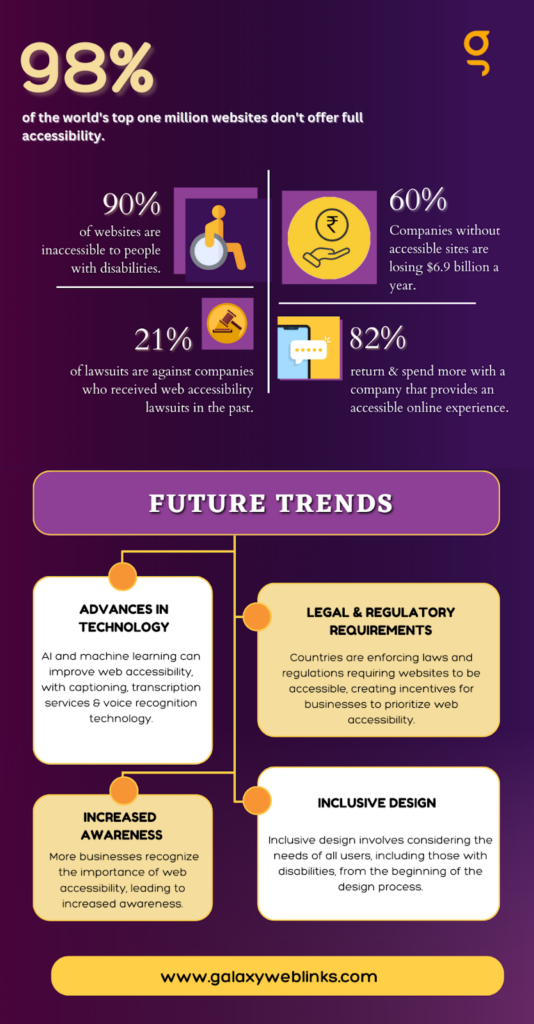
With 1.3 billion people worldwide living with disabilities, businesses cannot afford to ignore web accessibility. Not only is it the right thing to do, but also it ensures your business is inclusive and accessible to everyone. Did you know businesses have faced lawsuits and fines due to their websites’ lack of accessibility? 

And that’s not all. If you think giant enterprises are the only ones that are likely to be hit by such lawsuits, you’re wrong. Small businesses are also facing lawsuits because of lack of accessibility. So don’t miss out on this opportunity to learn why web accessibility is necessary for 2023. Take action now, and avoid facing legal issues or missing out on potential customers.

Why Web Accessibility is Crucial: The Growing Number of Lawsuits

The Growing Number of Lawsuits

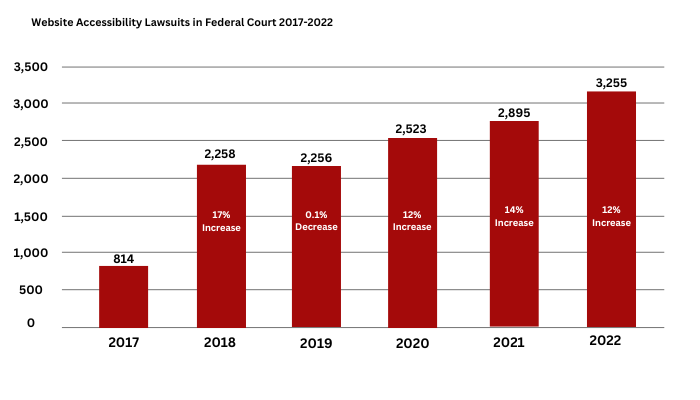
The Increasing Number of Lawsuits: There has been a significant increase in web accessibility lawsuits in recent years. In 2022 alone, over 2,000 lawsuits were filed in the United States.

Who is Suing: These lawsuits are typically brought by disabled individuals who cannot access websites due to various barriers such as inaccessible forms, missing alt-text, and lack of keyboard navigation. For example, a blind man sued Domino’s Pizza in 2019 because he could not use their website to order a pizza. He won the case, setting a legal precedent that websites must be accessible to disabled individuals.

The Financial Consequences: Businesses sued for web accessibility violations may face significant financial consequences, including settlements, legal fees, and reputational damage. In 2022, a giant retailer paid $10 million to settle a lawsuit alleging that their website was not accessible to blind users.

No Business is Immune: Web accessibility lawsuits are not just targeting large corporations. Small businesses, non-profit organizations, and educational institutions have also been sued for web accessibility violations.

Investing in Web Accessibility: Low Cost, High Impact?

Many small or medium-sized business owners might hesitate to invest in web accessibility due to concerns about cost and complexity. However, the reality is that web accessibility is a relatively low-cost process that can greatly impact a website’s user experience and brand reputation. Here are some key points to consider when it comes to the cost of web accessibility:

Cost of web accessibility audit: A web accessibility audit is a process that evaluates your website’s compliance with accessibility standards and identifies areas for improvement. The cost of a web accessibility audit typically ranges from a few hundred to a few thousand dollars, depending on the size and complexity of your website. If you’re a small business with a relatively simple website, you may be able to find affordable options for a web accessibility audit.

Cost of fixing accessibility issues: Once an accessibility audit has been completed, you’ll need to take steps to address any identified issues. The cost of fixing accessibility issues for a small website (10-20 pages) typically ranges from a few thousand dollars to less than $5,000. The cost may be higher for larger websites, but it’s important to remember that accessibility improvements can be implemented gradually over time.

Factors that impact the cost: The cost of web accessibility improvements can vary depending on several factors, including the number of pages on your website, the type of content you have, the complexity of your design, and the extent of the accessibility issues identified during the audit. However, it’s important to remember that even minor improvements to your website’s accessibility can significantly impact your users.

Additional Benefits of Web Accessibility and Examples

The rise in web accessibility lawsuits should serve as a wake-up call for businesses to prioritize accessibility. It’s not just about avoiding legal consequences. It’s about creating an inclusive online experience for all users. By ignoring web accessibility, businesses exclude a significant portion of the population and miss out on potential customers and revenue. Here are some additional benefits that web accessibility offers:

1- Increased Reach and Improved User Experience 

By designing websites that are accessible to everyone, businesses and organizations can reach a wider audience and provide a better user experience for all users. 71% of users with disabilities will leave a website that is not accessible. Some examples of websites doing this well include:

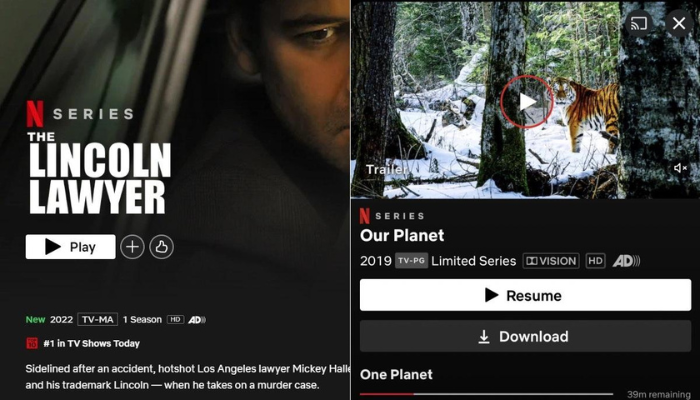
  • Netflix: Netflix has made a concerted effort to ensure its platform is accessible to all users, including those with visual and auditory disabilities. They offer closed captions in over 30 languages, audio descriptions for many titles, and customizable subtitles and captions for users with hearing difficulties.
Netflix

2- Improved SEO and Increased Traffic 

By designing websites that are accessible to all users, businesses and organizations can improve their search engine rankings and attract more traffic to their websites. Some studies have shown that accessible websites can rank higher in search engine results. Some examples of websites that have improved their SEO through accessibility include:

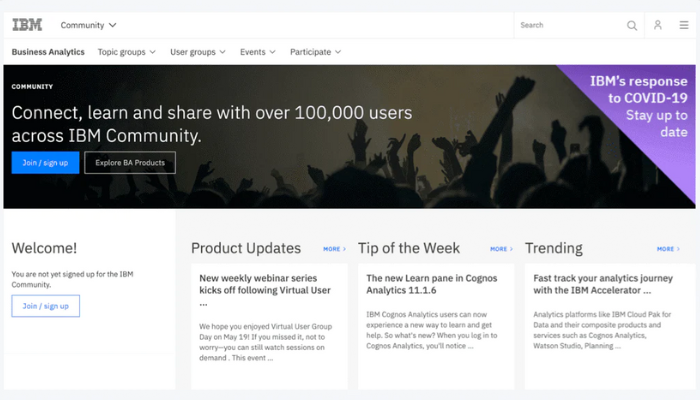
  • IBM: IBM has made a concerted effort to ensure that its website is accessible to everyone, including people with disabilities. As a result, they have seen a significant increase in traffic and engagement on their website.
IBM

3- Improved Reputation and Brand Image 

By designing websites that are accessible to everyone, businesses and organizations can improve their reputation and brand image, demonstrating their commitment to inclusivity and diversity. Some examples of websites that have improved their reputation through accessibility include:

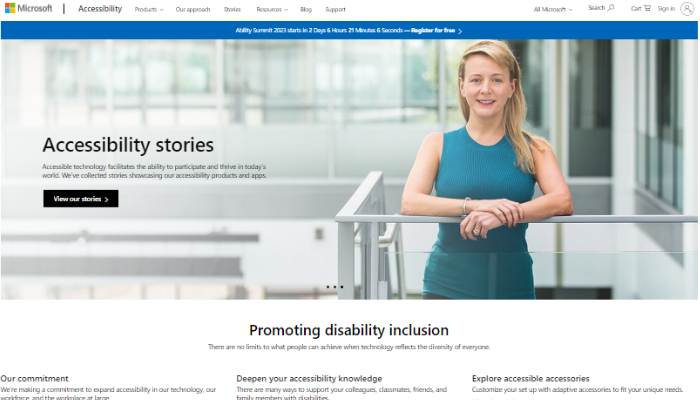
  • Microsoft: Microsoft has committed to accessibility across all of its products and services, including its website. They provide alternative text for images, clear and consistent headings, and keyboard accessibility, among other features.
Microsoft

Future Trends In Web Accessibility

Accessibility

The Technical Challenges and Solutions 

Ensuring web accessibility can be challenging, as several technical issues need to be addressed. Below are some common technical challenges and solutions for creating accessible websites:

The Technical Challenges and Solutions 

01- Missing or Inappropriate Alternative Text on Images

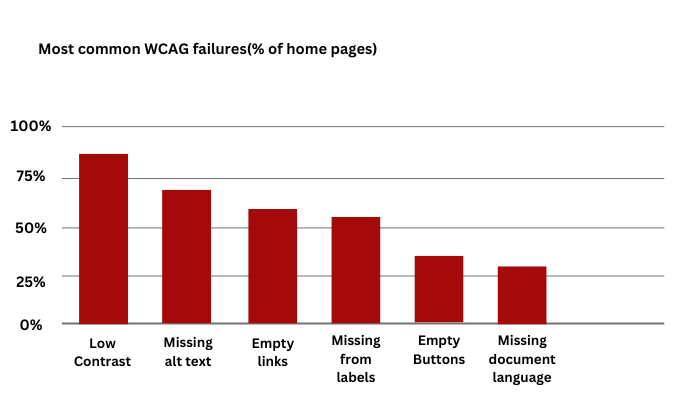
Alternative text (alt text) for images is one of the most common accessibility issues in web design. A significant portion of home page banners (31.3 percent) were missing alternative texts, according to a study by WebAIM. This has been a known accessibility issue for many years.

Solution – Providing appropriate and concise alternative texts for images is the solution. The alternative text should be descriptive enough so that users with visual impairments can understand what the image is about.

02- Poor Contrast Text

Low-contrast text is the most common accessibility error on websites. Poor contrast makes it difficult for users to identify the edges and shapes of several components. According to WebAIM’s recent analysis, 86.4 percent of home pages have this issue.

Solution – The text-to-background contrast ratio should be at least 4.5:1. To avoid this accessibility error, designers can use color contrast checkers during the web design phase to ensure that all background colors, text, and interactive elements have the perfect color contrast ratio. WCAG recommends 1.4.6 Contrast (Enhanced), 1.4.3 Contrast (Minimum), & 1.4.11 Non-text Contrast.

03- Video Captions Missing

Videos and audio content can be challenging to access for users with hearing or visual impairments and cognitive disorders like dyslexia. Deaf users can view videos by adding captions, while blind users can access content by adding transcripts. Transcripts benefit everyone.

Solution – Providing closed captions and transcripts for videos and audio content can make them accessible to users with disabilities. It’s essential to ensure that the captions and transcripts are accurate, synchronized, and easily accessible.

04- The lack of keyboard navigation 

It makes it difficult for users who cannot use a mouse or trackpad to browse a website, limiting their access to the content.

Solution-  Ensure that all website components can be navigated using only a keyboard, allowing users to select items using arrow keys and access all interactive elements such as links, buttons, and forms. Use HTML and CSS to create a clear and consistent navigation structure allowing users to move through the website quickly. 

Final Thoughts

Web accessibility is a moral imperative and a legal and business necessity. By designing websites that are accessible to everyone, we can create a more inclusive and equitable online world. 

In 2023 and beyond, advances in technology, increased awareness, legal and regulatory requirements, and a focus on inclusive design will shape the future of web accessibility. 

As web developers and designers, it is our responsibility to prioritize web accessibility and ensure that everyone, regardless of abilities or disabilities, can access and use the internet. We can create a more accessible, diverse, and inclusive online community.

Connect with us and find out how we can help you.

Top 5 Tips for Keeping Your eCommerce Website Running Smoothly

Your website is live, the product catalog is all set, and marketing is 100% on point. Now just imagine the horror of people leaving your website without any purchases. Why? Because your website lacks proper configuration. 

Scary, isn’t it?

Running an e-commerce website can be a stressful and overwhelming experience, especially for small and medium-sized businesses. You’re constantly juggling managing inventory, shipping products, and providing excellent customer service. 

On top of that, you have to ensure that your website is functioning smoothly and your customers have a seamless shopping experience. This can be annoying. After all, you established your online business to offer products or services, not to deal with website management.

But what happens when your website encounters issues like slow loading times, broken links, or payment gateway errors? It can be frustrating for both you and your customers and can ultimately lead to lost sales and damage to your business’s reputation. 

According to the stats, 53% of people will stop engaging with a website if images won’t load or take too long to load. Visitors’ patience can last barely 5 seconds, and that’s it. If your website takes more than that to load, poof! They’re gone. And it’s not a good sign for your business. 

E-commerce maintenance and why do you need it?

E-commerce maintenance is all about keeping an online store up and running smoothly. It involves a bunch of tasks like adding new products and features to the website, making sure the site is secure from any online threats, improving the site’s performance, keeping an eye on the server, updating payment gateways, managing inventory, and providing customer support. All of these activities are important for the successful running of an e-commerce website, and they ensure that customers can shop on the website without any hassles. So, e-commerce maintenance is a vital part of running an online store, and it’s something that requires ongoing attention and care.

Now let’s talk about why e-commerce maintenance is so important for you as a business owner. Keeping your online store up-to-date and secure, can improve your website performance, increase sales, and offer a better shopping experience for customers. Regular maintenance means the website is less likely to have technical issues that could result in downtime or security breaches. This ensures that the website is always available to customers, which is essential for running a successful online business. All of these benefits can help boost the business’s reputation, attract new customers, and ultimately, increase revenue. 

In this blog, we’ll discuss the top 5 tips for ensuring that your website is optimized for performance and providing customers with a seamless online shopping experience. So, let’s get started!

Keep Your Software Up to Date

Software updates can be a hassle, but they are critical for the security and performance of your e-commerce website. Outdated software can be vulnerable to security threats and may not function properly, leading to a poor user experience. Ensure you regularly check for updates to your e-commerce platform, plugins, and any other software you use. Keeping your software up to date also ensures that you have access to the latest features and functionality.

Optimize Your Website’s Speed

In today’s fast-paced digital world, customers expect websites to load quickly. Slow page load times can drive potential customers away, resulting in lost sales. A one-second delay in page response can result in a 7% reduction in conversions, and you don’t want that. Right? To keep your website running smoothly, ensure it is optimized for speed. This includes compressing images, minifying code, and leveraging caching technologies. If you’re unsure where to start, consider using a website speed-testing tool to identify areas for improvement.

Test Across Browsers

It’s not uncommon for your website layout to appear different across various browsers. While it may look excellent in Chrome, it may not be the same in Safari. To ensure a smooth user experience, it’s crucial to test your site across multiple browsers. A broken or confusing layout is likely to frustrate customers, so it’s essential to ensure that your website appears correctly on all browsers. Additionally, checking your site on major browsers on mobile devices is crucial to ensure complete responsiveness.

Monitor Your Website’s Performance

Monitoring your website’s performance is critical to ensuring it runs smoothly. Regularly checking your website’s key performance metrics can help you identify and address issues before they become significant problems. Consider using a website monitoring tool to monitor your website’s performance and receive alerts if any problems arise.

Check Loading Times 

If your website takes ages to load or if pages are taking too long to appear, you may need to invest in website maintenance. It’s essential to test your website’s loading times regularly, at least once a month, and especially when you add new content. Failing to do so can lead to slow loading times, which can be frustrating for customers, resulting in lost sales as they abandon the site.

Check Loading Times 

Managing a website in-house can be daunting in today’s fast-paced business environment. Without the necessary expertise, you may find it challenging to keep up with the latest trends and technologies, potentially causing your website to fall behind the competition. 

Outsourcing from a company that can help you with eCommerce maintenance can be your way to ensure that your website is well-maintained and optimized for maximum performance. This can lead to better user experience, higher search engine rankings, and increased conversions.

Take the stress-free road.

Remember, your website is the face of your business, and it’s crucial to make a great first impression on your potential customers. Investing time and effort into maintaining your website can improve user experience, boost conversion rates, and increase revenue. 

So, take action today and implement these tips to keep your e-commerce website running smoothly. And if you ever need help or support, don’t hesitate to contact experts who can provide the necessary development and e-commerce maintenance services to keep your website in top shape. By doing so, you’ll be able to provide your customers with a seamless online shopping experience and take your e-commerce business to new heights!

We know you need a website that runs like clockwork! But always keeping it up-to-date, secure, and bug-free can be challenging. That’s where Galaxy Weblinks comes in. Galaxy Weblinks is an e-commerce maintenance company that provides top-notch e-commerce maintenance services for your online store, so you can focus on running your business. 

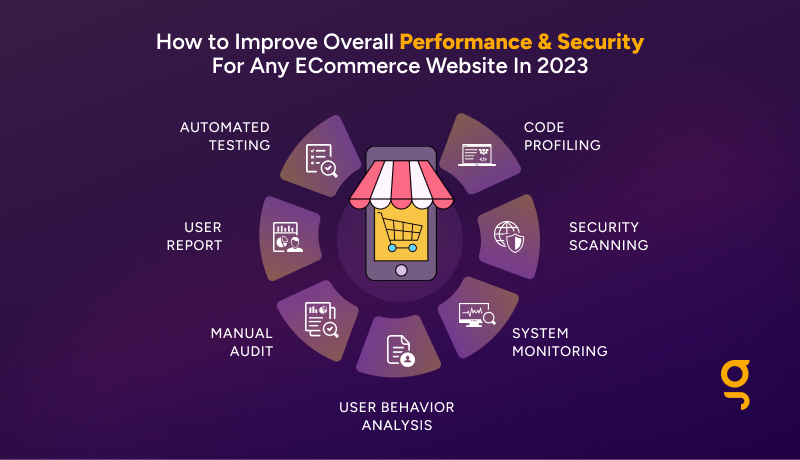
How to Improve Overall Performance & Security For Any eCommerce Website In 2023

The eCommerce industry has seen remarkable growth in recent years, with global eCommerce sales reaching $4.9 trillion in 2021. However, as eCommerce businesses become more prevalent, they also become prime targets for cyber attacks, putting pressure on maintaining website performance and security.

In fact, according to a report by Security Magazine, eCommerce websites are a prime target for cybercriminals, accounting for 22% of all cyber attacks. This means that eCommerce businesses need to prioritize website security to protect their customers’ data.

But it’s not just security that eCommerce businesses need to worry about. Poor website performance can lead to lost revenue and dissatisfied customers. Even a one-second delay in page load times can reduce conversion rates by 7%.

Investing in regular eCommerce maintenance services, updates, and security measures is becoming more crucial than ever for eCommerce businesses to ensure they can maintain their market position and protect their customers’ data.

How To Detect Website Performance & Security Issues 

Regular audits can help you identify issues early and prepare the necessary adjustments. But with the combination of a few methods you can try to detect and address performance and security issues in your systems before they become serious problems, and ensure that your systems are optimized for performance and security.

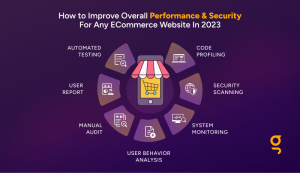
Here are some ways for you to detect performance & security issues and how you can solve them: 

Code Profiling:

  • Recommended for: Performance optimization & identifying security vulnerabilities
  • Category: Performance audit 
  • Priority: High
  • Recommended Frequency: Regularly, especially after making significant changes to the codebase.
  • Impact: Identify performance bottlenecks, memory leaks and security vulnerabilities.
  • Popular Tools: JetBrains dotTrace, Visual Studio Profiler, and Eclipse MAT for Java.
  • Technical Proficiency Required: Yes, it requires technical expertise.

Security Scanning:

  • Recommended for: Ensuring compliance with security standards and regulations
  • Category: Security scanning and compliance
  • Priority: High
  • Recommended Frequency: Regularly, depending on the application’s risk profile and industry regulations.
  • Impact: Identify compliance gaps that result in data breaches, legal and financial consequences, and reputational damage.
  • Popular Tools: SonarQube, Veracode, and Checkmarx.
  • Technical Proficiency Required: Yes, it requires technical expertise.

System Monitoring: 

  • Recommended for: Detecting system errors, ensuring system uptime, and optimizing system performance
  • Category: Performance optimization
  • Priority: High
  • Recommended Frequency: Continuous monitoring, with regular analysis of system metrics and logs.
  • Impact: Helps to identify system errors, optimize system performance, and ensure system uptime and availability.
  • Popular Tools: Zabbix, and Prometheus, New Relic and Datadog for application performance monitoring (APM); ELK stack (Elasticsearch, Logstash, Kibana) for log
  • Technical Proficiency Required: Yes, it requires technical expertise.

User Behavior Analysis: 

  • Recommended for: Improving user experience, optimizing marketing strategies, and identifying user trends
  • Category: Performance optimization
  • Priority: Medium – High
  • Recommended Frequency: Regularly, depending on the frequency of user interactions.
  • Impact: Understand user behavior patterns, identify areas of the application that need improvement, and optimize marketing strategies.
  • Popular Tools: Google Analytics, Mixpanel, and Amplitude. Salesforce and Hubspot for customer behavior analysis and Hootsuite and Sprout Social for social media behavior analysis. 
  • Technical Proficiency Required: Yes, it requires technical expertise.

Manual Audit: 

  • Recommended for: Security audit and compliance checks
  • Category: Security audit and compliance
  • Priority: High
  • Recommended Frequency: Periodically, depending on the application’s risk profile and industry regulations.
  • Impact: Helps identify security vulnerabilities and compliance gaps
  • Popular Tools: Manual audits are typically performed by security professionals with expertise in the relevant industry regulations and security best practices.
  • Technical Proficiency Required: Yes, it requires technical expertise.

User Report: 

  • Recommended for: User experience feedback, bug reports, and feature requests
  • Category: Security audit
  • Priority: Medium
  • Recommended Frequency: Regularly, depending on the frequency of user interactions with the application
  • Impact: Helps to identify user pain points, bugs, and feature requests to improve the application’s user experience.
  • Popular Tools: Google Analytics, Mixpanel, and Amplitude for web and mobile app analytics; CRM tools – Salesforce and Hubspot for behavior analysis and segmentation.
  • Technical Proficiency Required: No it doesn’t, it requires technical expertise.

Automated Testing: 

  • Recommended for: Ensuring software quality, improving development efficiency, and reducing testing costs
  • Category: Quality assurance and testing
  • Priority: High
  • Recommended Frequency: Continuous integration and testing throughout the software development life cycle.
  • Impact: Helps to ensure software quality, reduce testing costs, and improve development efficiency by identifying defects and bugs early in the development process.
  • Popular Tools: Selenium, Appium, and Cypress for web and mobile app testing

JUnit and TestNG for unit testing. Jenkins and Travis CI for continuous integration and testing

  • Technical Proficiency Required: Yes, it requires technical expertise.

Ways To Improve Website Performance: 

There are a few major factors that can significantly improve the performance of an eCommerce business website. Improving performance leads eCommerce businesses to increase conversions, revenue, and customer satisfaction. 

Here are some of them:

Optimize images: 

  • Task: Optimizing website images to improve website performance.
  • Priority: High.
  • Recommended Approach: Use a combination of image compression and resizing tools, and choose the right file format for each image.
  • Industry Standards: 2-3 seconds load time (source: Hubspot).
  • Impact on Performance: Increased website traffic, improved SEO and search engine rankings, and reduced bounce rates.

Use caching: 

  • Task: Configure caching on your website to improve website speed and reduce server load.
  • Priority: High
  • Recommended Approach: Use a combination of browser caching, server-side caching, and CDN caching.
  • Industry Standards: No specific industry standard, but the faster the website loads, the better.
  • Impact on Performance: Reduced server load and improved website scalability, increased website traffic, and improved user experience.

Minimize HTTP requests:

  • Task: Minimize HTTP requests to improve website performance by reducing the number of requests required to load a page.
  • Priority: High
  • Recommended Approach: Combine files and resources wherever possible, use CSS and JavaScript frameworks, and optimize images and videos.
  • Industry Standards: According to Yahoo, reducing the number of HTTP requests can reduce page load times by 20-50% (source: Yahoo Developer Network).
  • Impact on Performance: Improved website performance on slow network connections and mobile devices, improved user experience, and reduced server load.

Use a content delivery network (CDN): 

  • Task: Improve website performance by using a content delivery network (CDN) to distribute website content globally.
  • Priority: High
  • Recommended Approach: Choose a reliable CDN provider, optimize website content for distribution, and configure DNS settings correctly.
  • Industry Standards: CDNs can reduce page load times by up to 50% (source: Cloudflare).
  • Impact on Performance: Improved website availability and performance during peak traffic periods, reduced website downtime, and increased website traffic.

Ways To Improve Website Security: 

Conducting regular security audits can significantly improve the security of an eCommerce business website. By improving website security, eCommerce businesses can build trust with their customers and protect their sensitive information from attackers. Here are some of the major methods: 

Conduct regular security audits: 

  • Task: Identifying and assessing potential vulnerabilities, testing security controls, and developing a plan to remediate risks.
  • Priority: High
  • Recommended Approach: Engage a professional security firm or hire an experienced security professional to perform comprehensive security assessments and penetration testing.
  • Industry Standards: Follow established security frameworks and standards, such as the NIST Cybersecurity Framework or ISO/IEC 27001, to guide the security audit process and ensure compliance with regulatory requirements.
  • Impact on Performance: By ensuring that your website is secure, you can protect your business and customers from the increasingly sophisticated tactics used by cybercriminals.

Use SSL/TLS encryption: 

  • Task: Implement SSL/TLS encryption to secure data transfer between the server and the client.
  • Priority: High
  • Recommended Approach: Use reputable SSL/TLS certificates from trusted Certificate Authorities (CAs) and configure servers to use strong encryption protocols and cipher suites.
  • Industry Standards: SSL/TLS protocol versions and cipher suites are regularly updated, and industry standards are updated accordingly. The latest TLS 1.3 protocol is considered the most secure and recommended to use.
  • Impact on Security: Implementing SSL/TLS encryption ensures secure data transmission, protects sensitive information such as usernames, passwords, and credit card information from interception by attackers, and prevents man-in-the-middle attacks.

Use a web application firewall (WAF): 

  • Task: Protection against common web-based attacks such as cross-site scripting (XSS), SQL injection, and other vulnerabilities.
  • Priority: High
  • Recommended Approach: Configure the WAF to regularly update and maintain its ruleset to stay up-to-date with new attack techniques and vulnerabilities.
  • Industry Standards: The Open Web Application Security Project (OWASP) maintains a list of the top 10 web application security risks, which can serve as a guideline for selecting and configuring a WAF solution.
  • Impact on Security: Provide an additional layer of protection against web-based attacks, protecting against common vulnerabilities such as cross-site scripting (XSS), SQL injection, and other web-based attacks.

Regularly review third-party integrations: 

  • Task: Regularly review third-party integrations on your website to ensure they are secure and up-to-date.
  • Priority: This task is of high priority as third-party integrations can introduce vulnerabilities and weaknesses to your website’s security.
  • Recommended Approach: Monitor and assess third-party integrations regularly for security updates and permissions.
  • Impact on Security: Regularly reviewing third-party integrations can prevent security breaches and protect users from cyber threats.

Opportunity & Financial Cost of Ignoring Website Issues

It is important for businesses to regularly assess their performance and security measures and take proactive steps to mitigate these issues. Conducting regular audits and updates to their systems can help minimize these risks and ensure smooth operations. Here we have assessed the major performance and security elements you should consider:

Performance- 

  • Slow Loading Speed: 

Slow loading speed can lead to a significant loss of potential customers. According to Google, 53% of mobile users will leave a website that takes longer than three seconds to load.

Example: If an eCommerce website earns $10,000 per day and 53% of mobile users leave due to slow loading speed, the company could potentially lose $5,300 per day, resulting in a significant loss of revenue.

  • Poor User Experience:

Poor user experience can lead to decreased customer loyalty and missed opportunities. According to Adobe, 38% of users will stop engaging with a website if the layout is unattractive.

Example: If an online retailer has 10,000 visitors per day and 38% of them leave due to poor user experience, the company could potentially lose 3,800 customers per day, resulting in a significant loss of revenue.

  • Mobile Optimization:

Failure to optimize a website for mobile can lead to a significant loss of potential customers. According to a study by Statista, mobile devices accounted for 54.8% of global website traffic in 2021.

Example: If a website is not optimized for mobile and receives 100,000 visitors per month, the company could potentially lose 54,800 visitors, resulting in a significant loss of revenue.

Security

  • Data Breaches:

Ignoring website security vulnerabilities can lead to data breaches and financial losses. According to a study by IBM, the average cost of a data breach in 2020 was $3.86 million.

Example: In 2017, Equifax suffered a data breach that exposed the personal information of 143 million people. The company’s initial estimate of the financial impact was $600 million, which later rose to $1.4 billion.

  • Loss of Reputation:

Ignoring website security issues can lead to a loss of trust and reputation. According to a study by Edelman, 71% of consumers will stop using a brand if they perceive the brand as doing something unethical or illegal.

Example: In 2020, the video-conferencing app Zoom faced criticism for its security vulnerabilities, which led to a loss of trust and reputation among users and investors.

  • Legal Liability:

Ignoring website security issues can lead to legal liability and financial losses. According to a study by Ponemon Institute, the average cost of a data breach involving more than 50,000 records is $6.03 million, with an average cost of $146 per record.

Example: In 2020, the hotel chain Marriott was fined $123 million for a data breach that exposed the personal information of 339 million guests.

Get High-End Performance & Security Support

Neglecting website performance and security can lead to lost revenue, damage to reputation, and increased vulnerability to cyber attacks. However, investing in website maintenance and security can provide significant benefits, including improved customer satisfaction, increased revenue, and reduced risk of security breaches.

If you are an eCommerce business owner looking to improve your website performance and security, consider partnering with a trusted web development agency like Galaxy Weblinks. With years of experience in eCommerce maintenance services, Galaxy Weblinks can provide expert guidance and support for all your website maintenance and security needs. 

Contact us today to learn more about how we can help you with eCommerce maintenance services to maximum performance and security.

How Much Should You Invest In Monthly Website Maintenance?

website maintenance services

Are you compromising on quality to reduce website maintenance costs? Or perhaps you’re overspending on maintenance and wondering if there’s a way to cut it down? Well, we’ve got news for you – there’s a sweet spot in website maintenance, and it’s all about finding the balance between cost and quality.

But how much should you be investing in monthly maintenance to strike that perfect balance? 

On average, businesses should aim to invest at least 5-10% of their website development budget into monthly maintenance, which results in improving your search engine rankings by up to 30%.

So, if you’re wondering how to optimize your website maintenance without compromising on quality or overspending on website maintenance services, we’ve got you covered. Let’s find that sweet spot together and keep your website running smoothly for years to come.

How To Calculate The Cost Of Website Maintenance?

Let’s say you run an e-commerce store using the Shopify platform, and you need to maintain the website on a monthly basis. Let’s take a sample metrics to understand the cost better

Factors affecting maintenance cost for e-commerce website: 

  • No. of hours required 
  • Platform expenses
  • Cost of domain expertise

Let’s take an example to understand the cost calculation with the help of some assumed data.

Average maintenance time required in a month: 9 to 12 hours

Minimum Expense: Maintenance Cost for 9 hours per month

Maintenance time per month (T) = 9 hours

Hourly rate for maintenance (R) = $100 per hour

Domain expertise cost = D

Platform expenses = P

The domain expertise cost can be calculated as:

D = T x R

D = 9 x $100

D = $900 per month

Then, the total monthly website maintenance cost can be calculated as:

Total cost = Domain expertise cost + Platform expenses


Assuming the monthly platform cost is $229

Total cost = D + P


Total cost = $900 + $229

Total monthly website maintenance cost  = $1129

——————————————————————————————————————–

Maximum Expense: Maintenance Cost for 12 hours per month

Maintenance time per month (T) = 12 hours

Hourly rate for maintenance (R) = $100 per hour

Domain expertise cost = D

Platform expenses = P

The domain expertise cost can be calculated as:

D = T x R

D = 12 x $100

D = $1200 per month

Then, the total monthly website maintenance cost can be calculated as:

Total cost = Domain expertise cost + Platform expenses


Assuming the monthly platform cost is $229

Total cost = D + P


Total cost = $1200 + $229

Total monthly website maintenance cost  = $1429

Based on the above calculations, we can conclude that the minimum maintenance cost per month would be $1129 and the maximum would be $1429. If you are paying more, then you need to look into resource and task allocation in addition to checking the technology integration for your website.


If you are paying less than the minimum limit, then you should at least consider looking into the details of the maintenance activities and the overall website performance to rule out the possibility of ignored issues.

Factors That Affect the Cost of Website Maintenance

People commonly associate website maintenance costs to be solely attributed to the number of hours required to get the work done. However, there are other factors like the complexity of the issue, the technical expertise required, the priority of the task, etc. It is recommended to take all applicable factors into consideration when calculating or understanding the maintenance cost for your website.

  • Frequency Of Maintenance Issues

The frequency of maintenance issues can have a significant impact on the cost of website maintenance. 

A report by GoDaddy found that small business owners spend an average of 5 hours per month on website maintenance, but this can vary depending on the complexity of the website and the frequency of updates required. 

For instance, a website that requires daily updates and monitoring will have a higher maintenance cost than a website that only needs updates once a month.

  • Extent of Manual Effort Required

The amount of manual effort required for maintenance tasks can also impact the cost of website maintenance. 

A study by HubSpot found that small business owners spend an average of 2-5 hours per week on website updates, which can include tasks such as creating new pages, updating content, and testing website functionality. 

Websites that require more extensive manual effort, such as custom coding or design changes, will have a higher maintenance cost.

  • Technology Relevance

Outdated technology can also impact the cost of website maintenance. A survey by W3Techs found that only 2.5% of websites still use Flash technology, which is no longer supported by major web browsers. 

Websites that use outdated technology may require additional maintenance to remain compatible with newer web browsers, which can increase the maintenance cost.

  • High Maintenance Requirement for The Platform

Websites with high maintenance requirements may also have limitations due to their current technology. 

For example, a website with complex integrations or customizations may require more maintenance, which can be costly. In some cases, it may be more cost-effective to invest in newer technology that is easier to maintain in the long run.

website maintenance services

Recommended Strategies By Experience Website Developers For Reducing Website Maintenance Cost

Yes, it is possible to reduce website maintenance costs by assessing the efficiency of current maintenance practices and exploring technological upgrades. By optimizing current website maintenance services and adopting new technologies, businesses can improve the effectiveness of their maintenance efforts while reducing costs.

Maximizing Efficiency

One way to reduce website maintenance costs is to ensure that maintenance tasks are being performed efficiently. 

  1. Regularly Update Website Software

Keeping website software up to date is crucial for maintaining website security and performance. 

By regularly updating website software, businesses can reduce the risk of security breaches and minimize the need for manual maintenance tasks. For example, updating to the latest version of WordPress or a website theme can provide bug fixes, security updates, and improved performance.

  1. Outsource Website Maintenance 

Outsourcing website maintenance services to a third-party provider can be a cost-effective solution for small businesses that don’t have the resources to hire in-house staff. 

According to a survey by Clutch, the average cost of outsourced website maintenance is $100-$149 per hour. Outsourcing can provide access to specialized expertise and resources without the need to hire new staff or purchase new tools.

Technology Upgrades

Another way to reduce website maintenance costs is to explore technological upgrades as newer technologies may also offer additional features and functionalities that can help reduce the need for manual maintenance tasks.

  1. Adopt automation Tools

Investing in automation tools can help reduce the time and effort required for routine maintenance tasks. 

For example, tools like Jetpack, UpdraftPlus, and WP-Optimize can automate tasks like backups, updates, and optimization, which can significantly reduce manual effort and lower costs.

  1. Use A Reliable Hosting Provider

Choosing a reliable hosting provider can help reduce maintenance costs and prevent unexpected downtime. 

According to a study by the Hosting Tribunal, 1 hour of downtime can cost businesses anywhere from $10,000 to $1 million, depending on the size of the company and the industry. By choosing a reliable hosting provider, businesses can minimize the risk of downtime and reduce associated costs.

By implementing these cost-saving measures, businesses can improve their website performance and functionality while freeing up resources to focus on other aspects of their business.

Achieve Higher Conversion Rate, User Retention, & Performance with Professional Website Maintenance Services

It can be a daunting task for businesses to manage maintenance needs in-house, and outsourcing to the wrong provider can result in higher costs and lower-quality services. 

By partnering with a trusted and experienced website maintenance service provider like Galaxy Weblinks, you can ensure that your website is always optimized for performance, security, and functionality. 

Our team ensures on-time resolution of issues with proactive audits to prevent minor problems from becoming major obstacles. We have also advised our clients on the best technology to reduce maintenance requirements and also scale their businesses sustainably.
Get an in-depth website audit and website maintenance services costs to ensure a high-performing website.

The benefits of using Webflow for your business website

The benefits of using Webflow for your business website

Don’t judge a book by its cover.

The popular saying is applicable to books for sure, but websites? Not so much. 

Websites deal with the most extreme level of snap judgments. One that quickly influences the perceptions of credibility. It takes somewhat around 50 milliseconds (0.05 seconds) for users to form an opinion about your website—whether they like it or not, whether they want to stay or leave.

In today’s digital age, having a user-friendly and visually appealing website is critical for any business looking to succeed in the online space. It serves as the online storefront for your brand, providing potential customers with information about your products or services, and acts as a platform for online transactions. 

In our years of experience, we have seen companies struggling to create a website that accurately reflects their brand’s vision and values. Plus, problems like limited customization options, high costs, and poor website performance make it challenging for them to stand out from their competitors. 

Webflow, with over 3.5 million users, creates a website that looks great, loads fast, and works on any device. At present there are approximately 400,000 Webflow websites which are live globally.

While there are many web design platform options for you to choose from, in this article, we will be highlighting the benefits of using Webflow for your business website. 

First of all, what is Webflow?

A lot of you who have landed here might already know about it, but for those of you who haven’t, well, read on. 

Webflow is a web design and development platform that allows users to design and build websites without coding. It’s a drag-and-drop interface that enables you to create and customize your website’s layout, content, and functionality. It has gained massive popularity in recent years with a growth rate of 79% over the past year, attracting both small business owners and large corporations. 

Now that we have established the popularity and potential of Webflow let’s dive into some of its advantages.

Benefits of using Webflow for your business website

Benefits of using Webflow for your business website
  1. Ease of use

One of the primary benefits of using Webflow is its user-friendly interface. You don’t need to know how to code or have any technical experience to use it. The drag-and-drop functionality allows you to create and edit content quickly, making the website development process more accessible and efficient.

Moreover, Webflow provides various templates and pre-designed components, such as navigation bars and forms, that you can easily add to your website. You can customize them to match your brand’s style and color scheme, ensuring consistency across your online presence.

  1. Customizability

While Webflow offers templates and pre-designed components, you’re not limited to using them. You have complete control over your website’s design and functionality, allowing you to create a unique online presence that reflects your brand’s identity.

Webflow provides a vast array of design and customization options, including typography, color, layout, animations, and interactions. You can create complex designs, such as parallax scrolling and hover effects, without needing to write code.

Furthermore, Webflow allows you to integrate with third-party applications, such as Google Analytics and Mailchimp. You can also add custom code snippets to your website, giving you even more flexibility in terms of design and functionality.

  1. Responsiveness

In today’s digital landscape, having a mobile-responsive website is crucial. According to a study by Google, 74% of users are more likely to return to mobile-friendly websites. Webflow’s responsive design feature allows you to create a website that looks great on all devices, from desktops to smartphones.

Webflow’s responsive design is based on the concept of breakpoints. You can define different breakpoints for different device sizes, allowing you to create custom designs for each device type. This feature ensures that your website looks great and functions correctly, regardless of your customers’ device.

  1. SEO-friendliness

Search engine optimization (SEO) is a critical aspect of website development. It helps improve your website’s visibility on search engines, increasing the likelihood of attracting organic traffic. Webflow provides several SEO features, such as customizable meta titles and descriptions, alt tags for images, and clean code structure.

Webflow also automatically generates a sitemap for your website, making it easier for search engines to crawl and index your site’s pages. Additionally, you can easily integrate your website with Google Analytics and Google Search Console, allowing you to track your website’s performance and optimize it for search engines.

  1. Fast loading speed

Website loading speed is a crucial factor in user experience. According to a study by Google, the average mobile website takes 15.3 seconds to load, which can significantly impact user engagement and conversion rates. Webflow’s hosting service uses a content delivery network (CDN) that ensures fast loading speeds for your website.

How Webflow can help you create an ideal website

Webflow can help you create modern and responsive websites in minutes without writing a single line of code. It makes managing your website’s content easy without relying on a third-party content management system. With Webflow’s built-in CMS, you can easily add and update your website’s content without hiring a developer. 

In conclusion

Webflow is an excellent platform for service businesses for all of the aforementioned reasons. To summarize, firstly, it is extremely user-friendly and easy to use, even for those without experience in web design. Secondly, it is very affordable, especially compared to other market platforms. Thirdly, it offers a wide range of features and templates that allow businesses to create professional-looking websites with minimal effort. Finally, it provides excellent customer support, so businesses can get help when needed. So if you’re looking for the perfect platform to create a stunning, modern website without coding or learning complex web design principles, then Webflow is the way to go.

Looking for a webflow development company? Galaxy Weblinks is your answer. Take your business website to the next level with our webflow development services. Contact us today to learn more about how we can help you build a custom website using Webflow. Let’s start building your online presence together!

Is headless e-commerce really the future?

The e-commerce sector has made tremendous strides. There was a time when eCommerce platforms were designed mainly for desktop users. Cut to the present, customers can purchase products using various devices such as wearable tech, smartphones, social media platforms, etc. The idea behind the evolution is simple: customers who engage with brands across multiple platforms tend to make more purchases.

The market’s ever-changing needs have given rise to new e-commerce approaches in recent years. Earlier methods focused on back-end configurations, but the need for personalized, customized, and engaging omnichannel experiences has prompted the development of a new e-commerce design approach – the headless commerce approach.

Headless e-commerce has gained significant popularity among digital brands, and in the last couple of years, investors have invested heavily in this domain, with over $1.6 billion being poured into such opportunities. Numerous startups and established players in the e-commerce industry have introduced new technologies or products to leverage this trend to stay competitive in an increasingly crowded digital marketplace

Companies are increasingly adopting headless e-commerce as it offers more flexibility, scalability, and customization than traditional e-commerce platforms. In this blog, we will explore whether headless e-commerce is the future of online retail, looking at the benefits of this approach, statistics on its adoption, and examples of businesses that have successfully implemented headless e-commerce.

Is headless e-commerce really the future?

What is headless e-commerce?

Traditionally, e-commerce platforms have been built using a monolithic architecture, meaning the front and back ends are tightly coupled. This can limit the flexibility and customization of the user interface. Headless e-commerce, on the other hand, separates the front and back ends, allowing businesses greater control over the user experience.

In a headless e-commerce architecture, the front end is decoupled from the backend, meaning businesses can use any front-end technology they want. This allows for a more customized and flexible user experience. The backend, responsible for managing the business logic and data, is usually built using an API-driven approach, enabling the platform to communicate with any front-end technology.

Successful businesses that leveraged the benefits of headless e-commerce

Many businesses have already adopted a headless e-commerce approach, with some seeing significant improvements in their online shopping experiences. Here are some examples:

👟 Nike: Leveraged headless to optimize every aspect of their website to suit small-screen interactions, including visuals and call-to-actions. They utilized React SPA and Node.js backend for frontend (BFF) to ensure consistent user experiences across all pages. As a result, Nike gradually gained market share and became a leading player, surpassing their competitor Adidas.

🧼 Lush: Handmade cosmetics became even more accessible thanks to Lush’s faster, more intuitive mobile app with personalized recommendations and real-time inventory updates.

🎯Target: The retailer faced stiff competition from retail giants like Walmart and Amazon, with customers frequently switching between brands. Through thorough analysis, they discovered that almost 80% of their customers begin their buyer’s journey on one device but finished it on another. To capitalize on this opportunity for growth, Target adopted a headless commerce approach to unify the customer buying journey across various devices. As a result, Target experienced an increase in its site’s conversion rate as more users found it easier to finish their purchases with the new unified experience.

📎Staples: The UK-based office supplies behemoth grappled with a massive product catalog that was often siloed and required frequent updates, depending on inventory and promotions. Adopting headless architecture allowed them to update their product catalog quickly and efficiently, and to optimize their website for various functions. They can now offer features such as registering/login in, ordering by item number, or reordering previously purchased items, significantly enhancing their customers’ shopping experience.

💄Lancôme: The French luxury perfumes and cosmetics powerhouse and one of the world’s most valuable brands made the switch to Progressive Web Applications. The decision paid off, with Lancôme seeing a 17% boost in their conversion rate. The headless approach made it much more convenient for their target audience to purchase items even while on the move.

Why is headless e-commerce gaining popularity?

There are several reasons why headless e-commerce is gaining popularity among businesses. Here are some of the key benefits:

Flexibility: Headless e-commerce allows businesses to use any front-end technology they want, which means they can easily customize the user experience to meet their specific needs.

Speed: Because the front and back ends are decoupled, developers can work on them simultaneously, speeding up the development process.

Scalability: Headless e-commerce is more scalable than traditional e-commerce platforms, allowing businesses to add new features and functionality without impacting the user experience.

Integration: Headless e-commerce is designed to work with other systems, making integrating with other technologies easier.

Future-proofing: Headless e-commerce is future-proof, as businesses can easily swap out the front-end technology as new ones emerge.

Headless e-commerce trends 

There is a growing trend towards headless e-commerce, with more businesses adopting this approach. According to a report by Mordor Intelligence, the headless e-commerce market is expected to grow at a compound annual growth rate (CAGR) of 22.5% between 2021 and 2026. The report also notes that North America is expected to be the largest market for headless e-commerce during this period.

Another report by Digital Commerce 360 found that 43% of e-commerce decision-makers are planning to adopt a headless approach in the next two years. This indicates that headless e-commerce is becoming more popular among businesses as they look for ways to improve the customer experience and stay competitive in a rapidly evolving digital landscape.

A report by MarketsandMarkets predicts that the global headless commerce market size is expected to grow from $1.4 billion in 2020 to $3.5 billion by 2025 at a Compound Annual Growth Rate (CAGR) of 19.8% during the forecast period. The report notes that the adoption of headless commerce is increasing due to the growing demand for a personalized customer experience, the need for omnichannel marketing, and the increasing focus on improving customer engagement.

A report by Acquia found that 77% of organizations plan to adopt a headless approach within the following year. The report notes that headless commerce offers greater flexibility, scalability, and customization, which is particularly important for businesses looking to provide a differentiated customer experience.

Digital Commerce 360 found that 43% of e-commerce decision-makers plan to adopt a headless approach in the next two years. The report notes that headless commerce is becoming more popular among businesses as they look for ways to improve the customer experience and stay competitive in a rapidly evolving digital landscape.

A survey by BigCommerce found that 76% of e-commerce businesses plan to invest in headless commerce in the next two years. The survey notes that headless commerce is a way to differentiate from competitors, enabling companies to offer a more personalized, seamless, and engaging customer experience.

So, is headless e-commerce really the future?

Yes, headless e-commerce is the future of online retail, as it offers a more flexible, customizable, and scalable approach to e-commerce. Decoupling the front and back ends enables businesses to use any front-end technology they prefer, allowing for a more personalized and intuitive user experience. This flexibility, coupled with the speed and scalability of headless e-commerce, makes it an attractive option for businesses looking to improve their online shopping experiences and stay competitive in a rapidly evolving digital landscape. With the headless e-commerce market expected to grow at a compound annual growth rate of 22.5% between 2021 and 2026 and an increasing number of businesses planning to adopt a headless approach in the next two years, it seems that headless e-commerce is set to become the future of e-commerce. 

Want help with adopting headless for your business? Let’s talk. We can help.

MVP Mobile App Development: How to Get to Market Faster and Make Data-Driven Decisions

About 90% of startups fail to grow without building an MVP.

It’s a strong number to convince startups to take over their idea and create a prototype before stepping into it.

But what about the rest?

The rest of the startups look for ways to get their ideas to the market quickly and efficiently, and MVP (Minimum Viable Product) supports this concept to help startups achieve this goal. 

An MVP is a simplified version of a mobile app that contains only the core features and functions needed to validate the app idea and gather user feedback. 

The idea behind an MVP is to bring the app to the market as soon as possible and test its viability without spending a lot of time and resources. 

This way, startups can learn about their app’s strengths and weaknesses early on and make necessary changes to improve the product. 

All in all, it’s important to have a clear understanding of your unique value proposition, target audience, and metrics for success. 

Showcasing a demo of the MVP and providing examples of similar successful apps can also be very effective in demonstrating the potential of your app.

But, first, let’s take a look at what you’d miss out on if you target completing the whole project at once and not breaking it into simpler steps.

How MVP Eliminates Challenges: For Users

Creating a solution that provides real value to users is the actual idea of developing an MVP, but let’s clear our lenses to see what would happen if we skip this part. 

Some common pain points for target audiences in mobile app development include:

  • Difficulty In Completing A Task Or Process: 
    Users may struggle with organizing their requirements and finding information quickly and efficiently.
  • Inefficient Or Time-Consuming Processes: 
    Users may be frustrated with the time it takes to complete a task and compelling them to shift to other alternatives. 
  • Poor User Experience:
    Users may be frustrated with clunky interfaces or confusing navigation in a mobile app.
  • Lack Of Functionality:
    Users may want additional features or functionality not currently available in a mobile app.
  • Security Or Privacy Concerns:
    Users may be concerned about the safety of their personal information or the security of their transactions in a mobile app.

How MVP Eliminates Challenges: For Developers

An MVP (Minimum Viable Product) approach to mobile app development helps to minimize the difficulties that can arise in the development process. Some of the difficulties that are excluded in the MVP approach include:

  • Overbuilding:
    With an MVP approach, the development team focuses on delivering only the most essential features, avoiding the temptation to add too many bells and whistles that can slow down the development process.
  • Time and Cost Overruns:
    By focusing on a minimal set of features, MVPs help to control the development timeline and budget, avoiding the risk of project delays and overspending.
  • Unvalidated assumptions:
    An MVP approach validates the assumptions about the app’s potential success before investing too much time, money, and resources in the development process.
  • Lack of user feedback:
    MVPs allow developers to test the app with real users and gather feedback, which helps to avoid developing features that may not be useful or desired by the target audience.
  • Technical complexity:
    By focusing on only the essential features, MVPs help to reduce the technical complexity of the app, making it easier to develop and maintain.

An MVP approach to mobile app development can help businesses to minimize the risks and difficulties associated with the development process, while still delivering a functional product that meets the needs of their users.

Understanding The MVP Development Process 

Building an MVP is an iterative process, and the product will evolve over time based on user feedback and market trends. The goal is to validate the product idea and gather feedback as quickly and efficiently as possible to inform future development decisions.

Here is how MVP development staging takes place to bring out a better user experience.

  • Product Discovery:
    Identify the problem you are trying to solve and research your target audience, market trends, and competitors. The more data a company possesses, the better its prospects of success.
  • Feasibility:
    The product must provide value to users in the simplest form possible, as the term MVP suggests. Outline the users first, then create the MVP around their requirements.
  • Targeted Market Testing:
    The goal is to validate the product idea and gather feedback from potential users. Based on the feedback received, make changes to the MVP app and iterate on the product.
  • Comparative Costs:
    The cost of developing an MVP (Minimum Viable Product) can vary widely depending on several factors, including the complexity of the product, the development methodologies used, the technology stack, and the size and experience of the development team. 

    For example- If the estimated cost to create an android or ios application is 3000$, the estimated cost of developing an MVP mobile application will cost 40% of that. 
  • Comparative Time:
    It’s important to keep in mind that these are rough estimates, and the actual time required to develop an MVP can vary widely depending on the specific requirements and constraints of the project. 

    Additionally, the time required for ongoing maintenance and support should also be considered when calculating the total time required for an MVP project.

MVP Development – How To Get To Market Faster 

Developing an MVP mobile app provides developers with a faster, more efficient, and more effective way to validate their ideas, build a product that users love, and grow a successful and profitable business. 

Here are a few well-known facts about MVP mobile app development. 

  • Faster time-to-market:
    An MVP app can be developed and launched quickly, allowing developers to get user feedback and validate their idea in a shorter time frame.
  • Lower development costs:
    29% of startups crash due to multiple financial disasters. An MVP app typically requires fewer resources and less time to develop compared to a full-fledged app, which can result in lower development costs.
  • Improved user engagement:
    By focusing on a minimum set of features that deliver the most value, an MVP app can engage users more effectively and increase their likelihood of retaining and referring others.
  • Better decision-making:
    Developing an MVP allows developers to collect feedback from users early on and make data-driven decisions about what features to add, remove, or modify in the future.
  • Improved risk management:
    By validating the concept with a smaller investment of resources, the risk of building a product no one wants is reduced, allowing developers to make necessary pivots early on.

  • Improved focus:
    By developing an MVP, developers can focus on the core features that deliver the most value and avoid wasting time and resources on unnecessary features.
  • Better fundraising opportunities:
    An MVP that demonstrates traction and user engagement can increase the chances of attracting investors and funding to take the app to the next level.

Can MVP Market Itself As A Product?

The answer will always be Yes. 

By focusing on delivering a minimal but valuable set of features, an MVP app can demonstrate its potential to solve a problem, provide a unique user experience, or offer a new level of convenience. 

Here are a few solid reasons why MVP is the one. 

Reason #1: It Attracts Early Adopters In Building User Base

Attracting early adopters and building a user base are critical goals for MVP mobile app development. Take these steps to achieve these goals:

  • Unique Solution: 
    By offering a unique solution to a pain point, you can differentiate your MVP from similar products and attract early adopters looking for a fresh, innovative solution.
  • Word-Of-Mouth Marketing: 
    Early adopters can be powerful marketing allies, and their positive experiences with your MVP can help to attract other users through word-of-mouth marketing. Encourage early adopters to share their experiences with others, and reward them for doing so.

Reason #2: It Establishes A Brand Identity & Creating A Following

Establishing a brand identity and creating a following are important aspects of MVP mobile app development. Take these steps to achieve these goals:

  • Brand Personality: 
    Brand personality and values of your brand ensure that these are reflected in your messaging, marketing, and product design.
  • Clear Value Proposition: 
    It is a clear, concise value proposition that communicates the benefits of your MVP to users. This value proposition is reflected in all of your marketing and product design.

Reason #3: Increases Visibility & Credibility 

Increasing visibility and credibility are important goals for MVP mobile app development. Take these steps to achieve these goals:

  • Content Marketing: 
    Use content marketing to educate potential users about your MVP and demonstrate your expertise in your field. This can help to increase credibility and build trust with your target audience.
  • Partner With Businesses: 
    Partner with businesses that complement your MVP, such as app stores, service providers, or complementary products. This can help to reach a wider audience and increase visibility.

Reason #4: Gathering Feedback & Iterating To Improve The ProductReason #4: Gathering Feedback & Iterating To Improve The Product

Gathering feedback and iterating to improve the product are critical aspects of MVP mobile app development. Take these steps to achieve these goals:

  • Leverage Analytics: 
    Use analytics tools, such as Google Analytics or Mixpanel, to track usage and engagement with your MVP. This can help you to identify areas for improvement and make data-driven decisions about future development.
  • User Testing: 
    Conduct user testing to get direct feedback from potential users. This feedback can help you to identify areas for improvement and make data-driven decisions about future development.

Case Studies Of MVP Mobile App Development

Statistics show that one-third of startup business owners started their businesses with less than $5,000 and without any assurance that they would make a profit.

The temptation to start a big campaign immediately could be strong, but you should always start modestly. Due to the lengthy development process, about half of new concepts are abandoned since they cannot be proven at an early stage.

Since premature scaling is to blame for the demise of more than 70% of all firms, it is equally crucial to begin with tiny steps.

Here are two major examples of MVPs you know very well. 

  • Uber: Uber started as an MVP that allowed users to request a ride through a simple mobile app.
    The company validated its business idea by offering a small group of users a basic version of its app and gathering feedback to improve the product.

    Today, Uber is a multi-billion dollar company that offers ride-hailing services in hundreds of cities around the world.
  • Dropbox: Dropbox started as a simple MVP that allowed users to store and share files in the cloud. The company validated its business idea by offering a small group of users a basic version of its app and gathering feedback to improve the product.

    Today, Dropbox is a multi-billion dollar company that offers a full suite of cloud storage and collaboration tools.
  • Blum Telehealth: With the idea to serve users in the comfort of their homes, Blum Telehealth is focused on bringing medical care through Video calling regardless of the patient’s geographical location.

    The remote care facility validates its business idea by offering doctors and patients to effortlessly communicate apart from elevating the level of care for the entire community. Today, Blum Telehealth has served 6+ years successfully with an aim to reduce health care costs. 

Get Started With MVP Now 

If you’re considering MVP development for your startup, staying focused on your target audience, understanding their pain points, and continuously seeking feedback to improve the product is key.

By taking these steps, you can increase the chances of success for your mobile app and build a strong foundation for future growth.

So, what’s your next step toward MVP mobile app development for your startup?

If so, the galaxy can fit your idea into an app. We offer a wide range of product engineering services to help businesses at all stages of product development, from initial concept to market release.

Are