Build Better Apps in Less Time: 5 Reasons to Choose Low Code MVP Development

As of 2022, nearly 3 million apps are available for download on the Google Play Store. And of all people, millennials are the most active app users, with 21% opening an app 50 or more times per day.

Your analytics will reveal that most website traffic comes from mobile users. That’s why startups today want to ensure their presence on the mobile platform as long as their idea and the problem they intend to solve are feasible with a mobile app.

But here’s the catch, a growing app market can mean something other than that your new app will succeed. Especially for startups, you will know if your application will grow once you test it. Does this imply that you should invest in full-fledged development? Not quite.

There is another solution that is quite a buzzword in the industry! Many startups and app market legends, such as Spotify, Uber, Instagram, and Dropbox, have succeeded through the MVP approach. And Low-code MVPs can be especially beneficial for mobile startups working on a limited budget or timeline.

If you’re considering this approach for your startup, we recommend reading this post to learn more about it.

Build Better Apps

Why is Low Code MVP essential for mobile-based startups?

Before we get into the details, let’s talk about what an MVP and a low-code MVP are.

MVP is the primary product version you build to understand your audience better. It helps the audience know the product and what to expect from it. On the other hand, it helps businesses realize the actual value of the product and its feasibility.

MVPs allow you to determine:

  • if your users are ready for the product,
  • if they’ll be interested in using your solution, and
  • what the scope is for scaling the product.

If you get enough insights from the users of the no-code MVP, it may be worth investing in a full-fledged solution.

A Low code MVP performs the same function but involves less to no code in its creation, which comes with additional benefits for startups and small businesses since they are more efficient and cost less.

In fact, it is considered one of the quickest and most established routes to success, whether a new product or a feature upgrade.

Now let’s discuss the benefits!

Benefits of Low code MVP in mobile-based startups

Higher efficiency

As we saw earlier, No-code and low-code platforms appeal to startups because they offer ready-made tools, reusable code, pre-built integrations, and templates for various development scenarios.

According to Gartner, by 2024, 65% of development functions will be low-code.

Some solutions include in-depth analytics, monitoring, and A/B testing features to optimize system performance. Plus, they support integrations with third-party services and comply with various industry standards.

Sounds terrific, right? But wait, there is more.

Cost-saving

Efficient and costs less? What can be better than this combination?!

Low code development tools help enterprises reduce their costs by up to 84% by allowing them to spend less money hiring professional development teams, cloud specialists, and other technical jobs. Businesses also don’t need to invest in expensive hardware infrastructure, development software, and licenses.

On top of that, these tools let you build your low-code MVP with less effort.

Faster deployment

IDC found that these organizations have reduced their development lifecycle for new applications by 62% and new features by 72%, respectively.

Low-code solutions improve your company’s agility by making it easier to reuse modules and code templates, create your MVP, and get feedback from users more quickly.

All of this means that you can attract potential investors faster than your competition and get a head start on solving the issues that are holding you back, and you are all set for launch in less than half the time. Now that’s exciting!

MVP helps you identify the market demand and evaluate the customer experience.

Being a startup founder, you prefer to test and validate your product idea by creating an MVP. The concept may seem promising regarding projections and visual designs, but the actual proof of concept interacts with a tangible application.

Customer feedback is crucial, as it allows you to identify your product’s most and least appealing sides.

The reversibility, or being able to go back to make changes, is one of the key reasons why MVP development is popular among startups. If any functions are unnecessary or have bugs, fixing them or adding new features during the quality assurance testing process is much easier. This flexibility helps to implement updates smoothly and bring the release date closer.

Limitations of Low code MVP & Setting the right expectations

Like all tools, despite their benefits, developing MVPs has limitations concerning drawbacks.

Here are the primary things you must consider:

  • Technical constraints

No-code and low-code platforms might not support the features you want in your app. You might need to resort to custom development tools to overcome some restrictions.

  • Vendor lock-in

Your app can become locked into the vendor’s proprietary technology stack and lack access to the source code. So, migrating your MVP to another low-code platform will become too costly.

The most typical and crucial mistakes startups make during MVP development are fixating on minor imperfections, needing more feedback, ignoring analytics, and needing more time for release.

Developing an MVP using no-code and low-code platforms does not guarantee affordability and timeliness unless you keep the limitations in mind and stand clear of any mistakes that might happen.

DIY vs. Professional Services: Which is better?

If you are a startup, low code should assist you in delivering an MVP to market with as few resources as possible. And if you are an established brand and want to try out a new feature on your app, low code MVP can also benefit you.

On the other hand, just building an MVP does not guarantee success. Business owners must remember that creating a no-code or low-code MVP is a quick way to test their business idea, not a magic switch that improves everything about your app.

Your apps rely on coding methodology and management practices to succeed. Furthermore, your team may still need to do some custom coding to overcome the limitations of low-code technologies.

If you believe you require the assistance of an experienced software development company’s assistance, don’t hesitate to get in touch with us. We’ll make your MVP development truly affordable.

Unlocking E-Commerce Success: 05 Essential E-Commerce Conversion Rate Optimization Tips

Whether you are considering beginning an e-commerce business or already have one, some actions must be taken before launching your e-commerce website to ensure its success. One influential aspect of your e-commerce business is conversions. All online stores work diligently to increase their conversion rates. Every team knows how difficult it is to raise the e-commerce conversion rate by even a tiny percentage. 

Low conversion rates are sometimes the only thing keeping your company from achieving a certain level of success. Marketing initiatives that emphasize conversion rates are more effective than those that do not. 

Data from Outgrow. co show that companies typically spend 92 USD to acquire customers but just 1 USD to convert them. Therefore, it should be easy to believe that just 22% of firms are convinced of the return on their investment from conversion rates.

According to e-commerce Guide, e-commerce currently accounts for almost all retail growth in the US, which is expected to continue for the foreseeable future. That should be enough reason for you to put your business at the forefront with cutting-edge technology via the best-optimized website and user experience. 

How Is CRO Beneficial to the Business?

The unifying objective of all marketing initiatives is to improve results. Furthermore, the pursuit of innovation and development must be continuous to seize growth possibilities, regardless of the KPIs used to gauge the effectiveness of these processes.

Therefore, when addressing how to focus the lead or visitor’s attention and guide them to a specific action on the website, focusing on approaches such as CRO Marketing or Conversion Rate Optimization is beneficial.

While increasing e-commerce conversion rates is the primary goal of CRO, it also has the following extra benefits:

  • CRO enhances the user’s experience. By removing obstacles, you streamline and hasten the consumer experience. It therefore benefits your business’s bottom line and its standing in search engine results pages (SERPs).
  • CRO uncovers marketing possibilities: CRO identifies marketing opportunities that were previously prohibitively expensive, helping them to get a large number of new consumers.
  • CRO Adds Business Momentum: It boosts your capacity to spend money cost-effectively and helps you obtain more value out of every dollar invested. Momentum is crucial for recruiting further investment, so it also has that secondary advantage.
  • CRO uncovers your target audience: Since CRO calls for ongoing research and hypothesis testing, it provides a thorough insight of the target audience.

05 E-Commerce Conversion Rate Optimization Tips

01- Use high-quality images and videos on your product pages

According to MIT research, the human brain can process a picture in only 13 milliseconds, giving your customers a quick first impression of your brand and goods caliber. According to research by Shopify, only 0.52 percent of customers prefer to see a single product photo, 33.16 percent like to see many shots, and almost 60 percent prefer images that allow them to get a 360-degree perspective of the product.

When someone purchases anything online, high-quality photos & videos clearly show them what they will receive. They give an overview of texture, shape, shades, etc. Additionally, they assist customers in understanding the product’s size and the variety of its uses.

Key Takeaway- It’s no secret that visual marketing is crucial for developing a brand online. High-quality visual content, such as product photos, can make or break an e-commerce brand’s online visibility and consumer experience. Your images must provide information and help the consumer distinguish between various products. 

02- Be competitively priced.

When it comes to price, consider not just the product you’re trying to sell online but also the value it provides and your e-commerce USP. A company must first conduct some research to determine the pricing using a competitor-based strategy.

You must conduct market research on your competitors offering products that are incredibly similar to or identical to yours to develop this pricing plan for your online business. This should include high-end and low-cost retailers to give you a thorough market overview.

Let’s imagine you run a business selling sports footwear and looking forward to adding new designs. Even if the sports shoes cost you $20 to manufacture and advertise, the average cost for a sports shoe is $40. You can start your pricing slightly over the market average of $45, giving you a $25 profit.

Key Takeaway: The cost-based strategy is extended by e-commerce market-based pricing strategies that take into account your niche competitors. This is crucial if your products are identical to or highly comparable to those offered by other online retailers, allowing buyers to compare prices.

03- Clear navigation menus

Homepage navigation is one design feature that gains from familiarity and convention. However, many design website navigation as a last-minute addition after considering pages and content. In a recent poll, just 50% of internet users could anticipate where relevant content will rely on typical page navigation.

Users want to save time figuring out complicated, almost buried menus and strange iconography. The use of a traditional navigation structure improves usability. Navigation is made more efficient by placing the most crucial pieces in well-known places.

Key Takeaway: A simple navigation menu makes it easier for customers to understand your website’s many product categories. You must categorize your products using generic terms. For instance, a yoga brand can categorize its product line into “Bestsellers,” “Women’s,” “Men’s,” “Maternity,” and “Sale.”

04- 3-30-3 rule for creating content

In today’s fast-paced environment, capturing a potential customer’s attention can be challenging, even if your content is excellently crafted and highly relevant. The “3-30-3” formula can help you create content that engages readers and has an impact. The 3-30-3 rule lasts three seconds, thirty seconds, and three minutes.

  • 3 seconds- This implies that you have just three seconds to convince a website user that they are looking for the right product and are in the right place. Ensuring your title is intriguing, compelling, and grabs the reader’s attention is crucial.
  • 30 seconds- You only have 30 seconds to make your pitch after a visitor has chosen that your website is the best place for them to be. Therefore, your product introduction and opening H2 ought to be excellent. At this stage, you should grab their attention with eye-catching industry figures, quotations, or a fact that sets your product apart from the competition.
  • 3 minutes- At this point, users start to show a desire to understand more about your products. You must now choose what will convert the best for you, whether a short story, a demo, a client review, or infographics.

Key Takeaway: 

The “3-30-3” rule states that you have only three seconds to get a reader’s attention, thirty seconds to keep them engaged, and around three minutes for them to read the entire content. Here, it’s crucial to succinctly explain what they will gain by reading your content and how it will impact them.

05- Maximize the Mobile Experience

According to Statista, 93% of Millennials have used a mobile device to compare online deals, while 82% of Internet users in the United States have used a mobile device to shop online. Furthermore, Marketing Land says mobile app conversion rates are three times greater than mobile website conversion rates.

Businesses that have adapted to the popularity of mobile experiences in e-commerce are reaping the benefits in a very diverse business environment, while those that still need to commit to this area are inevitably losing out on a growing segment of the customer base.

A mobile-optimized website will automatically alter its size to accommodate different screen types, depending on the device used to view it. A non-responsive website will not display correctly on all devices, interfering with the user experience. This is particularly damaging for online stores as it could increase bounce rates and worse conversion rates.

Key takeaway:  With direct communication with customers, the mobile experience gives away an opportunity to reach a broader range of customers and access valuable customer data. All it requires is to create a mobile experience with a slick appearance, fluid operation, and everything in its proper place.

Final Thoughts

E-commerce has become a crucial component of the global retail landscape in recent years. As modern life is increasingly digitized, online shopping has become essential for retail and e-commerce businesses. A well-designed website that checks all the above-listed points is necessary for immediate and long-term success.

As boosting e-commerce conversion rates should be the number one priority for businesses, Galaxy Weblinks can offer more specialized solutions with streamlined processes that drive growth and encourage customers to do what is most important, buy your products. To continue serving your people, you must be ready to make the next move. If you need us to help you with anything related to e-commerce website/app design and development, contact us! We’re happy to help.

How to leverage product discovery to get funding for your app?

With numerous apps rolling down the industry daily, it’s essential to make the app survive and significantly impact this competitive market. So, how can one greatly influence a wider variety of prospects than at any other time in history? It takes more than just an idea to create a cutting-edge app. Getting funding for the project is equally of utmost importance. Only the right investments will ensure that your winning apps actually win the market.

According to McKinsey, 17% of IT projects fail the business trying to execute them. According to CB Insights, poor market, product, development, and consumer research lead to a product’s failure in 35% of cases.

Before pitching investors your business or app idea, you need to put in some effort. Investors want to know that you have given your concept some serious thought, so a basic idea won’t cut it. IDC predicts that in 2023, infrastructure and service investment for public clouds would nearly double to $500 billion globally. This is where product discovery can make a world of difference.

Using product discovery, businesses can assess whether a potential product concept is viable on the market. Product discovery justifies why your product should exist and determines who will use it instead of creating solutions to challenges that nobody currently faces. Additionally, it brings about the possibility of attracting new investments quickly.

Product-Discovery

What is Product Discovery?


Product Discovery is a process that helps product teams initiate project development to better understand your customer(s) and their problems. In a nutshell, you put your idea to the assessment in terms of how well it really works to solve issues and live up to user expectations.

The primary goal of the discovery phase is to validate your assumptions and ideas about the app and mitigate your risks. Based on the data gathered, you can refine your idea and find the best approach to address their challenges and deliver a solution that meets the users’ expectations and demands. It often involves consumer research, market research, mockups, prototypes, and even the development of preliminary functional products. 

The aim is to:

  1. Recognize and identify users’ existing problems.
  2. Validate the team’s proposed solutions.
  3. Deliver solutions that actually meet users’ and consumers’ expectations.
  4. Minimize risks that might arise before, during, and after product development.

You will find yourself being tugged in many different directions by stakeholders and customers if you don’t know exactly who you are targeting as your customer. You need a product discovery to offer you a solid foundation. You will benefit from presenting a better possibility, and the business will benefit from a more significant return on investment.

How Product Discovery Can Help You Get Investments?


01- IDEA VALIDATION ENSURES FASTER CREATION OF A PREMIUM PRODUCT

When a business idea is validated, you can assess whether any flaws might lead to significant returns, discounts, fixes, or replacement expenses. According to Business of Apps, the cost of developing a simple app can range from $32,000 to $48,000, while the cost of developing a complicated app starts at $72,000. Over 80% of mobile apps need 3 months or more to build, according to a survey by Outsystems. That is just another way of explaining that idea validation for your app will sometimes shield your business.

Investors get a sense of affirmation from product discovery that you will develop products or services that will address the issues your potential customers may have. Additionally, a business may already use a similar model on the market, or it may be excessive and complex for a potential client to grasp. However, product discovery allows you to test your idea, which lowers the risk before investing time and money in an unsuccessful venture. Moreover, incorporating a sharp vision into development will assist you in reducing time to market (TTM).

Key Takeaway- Product discovery serves as a methodical approach to verifying that the problem and the proposed solution you’ve defined align with what customers are willing to pay the price for. Investors get a sense of validation with product discovery as it lowers risk, accelerates the market launch of a value-adding service, and cuts expenses.

02- STREAMLINES PROJECT BUDGETING MORE ACCURATELY

According to **Fortunly, 18% of businesses fail because of cost overruns, and the product discovery process might help you avoid this. It will enable you to gather an accurate estimate of the project’s specific scope, preventing the possibility of transpiration that the product cost ends up being much more significant than anticipated due to unanticipated shifts in the scope or hidden complications. It can spare developers from completing extra work and reduce project delivery costs and time.

Not only will the product discovery increase your chances of getting an investment, but it will also enable current stakeholders to resolve any crucial issues before the start of development. To put it another way, you can set up a process for what you’re developing and how you will make it if you grasp the potential of your product.

Key Takeaway-  A detailed timeframe and an in-depth budget projection are both enhanced by the product discovery process. It prevents falling short of covering necessary costs and lowers the chance of earning less than expected.

03- GET A PRODUCT OUT THE DOOR QUICKLY

Spotting potential pitfalls early on and understanding how to avoid them, as well as making it clear what you’re developing and why product discovery will help you release a product more efficiently and quickly. You will save time in the long run if you take the effort to grasp the product needs slightly earlier. Product discovery aims to eliminate repetition and guesswork from product development and delivery by continually checking for hundreds of frequent change points.

With product discovery, making a choice is simpler if you think about everything your app has to accomplish, including scalability, function as expected, and connecting to data and other systems. All desirable features may be included later as the product gains momentum in the market. Therefore, the discovery analysis carried out at the start of the discovery phase will help you prevent various flaws and faults while saving money on additional development.

Key Takeaway-  Companies that are keen to capitalize on emerging market trends must release products fast to the market. If you use product discovery early in the development process, you can exceed customer expectations and outperform your competitors with quicker development timelines.

04- MINIMIZE DEVELOPMENT RISKS AND DELAYS

According to the Ministry of Statistics and Programme Implementation, 664 projects were delayed, while 425 out of 1,579 reported cost overruns.

Each investor has a unique level of risk tolerance. It goes without saying that low-risk applications are more likely to receive investment than high-risk ones. By doing product idea analysis as part of the discovery phase process, you can spot apparent risks, provide strategies to manage them, and lower the possibility of unexpected issues throughout the product development process.

Product discovery lays a significant focus on disclosing risks, from missed deadlines and delayed releases to low demand for planned product enhancements to price wars with competitors. You can avoid making risky decisions by thoroughly undergoing product discovery before kicking off the development process.

Key Takeaway-  The discovery session provides you with a range of crucial hypotheses and minimizes the risk of paying extra unnecessary expenses or delivering a product that doesn’t satisfy the needs of the target market.

05- PRIORITIZING THE MOST IMPORTANT FEATURES

Which aspect or element of your app is most crucial? Which one should you start with? Prioritization is a tough nut to crack in product development. However, the product discovery phase makes it easier to validate the functionalities that will be used the most frequently and bring in the most revenue. Your priority will be clarified by actual user data regarding their problems and expectations. You can work with stakeholders to set the product backlog’s priorities with the help of user input.

Key Takeaway- With product discovery, investors can know what the app can deliver from the start, allowing them to prioritize the most important features with significant parameters. It allows the team to focus on creating something that provides genuine value to customers.

Wrapping It Up

Most app businesses fail due to a lack of investment, as accessing investors can sometimes be challenging. However, product discovery will help narrow down the appropriate investors for your product, as its primary objective is to gain a deeper understanding of business objectives and requirements. This makes it possible for you to lay the groundwork for your mobile app development that will satisfy your company goals and start turning a profit right away. Needless to say, you should do some preliminary research before pitching your business concept or app proposal to investors. Investors will undoubtedly invest in your project if it appears groundbreaking to them.

Galaxy Weblinks has expertise in building software from the get-go, including serving clients through the discovery stage of a software project for a wide range of industries and delving deeply into your product concept and context while providing effective discovery consulting. Contact us, and we’ll assist you in every step of the product discovery process. We believe that a product’s success depends not only on its original concept but also on how well it is put into practice.

Things To Be Considered During Design Phase For Low Code App Development

Galaxy Low Code No Code Services

Low code solutions are all the rage these days, and their popularity as general social and technological phenomena is expected to rise. It simplifies and streamlines every application lifecycle stage, promoting ongoing connectivity by splitting the conventional IT and business boundaries. They are just as remarkable and successful as those developed by highly competent experts, even though they can be built in less time and effort.

As new technologies and features are introduced to close the gap between what someone with little to no coding abilities can do and what a full-fledged developer can do, the low code and no code solution design movement is resurgent.

According to McKinsey’s “The business value of design” study, businesses with a better user experience outperform their competitors in terms of revenue by a factor of two and shareholder returns by 21%. According to Gartner, more than 65% of application development activity will be carried out using low code platforms by 2024. This indicates that low code app development tools won’t go away, and the primary focus will be on demand for better design.

Design Challenges Of Low Code App Development

You are no longer limited by drawn-out development cycles thanks to the introduction of LCNC platforms. However, a team can face a few oft-cited design challenges during the design phase for low code development.

Improper Scalability and Reusability of UI Elements.

A low code platform might have numerous small UI components spread across several devices. And as to maintain a consistent end-user experience, even the slightest modifications to one element need to be replicated elsewhere, this leads to a design barrier.

Lack of Customization.

Each platform has a different set of customization options. While some low code no code platforms restrict editing options, others provide access to the source code. Similarly, some will let you create custom applications while others won’t. These limitations often hinder you from gaining that edge in your app.

Limited Integration Options.

Operational efficiency is the main objective of no code platforms. They must work on a core user experience and connect to older systems. It limits the ways that users can integrate. Additionally, the provider forbids third-party or internal system custom integrations.

Furthermore, managing APIs when integrating hundreds of systems is the most challenging element.

Things To Consider For Low Code Platforms During The Design Phase


1- Design for impact.

Regardless of your users’ desired solution, provide the one that best addresses their problems. By setting up a shared understanding and creating solutions, design thinking approaches can assist you in identifying unfulfilled requirements.

Therefore, compile the system design specification document that represents the software requirement specification (SRS document) from earlier phases.

Key Takeaway: Ensure your design solutions align with the problems at hand to provide exceptional customer outcomes that lead to the intended business objectives. Think about using the North Star method for goal setting to direct your planning and choices during the design process.

2- Develop a system document.

Creating a document that translates the specified low code no code platform guidelines could be extraordinarily valuable. To keep the team in sync and enable them to meet the rising demand for continuous delivery, it can be informative to specify which tools and services users could use on the platform, access permission for usage based on roles, unification of project-related data, and the keeping of all policies in one place. Additionally, people can carry out the entire project swiftly if they have all the relevant information. Expanding and enhancing digital workflows aims to combine business processes while eliminating the guesswork and maintaining team cohesion.

Key Takeaway: With the introduction of the system document, you are no longer bound to spend months interacting with an app production team. The goal is to efficiently complete the software development’s design phase while accelerating the app design and delivery.

3- Define your information architecture.

Using hierarchy manipulation throughout the designing phase is a great approach to demonstrate how the elements of your work interact, highlighting the most crucial components and detracting attention from others. These should be set as parameters to inform users of information and relevance. Having this outlined makes it simpler for the subsequent UI design stage for your team members to convert this architecture into semantic code that is simpler for assistive technology to understand.

Key Takeaway: The goal of information architecture in low code app development is to organize, structure, and classify content functionally and sustainably. The goal is to make it easier for users to access information and finish tasks.

4- Put Accessibility into Play.

If accessibility is essential to your business, you should consider it from the start. Fixing accessibility issues on already-existing websites requires more time and effort than starting from scratch with a fully accessible website. When accessibility is incorporated from the start, it maximizes the outcomes and uses fewer resources. It helps consider the diverse variety of customers that utilize your services and items.

Key Takeaway: Regardless of how big or small your project is, accessibility should be considered from the beginning if it is crucial to your business. This prompts you to consider the wide range of complex individuals utilizing our designs and code. It aids in ensuring that we don’t build any obstacles for them.

5- Conduct Design Reviews.

Sometimes all it takes to shift from mediocrity to excellence is a design review. Design reviews are carried out to ensure that the functional requirements, performance requirements, security requirements, etc., are met. The review looks into implementing certain features and analyzes a project feature or user flow prototype. It’s usually a good idea to incorporate diverse roles in the process. This lets you see your design from multiple angles and create a distinctive, organic, and intuitive end result.

Key Takeaway- It’s crucial to implement a successful design review process to get insightful feedback. With an advanced design review process like the Adalo app, your entire team can make faster and more informed decisions. Even the slightest ideas and suggestions can help to improve and simplify the user experience for everyone.

Wrapping It Up

The design stage in creating low code apps is crucial to successfully completing the software project. It yields one of the project’s two critical elements: The Design and The System. The second crucial component, the system, can only be built, practiced on, put into use, or operated with a detailed design.

The ultimate shape of the software product is substantially impacted by the quality decisions made during the design phase regarding development techniques, frameworks, configuration, implementation, software and hardware architecture, etc. Using the design checklist outlined above, you can develop enterprise-level, usable solutions that advance your business.

If you’re looking for qualified software designers and architects, Galaxy Weblinks can help. We streamline the process of offering practical answers to complex business problems.

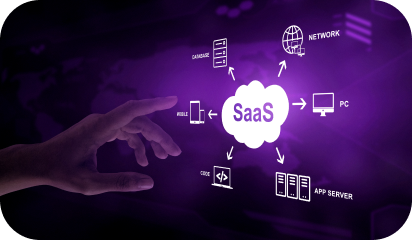
Top 5 SAAS Trends to Watch in 2023

Top 5 SaaS Trends to Watch In 2023

SaaS in 2022 was all about growth and innovation, with a significant focus on giving customers the best possible experience. Thanks to COVID-19, the whole industry had to change radically in 2021 and 2022, but those changes were essential. If we look at the data, it’s clear that personalization, customization, scalability, and customer experience are all major priorities.

  • In 2017, cloud workloads accounted for 86% of data center workloads; in 2022, this figure has increased to 94%.
  • In 2022, 73% of SAAS business leaders believe machine learning will double employee productivity.
  • With 52% of web traffic coming from mobile devices, the mobile SaaS market has grown to $7.4 billion in 2022.
  • PaaS accounts for about 20 percent of the overall cloud services market, and the SaaS segment dominates most of it.

While these were the most impactful trends of 2022, we expect the upcoming year to be much more exciting for the industry.

Let’s get started and talk about the top 5 SaaS trends to watch in 2023.

1. Improved Personalization with Artificial intelligence

Customer expectations have changed a lot over the years. Nowadays, many consumers are willing to give up a little bit of privacy in exchange for getting relevant recommendations. They also expect brands to provide them with personalized experiences. This shift has affected the business-to-business (B2B) industry, where longer sales cycles and multiple customer touchpoints are now the norm.

According to Salesforce research, by 2023, three-quarters of B2B customers will expect their suppliers to predict and anticipate their needs before they even get in touch. With their robust pattern recognition and predictive analysis, AI and machine learning can assist SaaS companies in meeting the levels of personalization that consumers have come to expect.

Why it Matters:

Now is the time to start if you’re not already considering AI optimization for your SaaS business. AI and SaaS’s advantages in customer service, personalization, and security can translate into profits for all businesses involved. So if you’re looking for ways to boost your bottom line, this is definitely an avenue worth exploring.

2. Low code/ No code platforms for faster product development

According to reports, more than 60% of business stakeholders have implemented less than 50% of their technology solutions. In such circumstances, low code appears to be a boon because it helps to get custom apps in 50% less time and at 40% less cost.

Gartner predicts that “low-code application development will account for more than 65% of application development activity by 2024.” This will also allow startups to test their concepts and ideas in a real-world scenario faster. This will enable them to get investments sooner than the average time.

Why it matters:

Low-code development platforms are a great way to speed up development and get your SaaS product to market faster. Low-code tools are used for creating email and online advertising campaigns, as well as applications and websites. MailChimp is a popular example of a low-code tool with its email builder functionality.

Low-code platforms can be used for much more than just building custom apps. They can also be used to create apps that streamline internal business processes. For example, automated workflows can easily share data among multiple SaaS applications. This can be helpful for onboarding and recruitment, financial data processing, automated marketing, and more.

3. Multi-cloud Adoption for improved flexibility and reliability

If you thought 2022 was the year of hybrid cloud, just wait until 2023! That’s when businesses will start reaping the benefits of using multiple cloud providers. It’s called a “multi-cloud strategy,” providing increased flexibility and security.

While most businesses were still tied to a single cloud service provider in 2020, reports show that by 2023, 84% of mid-to-large businesses will have adopted a multi-cloud strategy. So if you haven’t started using multiple cloud providers yet, 2023 is definitely the year to do it!

Why it matters:

You’re no longer limited to just one cloud provider when you go multi-cloud. You can easily pick up and move your applications to a new platform if you need to. This makes life a lot easier and gives you more options for finding the right cloud solution for your needs.

4. Vertical SaaS for better service customization

More and more businesses are finding that a vertical SaaS solution is the way to go when it comes to cloud computing. This is especially true if you have a business that falls into a specific niche or industry, like retail, automotive, or insurance. With vertical SaaS, you can create solutions that are specifically tailored to the challenges your business faces. Even though the potential market and user base might be smaller, vertical SaaS is still highly effective.

For example, the restaurant industry is projected to see a 20% increase in technology adoption and upgrades by 2022. Brands like McDonald’s, Starbucks, and Dunkin’ are now investing in custom SAAS solutions that match their brand guidelines and SOPs and solve critical operational challenges for QSRs.

Why it matters:

SaaS is a great way to deploy solutions quickly and efficiently. Real-time collaboration and better security make it the perfect way to scale your business rapidly. In 2023, we’ll see a significant increase in vertical SAAS, which will help businesses address specific industry challenges.

5. Unbundling and Decoupling SaaS service packages

SaaS providers are always looking for ways to improve their pricing and packaging models so customers can get the most value out of their purchases. One way to do this is by unbundling SaaS packages, allowing users to choose the features they need. This approach gives customers more control over what they pay for, ultimately leading to a better experience for everyone involved.

With nearly half of the organizations pointing to vendor lock-in as a barrier to SaaS adoption, we expect this package unbundling trend to continue. This is especially true when SaaS providers, funded so often by venture capital, become increasingly flexible to retain and attract new customers with personalized value-based feature sets, pricing, and packaging.

Why it matters:

The SaaS industry is oversaturated with thousands of products that are often barely different from each other. The future belongs to hybrid products that enable customers to create experiences tailored to their needs. And not the “one size fits all” model.

The “do it yourself” software movement will grow as the tools get more accessible and easier to use and as more and more people learn technical skills. Unbundling SaaS is just the first step in that direction.

Key Takeaways

Many organizations realized in 2022 how important it is to respond quickly to changes and uncertainties. Business process automation, or having the right digital muscles in place, emerged as the most crucial capability every organization should have to remain relevant. This enables them to provide a seamless customer experience and perform data-driven management.

In the next few years, the SaaS industry will be pretty different from what it is now. We’ll need to make a significant change to how we build things to focus on creating customized and secure outcomes instead of just owning the software. This means understanding how different organizations use SaaS products and then putting the proper controls in place for each.

We would be happy to offer a consultation if you want to upgrade or add features to your SAAS product. Reach out to us at https://www.galaxyweblinks.com/

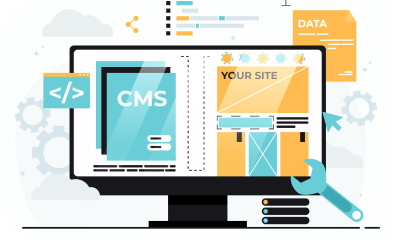
CraftCMS Pros and Cons — A Quick Guide

What is CMS (Content Management System)?

  • A content management application used for creating, editing, and publishing content.
  • Allow multiple users to contribute, schedule, or manage content.
  • Having a browser-based interface accessible anywhere to any number of users.
  • Drag-and-drop editors allow users to enter text and media without expertise in HTML, CSS or other programming languages.
  • Easy content creation and formatting. Content storage in one place.
  • Permissions for managing content are based on roles: authors, editors, and admins.
  • Publishing and organizing content live.
  • It reduces your reliance on front-end developers to make changes to the website.

“What is Craft CMS?”

There are many Content Management Systems. You’ve possibly heard about a few of the popular ones like — WordPress, Drupal, Craft, Shopify, and Joomla.

Craft CMS was introduced in 2011. It is a relatively new CMS but is increasingly becoming popular as an alternative to WordPress. It has excellent features, including, simple editing, flexibility, and live previews.

As an agency, we prefer to create unique solutions that are reflective of every individual client. We believe a lot is going for Craft. It enables us to achieve more even on tighter timeframes and budgets.

An overview

  • Written in PHP on the Yii 1.x platform.
  • Versatile, user-friendly, lightweight CMS with a clear graphical interface.
  • Simple control panel for content production and administration.
  • Craft CMS uses Twig, a strong, open-source PHP template engine, for the template.
  • Twig’s syntax is derived from Jinja and Django templates.
  • Has all the key backend functionality (SEO, page ranking) and commercial features (1st party localization, easy rebranding, etc.).
  • Page revisions, live view modifications, live page updates, and plugin administration are all maintained.
  • You can expand and enhance Craft CMS functionality and features using backend technologies like PHP and JS.

Should you go for Craft CMS or place your bets on a more popular CMS like WordPress, which is used by 60% of CMS users? Many variables need to be considered when answering this question, and it can’t simply be boiled down to one side or the other.

Advantages and disadvantages of CraftCMS

Speed

CraftCMS is faster than WordPress. It is much snappier than WordPress.

On the downside, there are some WordPress themes (like WooThemes) that don’t translate very well into Craft.

In that case, speed gets compromised. Fortunately, there are now some excellent solutions for translating these themes.

Complexity

One of Craft’s advantages is its highly customizable nature: If you can work a little bit with code or hire someone who can (like us) then there are plenty of ways in which Craft could make your life easier as opposed to more difficult.

Craft can get complex at times for those who have no idea about it. In that case, you may need a developer or two to help along the way.

Flexibility

Craft’s greatest strength is its flexibility. Because it is open-source, it has been adopted by a large community of developers who continually update and improve upon it.

This means that, no matter what your niche or business requirements are, you can be sure there will be a solid solution for you to use.

It also helps that Craft is so easy to customize with an interface that feels tailor-made for those with minimal technical knowledge.

On the downside — if you choose to add features beyond what Craft offers natively, customization costs can appear depending on how complex your project needs become.

Ease of use

One of Craft’s most appealing features is how easy it is to set up. Once installed, it takes minimal effort to modify templates and create new pages.

So if you want a CMS that doesn’t require any programming knowledge to get started, Craft is your best bet.

This ease of use also makes Craft very accessible for beginners — especially when it comes to getting a website up quickly.

Released under an MIT license, CraftCMS can be used for both personal and commercial projects. It’s been getting a lot of attention lately from developers because it makes developing custom modules simple.

We’ve seen developers convert to Craft almost instantaneously after discovering how easy it is to get started building sites with it. When it gets easy for us, we try to make it even easier for our clients by all possible means.

Get our Web Platform experts onboard to help you set up your CMS website in no time.

Moving Forward in 2022, With a Retrospect on 2021!

With a commitment to vaccines and the hope of smiling without face masks, 2021 was indeed a year to remember. Even in its second year of working remotely, Galaxy clocked a growth of 97% in revenue over 2020. This growth spurt paved our way into the INC 5000 list that showcases America’s fastest 5000 growing companies. 

We were fortunate enough to be able to continue doing what we love and are passionate about! We were all very excited about what 2022 would bring for us. Brimming with new ideas, now is the time to review and ponder how the year went by and be proud of it. 

Here is a look back at 2021 in the form of numbers, milestones, and learnings.

At Galaxy, our employees are our greatest strength. We added a whopping 219 talented techies to our family, taking our overall number to 570. We are also big on recognizing the contributions of our employees and have promoted 41 of them as a reward for their hard work and commitment.

Galaxy added 44 new clients to our rapidly growing list and an impressive 140 new projects. Our areas of specialization include 

The year 2021 was also full of industry recognitions and accolades.

We also gained some valuable life lessons and valuable learning.

  • Businesses are beyond B2B or B2C. It is about H2H, i.e., human to human connection.
  • We are committed to remaining transparent and approachable to our clients. 
  • Galaxy is a close-knit family where the well-being and growth of our employees are our biggest commitments. 
  • Leadership is about creating more leaders. 

Another feather in our cap is Sanjeevani, our corporate social responsibility initiative. We raised INR 200,000 from our employees in 2021, which was matched equally by the organization. We used this amount for various philanthropic initiatives like providing financial assistance for medical expenses, donating at old age homes, donating clothes to the underprivileged during festival season, and so on. 

2021 proved to be a fruitful year for Galaxy, and we look forward to more growth, learning, and experiences in 2022! 

5 Steps for Effective Performance Testing: A Practical Guide

Applications are becoming increasingly complex and with a reduced development cycle. This necessitates the adoption of new, agile development and testing methodologies. Application performance as a component of the overall user experience is now among the most important aspect of application quality. 

Sequential projects with static qualification/implementation/test phases that postpone performance testing until the end of the project may face performance risks. By today’s application quality standards, this is no longer acceptable.

This article will give you practical advice on how to conduct efficient performance testing in this new and more demanding environment.

Stage 1- Software analysis and requirements preparation

Before beginning performance testing, it is critical to ensure that the software configuration has been properly adjusted. When the system is deployed, functional testing should be performed to ensure that the main functions used for performance checks work properly.

The examination of a system’s features, operation mode, and peculiarities are part of its analysis. To achieve the following goals, detailed analysis is required:

  • Simulate the best user behavior patterns and load profiles
  • Determine the amount of test data required
  • Identify system bottlenecks
  • Define the software monitoring methods

The primary focus should be on defining the success criteria for the tests that are usually included in the SLA (service-level agreement). The criteria that the system technically corresponds to are called the requirements. The requirements defined during the first stage will be compared to the received results to evaluate the behavior of the product and system units and determine the bottlenecks. There are so many crucial performance testing metrics that are used as success criteria.

System analysis encompasses all information about the software, testing objectives, planned test runs, test stand configuration, performance testing tools, user behavior scenarios, load profile, testing monitoring, load model, application requirements, and the method of delivering results.

Stage 2- Design Testing Strategy

The testing strategy is developed based on detailed system analysis as described above. Below are the steps to develop an ideal testing strategy:

2.1. Choosing optimal performance testing tool

These tools can be used to conduct performance testing:

ToolAdvantagesDisadvantages
The test results are well-structured and stored in an MS SQL database.
There is no limit to the number of virtual users covered by the license.
Declarative tests have limited functionality for scripts logic.
Declarative tests are the only type of testing available for SharePoint.
Provides a distributed architecture (VuGen, Controller, Load Generator, Analysis).
There are tools available for working with various protocols.
Allows you to generate reports and create report templates.
It is possible to keep detailed action logs for each virtual user.
The number of virtual users is limited.
The number of updates is relatively low.
It is possible to run tests with complex logic and dynamic parameter correlation. Web application testing is possible (including API and web services, database connections).
Allows you to simulate the behavior of multiple users in multiple parallel threads while applying a heavy load to the web application.
Encounters issues in the reproduction of AJAX traffic.
There’re limited reporting functions.
Requires many resources of RAM and CPU for test launching.

2.2. Design of a load profile and a load model

As part of the performance testing process, statistics on application usage are gathered. The data gathered is required for the creation of the load profile – a user behavior model.

Different load models can be used in the same test. For example, one new virtual user could be added every five minutes, or all users could be added all at once. The query rate, test duration, 

and the number of users are the most important aspects of the load model.

2.3. Configuration of the test stands

The results of performance testing can be influenced by a variety of factors such as test stand configuration, network load, database content, and many others.

As a result, to obtain the most reliable results, performance testing should be carried out in a separate environment with features and configurations that are similar to the parameters of the real software.

Test stand elementsFeature

Application

ArchitectureDatabase (structure, data)Software required for the system operation

Network

Network mappingBandwidth performanceCommunication protocol

Software

Operational system (version and service packs)Application server (version and patches)DBMS (version and type)
HardwareCPU (number of cores, type, clock speed)Random-access memory (space, type)Hard disk (type, speed)

Stage 3- Load generator configuration and monitoring

Performance testing tools should be installed on a load generator to produce high-quality results. It is a virtual or physical machine that is near the application server(s).

If a heavy load is to be generated, one machine’s resources may be insufficient. Distributed performance testing is carried out in this case.

Software monitoring can be carried out with the assistance of tools for controlling system hardware resources consumption.

The following are the most popular hardware monitoring tools:

  • New Relic: The performance tracking service offers analytics for every component of the environment. The tool is a powerful tool for viewing and analyzing massive amounts of data and obtaining information about real-time actions.
  • Grafana: This monitoring data visualization tool can analyze data from Graphite, InfluxDB, and OpenTSDB time-series databases.
  • Zabbix: The software employs a “server-agent” model. The server collects all of the data and allows you to view the monitoring history as well as set up metrics and rules.
  • JProfiler combines CPU, memory, and thread profiling, making it simple to determine what should be optimized, eliminated, or modified. This tool can be used for both local and remote services.
  • Xdebug is a powerful tool used to analyze PHP code and identify bottlenecks and slow elements.
  • XHprof decomposes the application into function calls (methods) and generates resource consumption statistics for them. The metrics include the amount of allocated memory, the number of function calls, the execution time, and many others.
  • PostgreSQL is an object-relational database management system that is free to use. The pgBadger profiler can be used to achieve performance testing objectives.
  • MS SQL Server Profiler is a tool for tracking, reconstruction, and debugging of the MS SQL Server. It enables the creation and processing of queries.

Stage 4- Test Data Generation and Test Scripts Development

Let’s look at four different types of test data generation:

Code

Scripts written in various programming languages (Java, Python) enable the creation of users, passwords, and other values required for proper data usage.

SQL statements

SQL queries can also be used to populate a database. This method is only available if the database is accessible from the server. The approach can be implemented as follows: first, a completed DB in MS Access with fields identical to the server-side database is created; second, a dump file containing requests to add information to the DB is created.

API requests

API requests can be used to populate the database with items for sale or user information. One or two phone calls will suffice.

Interface

For filling the database via the system interface, a script that mimics the steps of the user registration process can be developed. The script adds new users to the database. A snapshot of the file system can be created in order to use the newly created users for test execution.

Stage 5: Preliminary Launch and Test Execution

Preliminary tests aid in determining the best load model for the system. They also show how the application resources are used and whether the power of the load generator(s) is sufficient for running full-scale tests.

The tests should be run with various load models. As a result, the testing load is determined based on software monitoring and analysis. For test execution, there are many types of checks, like stress testing, lead testing, stability testing, volume testing, etc. Read more in detail.

Performance testing is an ongoing process.

Performance testing needs to be carried out on a regular basis. Hopefully, your website or application will continue to grow, necessitating changes to accommodate a larger user base.

Contact us to find out how performance testing experts can improve the quality of yo

5 Important UX Principles to Follow for a Great Website Design

When people hear the word “design,” they are frequently led to believe that the person in that role is solely responsible for producing something visually appealing. While aesthetics are important, UX design is beyond that. 

Crafting delightful digital experiences needs an understanding of how people perceive and interact as they progress through their digital journey. This is to ensure that the website design is not only visually appealing but also effective and simple to use.

Fortunately, UX pioneers have already done much of the hard work for us. They have developed a set of principles and laws that can serve as the foundation for creating winning website design experiences.

  1. Keep Users’ Choices to a Minimum (Hick’s law)

A common design misconception is that having more product options leads to a better user experience. Fortunately, plenty of research has debunked that myth, leading to Hick’s Law, which states that: 

The time it takes to make a decision increases with the number and complexity of options.

With less visual information, the text will be more noticeable and will heighten the impact on the user. Image by Mixd.

If users end up in the decision-making dilemma of what next. They become frustrated and might leave that website or app altogether.

Elemento CTA with less complexity in options to choose from.

How to use Hick’s law?

  • Eliminate complexity: To reduce cognitive load and highlight recommended options, break complex tasks down into smaller steps for the user (for example, by using progressive disclosure to onboard new users or reducing the steps for a payment process).
  • Sort your options: Take a look at how most websites are navigated. If they provide access to every link on the site, they have failed to apply Hick’s law and may easily overwhelm the user. Instead, only the most important options should be presented, which can be defined using the card-sorting method.

When it comes to time spent on a website, most have a sweet spot. If there isn’t enough time, the user will most likely leave without purchasing or registering. If they spend too much time on information, they may become distracted and fail to make a purchase or register. With just enough time, the vast majority of users who intend to make a purchase and register will do so.

Once a site is live, you can begin to determine the sweet spot and use Hick’s Law to either increase or decrease the average amount of time spent on the site.

2. Use Familiar Scenarios and Logic (Jakob’s Law)

So often as designers, we want to reinvent the wheel, to come up with a solution that no one else has thought of. But, as Jakob Nielsen (the creator of Jakob’s Law) put it, the truth is:

Users spend the majority of their time on other websites and would prefer that your site function in the same way as the websites they are already familiar with.

This rule applies to all of the products we use, not just websites. With this in mind, designers must resist the urge to create something unique, as doing so may end up doing more harm than good to the user experience. Designers should instead concentrate on leveraging existing mental models to which users are already accustomed. This reduces the cognitive load placed on users and allows them to concentrate on completing tasks rather than learning a new mental model or process.

Dropbox’s login page applies Jakob’s law by designing a login page similar to those of other websites.

How to use Jakob’s law:

  • There’s no need to reinvent the wheel; instead, concentrate on creating patterns that users are already familiar with.
  • Failure to meet user expectations can increase their cognitive load by requiring them to learn something new. To improve learnability, adhere to established conventions.

3. Make Your Interface Visually Appealing (Law of Aesthetics)

People have an underlying belief that things that look good will work better.

In 1995, Hitachi Design Center researchers investigated this effect for the first time. They discovered a strong link between aesthetic appeal and ease of use.

They concluded that the aesthetics of a product have a strong influence on users. It implies that users perceive attractive products to be more useful. In other words, the more positive the reaction to visual design, the more forgiving they are of minor usability issues.

Finally, people do judge a book by its cover.

It’s a well-known fact that aesthetics is one of the core reasons why Apple has an edge over its competitors.

How to Use Aesthetic Usability Effect:

  • Design with keeping the interaction model of people in mind.
  • Concentrate on the user funnel’s high-friction, high-value points (top landing pages, bottom of the funnel stages such as checkout flow).
  • With continuous user feedback, you can improve your aesthetics.
  • When using the aesthetic-usability effect, don’t change the usability, which means the product’s core function should remain unchanged.

4. The One That Looks Different From the Rest (Von Restorff Effect)

Also known as the ‘isolation effect’, this law anticipates that when multiple similar objects are present, people will likely remember the one that differs from the rest.

The law is mostly found in use on product pricing pages, where most of the pricing packages are the same except for a few variations in the text.

Companies take advantage of this by highlighting their preferred pricing in a different color, shape, and size to draw attention to that item.

ClickUp uses the Von Restorff principle in their pricing plan, by highlighting their preferred plan’s name and price.

A darker shade in the pricing box isolates the selected plan, making it the user’s focal point.

How to use the Von Restorff effect:

  • Make important information or key actions stand out visually.
  • To make the product listings stand out, use words like “special offer” and “new.”
  • Look for opportunities to learn how to create positive experiences in the interface.
  • Maintain a healthy balance. Users can easily become distracted by noise if you create too many different colors and shapes.

5. Zeigarnik Effect

Remember when an episode of your favorite show ended on a cliffhanger, leaving you hanging?

You’re not going to rest, and you’re going to move on to the next episode.

Don’t you think this happens a lot in our everyday lives?

Zeigarnik effect

This means that people recall interrupted or unfinished tasks more vividly than completed tasks.

This concept can be applied to UX, where we could talk about new features and offer them for an X amount, and then tell the user that if he wants to proceed, he must do Y action, such as register, buy, etc.

Grammarly example

Linkedin’s profile completion page also makes use of the zeigarnik effect.

Users are more likely to provide missing information when they see a message like “add skills to showcase your strength.”

Take a look at how Instagram uses this to this effect with its infinite scroll.

Even when you’re certain there’s nothing else to see in your feed, Instagram plays its card – ‘infinite scroll’ – to entice you to keep using the app.

It is predicated on the need for/possibility of seeing a new story.

How to use the Zeigarnik Effect?

  • Gamify user interactions and include progress trackers to encourage users to finish the task.
  • Take advantage of the user’s mental state after they’ve completed a task. Now is an excellent time to concentrate on a user’s new objectives!
  • Divide content into bite-sized chunks of useful information.
  • Don’t tell everyone everything you have right away.
  • Digital writing tools show you how many problems you have with your writing and how you can solve them by upgrading to premium.

To summarize

It’s critical to understand that your eyes and ears frequently fail to convey what you can perceive. The designers must consider perception and imagination and attempt to link them using UX laws.

So, how did you feel after learning about all of the laws and their advantages?

Please contact us and let us know if you require UX experts to improve the performance of your website.

How to Ensure Your SaaS Application’s Performance as Designed

Internet users expect web content and apps to load within seconds. They want a fast and seamless digital experience on all their devices. The need for speed and seamless performance is a given now (for both users and business owners).

Consumers abandon slow-loading websites, without completing the desired action. High performance is important and a reliable user experience is important for SaaS businesses. There are SaaS products for customer support, communication, payment, project management, automation, and for every process that is or can go digital. 

SaaS will continue to grow as organizations of all sizes rely on it to deliver apps and IT services. With SaaS services becoming popular, demand for high availability and performance also grows. 

Meeting rising consumer demand is great for business. But it can be a logistical nightmare for SaaS providers. Growing load on the SaaS infrastructure increases latency and performance issues.

Before the release, SaaS applications must go through thorough performance testing. 

SaaS testing ensures that the product functions as designed and serves the end needs. Adequate testing enhances performance, leading to higher customer satisfaction. This in turn means more revenue through user adoption and subscription fees.

Applications built as SaaS are subject to rigorous testing to ensure that the application is performing as per expectations. 

Here are the tips that will help you in the SaaS development process and SaaS testing.

Tip 1. Skilled team

SaaS applications live on a remote server and are delivered over the internet. Existing in a digital space, SaaS applications rely on three aspects: storage, networking, and computing capacity. Testing SaaS products means you have to ensure coexistence between these three technologies.

Tip 2. Performance Testing (Onboarding/Staging vs Production)

There are many ways to deliver and run performance tests with varying levels of quality. One approach is not necessarily better than another. It all depends on your business needs and what you are trying to achieve with testing. In general, there are two different approaches:

  1. Running performance tests against staging or development environments.
  2. Running performance tests against production or live environments.

Tip 3. Adhering to the prerequisites for Performance Tests 

  • Before testing begins, system requirements must be validated. 
  • It is not possible to automate everything. 
  • In agile environments, it can be difficult to develop a test plan that matches development sprints and iterations. 
  • Risk management is an essential prerequisite for any significant development project in both an agile and non-agile environment.  

Tip 4. Sprint Planning

Communicate risk priorities with the QA and development teams during sprint planning. That will help keep them focused on real risks instead of wasting time on hypothetical ones. You will have better software, with faster delivery. A key part of effective SaaS performance testing is understanding these fundamentals. 

All said and done, there are still challenges SaaS businesses need to overcome. Four key elements affect the SaaS digital experience:

1: Global SaaS User Growth

SaaS has seen extensive end-users growth on a global scale. And, this is one of the reasons for heightening performance challenges. You may wonder how? Application performance deteriorates when the app is far from the data center.

End-users far from the original data center means variables like networks, IPS, and browsers come into the picture, causing poor performance. Location of your data center matters. 

2: Infrastructure Add-Ons

Expanding into new geographies, SaaS providers add more infrastructure and divide existing systems to reduce the load. With added infrastructure build-outs, complexities increases. This is bad for both infrastructure health and end-user application performance.

3: The Internet is Capricious 

Complete SaaS outages are rare; but not completely off the table. SaaS outage can have a disastrous effect on the end-user. Recently we have seen a major SaaS outage with the Amazon S3 (AWS) in February 2021. 100% availability is unrealistic even when your web services depend on Amazon’s cloud.

4: From APM to DEM

SaaS providers must shift from traditional application performance management (APM) to digital experience management (DEM). In DEM, the end-user experience is the ultimate metric. It identifies how all underlying services, systems, and components influence the end-user experience.

You should put a process and the right tooling in place for SaaS applications monitoring.

The list of variables impacting the performance is long and ever-increasing. SaaS providers need insights into advanced analytics to understand data and identify problems.

Right deduction of data resolves issues that are both within infrastructure, like a data center needing more capacity, and outside it, like a slow internet service provider (ISP).

***

Businesses are depending on SaaS applications more than ever. As users shift more towards the cloud, SaaS providers will continue to see growing demand for their services. The demand for a higher level of performance and productivity will also increase. SaaS providers cannot disappoint with poor performance.

As a SaaS provider, you should deal with the rise in expectations for availability and performance through new approaches. Like evolving from APM to DEM. This is just one example. There are many ways to go about insuring SaaS performance.

If you need immediate assistance or have questions about how Saas Testing may affect your organization or client, we would love to talk with you. Galaxy weblinks intend to help software companies transform their businesses into SaaS successes.